About Wisconsin Square
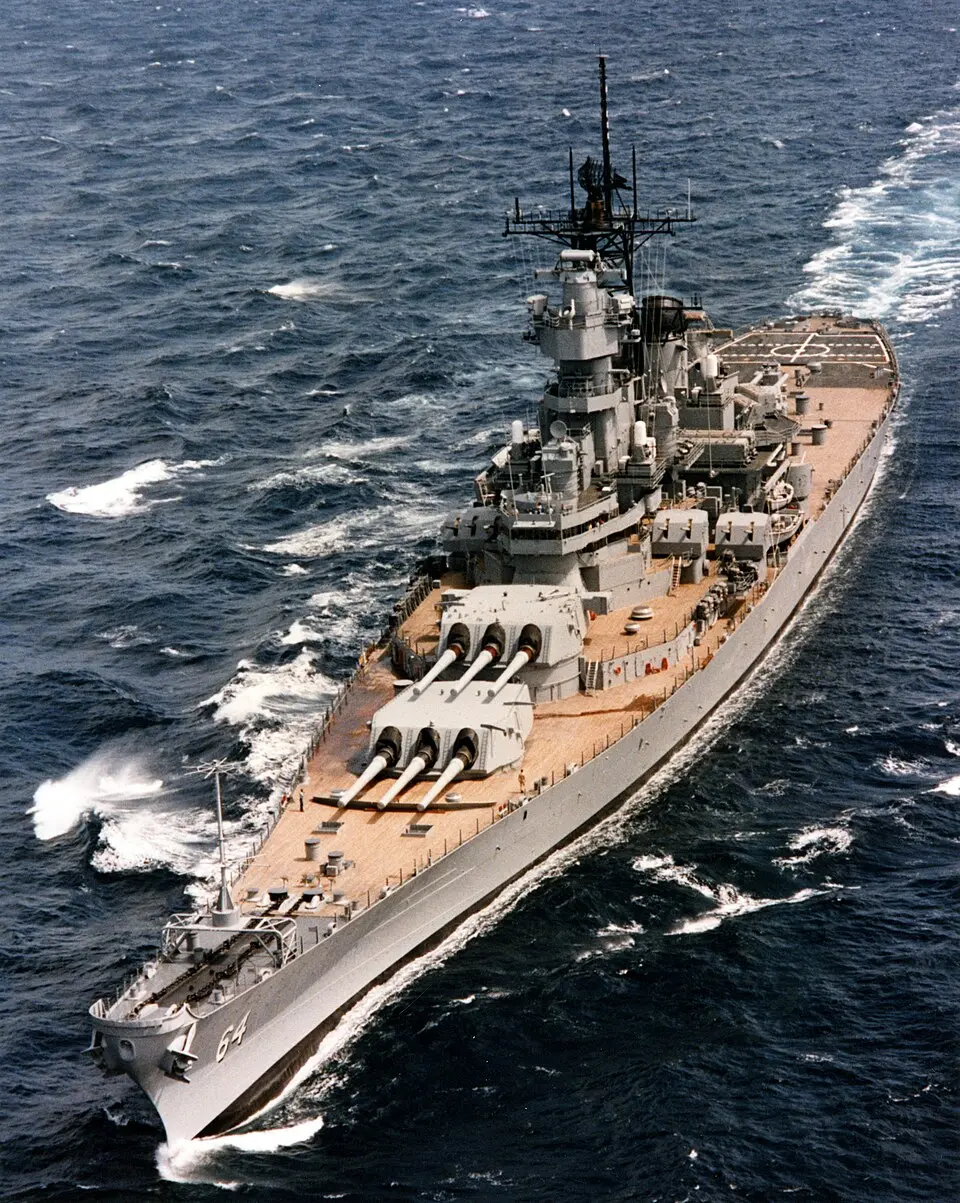
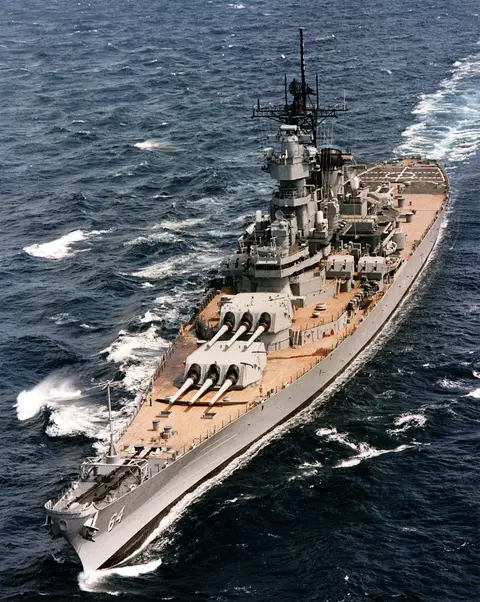
Wisconsin Square in Norfolk, Virginia, is far more than just a city plaza. It is home to one of the most impressive monuments to United States maritime history: the former battleship USS Wisconsin. This museum ship, which originally served in the United States Navy as BB-64, is a survivor of the famed Iowa class. For visitors to the Nauticus National Maritime Center, the site offers a unique chance to experience a historic warship of this size up close. The ship is firmly moored and open to the public as part of the Hampton Roads Naval Museum, and you can tour the decks as well as, now, the interior spaces.
The story of the Wisconsin begins in the late 1930s, when planning started for a new generation of battleships. The construction contract went to the Philadelphia Naval Shipyard, where the ship's keel was laid on January 25, 1941. After a build time of just under three years, it was launched on December 7, 1943. The ship was christened by the wife of the then-governor of Wisconsin, the state after which the vessel was named. The Wisconsin was officially commissioned on April 16, 1944. As the third ship of her class, after the Iowa and the New Jersey but before the Missouri, she marked an important milestone in the development of the U.S. Navy's fleet.
The technical specifications of the Iowa class were revolutionary for their time. At a length of around 270 meters (887 feet) and a width of 33 meters (108 feet), the dimensions were chosen so that the ships could fit through the locks of the Panama Canal. This allowed for rapid redeployment between the Pacific and the Atlantic. Although the official displacement was 45,000 tons, in order to respect the limits of the London Naval Conference, the actual displacement at full load was around 58,000 tons. Powered by steam turbines, these ships reached speeds of up to 33 knots, making them the fastest battleships of their era.
The Wisconsin's armament was formidable. The main battery consisted of nine guns with a caliber of 40.6 centimeters (16 inches), arranged in three triple turrets. These weapons had a range of up to 40 kilometers (25 miles) and could effectively engage both naval and land targets. The main armament was originally supplemented by smaller guns for anti-aircraft and dual-purpose use. Over the decades, however, this secondary armament was modernized. During the extensive refit in the 1980s, the ship received modern guided missiles, including Tomahawk cruise missiles and Harpoon anti-ship missiles, underscoring its role in modern warfare.
Her first major deployment came in World War II. After sea trials in the Chesapeake Bay and off Trinidad, the Wisconsin moved to the Pacific. There she was assigned to the Third Fleet under Admiral Halsey. The ship took part in attacks on Manila and survived the devastating Typhoon Cobra, which sank three destroyers of the U.S. fleet. In the following months, the Wisconsin served as an escort for aircraft carriers during air strikes on Japanese positions in Taiwan, Luzon, and Okinawa. She also shelled the island of Iwo Jima directly to make the landing of U.S. troops possible, and took part in the Battle of Okinawa, where she narrowly avoided a confrontation with the Japanese battleship Yamato.
After the end of the war and Japan's surrender in August 1945, the Wisconsin returned to home waters. In the postwar period, the ship was used mainly for training cruises and presence missions in various seas. She visited ports in South America, Europe, and the Caribbean. In 1948, the ship was decommissioned and assigned to the reserve fleet. But the quiet did not last long. As early as 1951, the Wisconsin was reactivated to support UN forces in the Korean War.
During the Korean War, the Wisconsin shelled North Korean targets, including artillery positions, industrial facilities, and troop concentrations. She supported ground troops of the U.S. Marine Corps and the South Korean army. A notable incident occurred in May 1956, when she collided with the destroyer Eaton in dense fog during an exercise. The Wisconsin sliced through the destroyer's hull, and both ships were badly damaged. The Wisconsin's bow was replaced with a section from the never-completed sixth ship of the Iowa class, which demonstrated the Navy's resilience and readiness for rapid repair.
After the Korean War and further deployments in the 1950s, the Wisconsin was finally decommissioned and mothballed in 1958. For over three decades, the ship remained in the reserve fleet. Only in the 1980s, as part of the 600-ship Navy program under President Reagan, was the Wisconsin modernized again and returned to service in 1988. This modernization included the installation of modern guided missiles and adaptation to the threats of the Cold War.
Her last active deployment came in the Gulf War of 1991. The Wisconsin transited the Suez Canal into the Persian Gulf and launched cruise missiles at Iraqi targets there. She also served as a command center for coordinating the first wave of attacks. The ship shelled Iraqi positions and infrastructure to prepare for the ground war. One curious episode was the surrender of Iraqi soldiers on Failaka Island to an unmanned drone launched from the Wisconsin, considered one of the first of its kind in military history.
Today, the Wisconsin is a fascinating destination for history buffs and technology enthusiasts. Since being transferred to the City of Norfolk in 2009, the ship has been operated by Nauticus. Visitors can walk the vast decks and marvel at the imposing gun turrets. The interior spaces are also accessible, offering insight into the life of the crew and the technical complexity of the ship. The U.S. Congress has also stipulated that the ship may not be demilitarized and must be kept in a condition that would allow theoretical reactivation in the event of a national emergency.
Wisconsin Square thus offers direct access to a chapter of world history. It is a place of remembrance for the strategic importance of sea power and the technological achievements of the Navy. The combination of historical significance, engineering prowess, and the chance to step aboard such a monument makes it an indispensable part of Norfolk's cultural heritage. Whether you are visiting with family, a school group, or on your own, a visit to the USS Wisconsin is an impressive experience that brings the past to life.
At a glance
- Category
- Sight › Historic sites
- Rating
- no reviews yet · write a review
- Address
- 305 Brooke Ave
23510 Norfolk, USA - Phone
- —
- Website
- —
- —
- Coordinates
- 36.84878° N · -76.29427° E
- Data quality
- confidence 0.92
- Identifier
- ID 886cee6f-b52…
Location & surroundings
Toggle layersRatings & comments
none yetNear Wisconsin Square
closest 5 per category · 2 kmSights
Restaurants
Museums
Hotels
Cocktail bars
More:Historic sites in Norfolk (195)All sights in Norfolk (206)
176 places within 2 km loaded.


You need a free account to leave reviews and photos – that keeps comments genuine and lets you edit them later.