About Empire Building
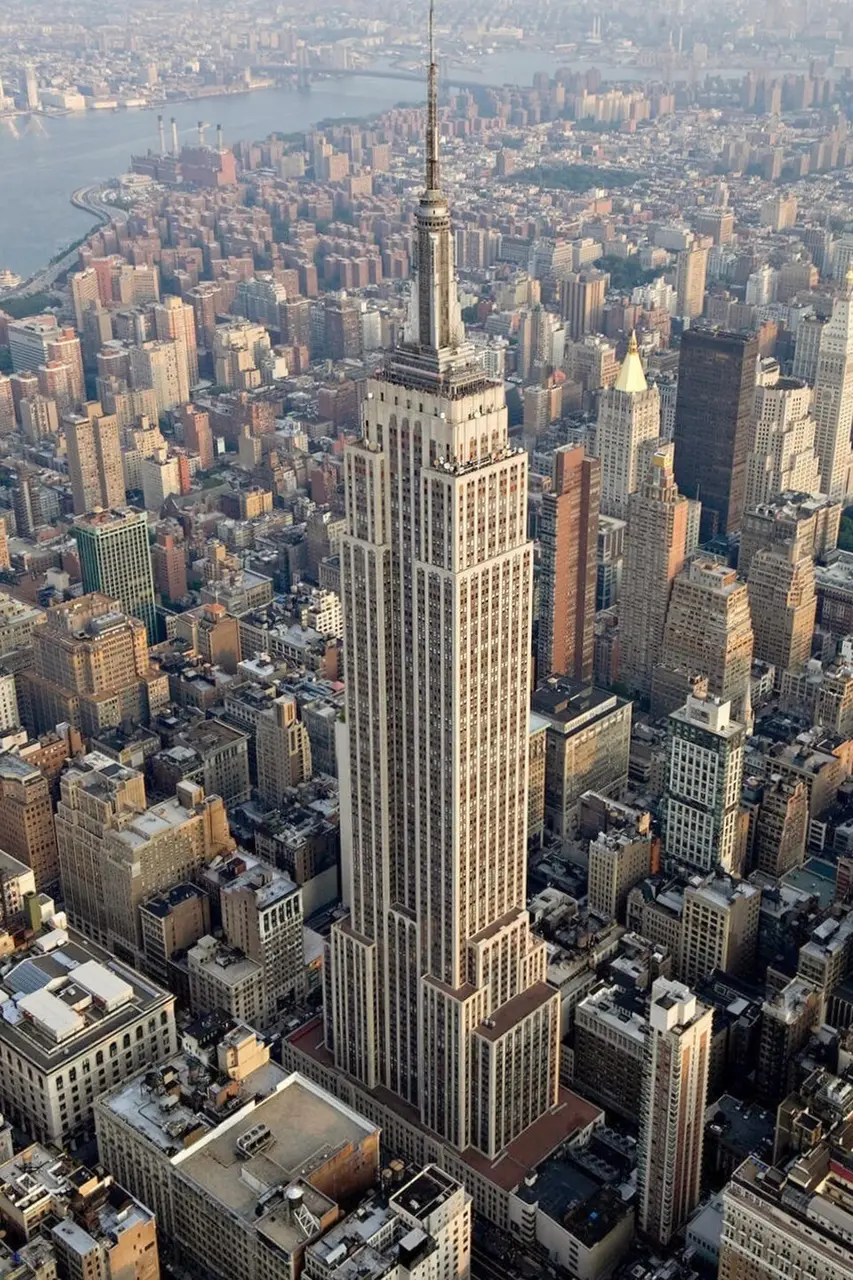
The Empire State Building in Manhattan is far more than just a high-rise; it is the iconic symbol of the New York City skyline. One of the best-known structures in the world, it draws millions of visitors every year who come to enjoy the view over the metropolis or to explore the fascinating history of the building. The skyscraper stands on Fifth Avenue between West 33rd and 34th Streets and dominates the look of Midtown Manhattan. Its special significance lies not only in its height but also in its architectural design, which perfectly embodies the Art Deco style. For many travelers, a visit here is a must, since the building is considered the epitome of the modern skyscraper and is deeply rooted in pop culture.
The building's history begins in a time of great ambition and economic uncertainty. In 1929, investors and politicians announced the construction of a new skyscraper meant to surpass the previous record holder, the Chrysler Building. The name derives from the nickname of New York State, known as the Empire State. The design was handled by the architectural firm Shreve, Lamb and Harmon, which had never before realized a project of this scale. The site was deliberately chosen south of the then-center of the city, in the hope that the mere presence of the giant would create a new business district.
The construction itself was a technical masterpiece, completed in a record time of just 18 months. More than 3,400 workers were employed on the site, coordinated by precise logistics that made it possible to raise almost five floors per week on average. The steel frame was held together with rivets, a method typical of the era. The photographs of Lewis Hine, who captured the workers on the steel framework at great heights, became especially well known. These images became world-famous and still contribute to the legend of the building today.
The architecture of the Empire State Building is strongly shaped by the building regulations of the 1920s, which required skyscrapers to become narrower toward the top so as not to cast shadows on neighboring buildings. This gives the structure its characteristic stepped form. A massive main block extends up to the 86th floor, tapering through slight setbacks. Above it rises a slender tower, used mainly for broadcasting equipment. The facade is made of limestone and granite, giving the building a refined and solid appearance. The lobby is elaborately designed with marble, including rare varieties from Hesse, Germany, which are considered especially colorful.
Visitors can tour the building on two different levels. The first observation deck is on the 86th floor, on a large open-air terrace at a height of 320 meters (1,050 feet). From here you get a breathtaking 360-degree view over the entire city and, in clear weather, all the way to the surrounding states. This terrace is one of the most visited attractions in the world. The second deck is on the 102nd floor, the building's top level. It is smaller and enclosed, but offers an even higher perspective. Both decks can be reached by high-speed elevators, though security checks before entry often lead to long waits.
A fascinating detail of the building's history is the mooring mast for airships originally planned for the top of the building. The idea was that passengers on transatlantic flights could arrive directly on Fifth Avenue. The plan failed, however, because of the strong winds at that height. A test flight succeeded for only a few minutes, and the idea was never put into practice. Today the top of the building serves as a transmission mast for radio and television broadcasts, underscoring the structure's technical function.
The lighting of the Empire State Building is another highlight, making the building a dynamic element of the city skyline. Since the 1960s, the top has been lit in different colors at night. Without a special occasion, the building glows in white light, but on holidays or special occasions the color changes. It shines in the national colors of the U.S., in green on St. Patrick's Day, or in the colors of the rainbow. Current events, such as sports results or political elections, are also honored with special light shows. Since the switch to LED technology, moving light effects are also possible, making the building look even more impressive.
The Empire State Building also has an eventful history with some dramatic episodes. In 1945, a bomber crashed into the 78th floor of the building in fog. Despite the severe damage, the structure held and was able to reopen the next day. Another remarkable incident involved a female employee who was thrown into a damaged elevator in the collision and plunged more than 300 meters (about 1,000 feet) down the shaft, yet survived. These incidents underscore the sturdiness of the construction and the dramatic history of the building.
Today the Empire State Building is used predominantly as an office building but also houses tourist attractions. On the second floor is a theater offering a virtual 3D flight over New York. The building is also a popular destination for athletes, as an annual stair race takes place in which participants run from the lobby to the 86th floor. This event attracts runners from all over the world and demonstrates the physical scale of the structure in an impressive way.
Culturally, the Empire State Building has attained an almost mythical status. It appears in countless films, including the famous movie King Kong, in which the ape climbs to the roof. This depiction boosted the building's popularity worldwide. It is also frequently featured in literature and art. The building is regarded as a symbol of the courage and resilience of people during the economic crisis in which it was built. It is not just a workplace but a landmark that embodies the history and spirit of New York.
For travelers, the Empire State Building offers a unique combination of history, architecture, and spectacular views. It is a place where you can feel the city's past while looking down on the modern metropolis at the same time. The mix of the elegant Art Deco style, the technical achievement of its construction, and its cultural significance makes it an unforgettable experience. Whether you visit the observation decks, admire the lobby, or simply look up at the illuminated building from the street, the Empire State Building remains a fascinating symbol of New York City.
At a glance
- Category
- Sight › Historic sites
- Rating
- no reviews yet · write a review
- Address
- 350 5th Ave
10118 New York, USA - District
- Manhattan
- Phone
- —
- Website
- www.skyscrapercenter.com
- —
- Coordinates
- 40.74879° N · -73.98559° E
- Data quality
- confidence 0.73
- Identifier
- ID a1a146c1-ce1…
Location & surroundings
Toggle layersRatings & comments
none yetNear Empire Building
closest 5 per category · 2 kmSights
Restaurants
Museums
Hotels
More:Historic sites in New York (3,728)Sights in Manhattan (2,358)All sights in New York (4,021)
300 places within 2 km loaded.
Don't miss in New York
All sights Historic sites01
Empire State Building
20 W 34th St · New York● Website○ Phone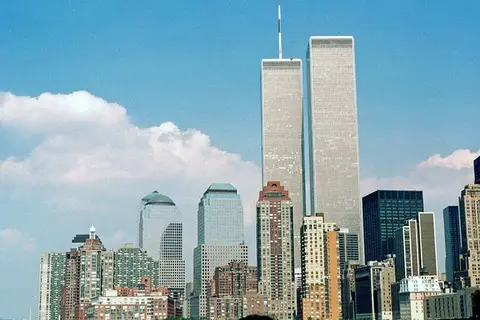 Monuments02
9/11 World Trade Center Memorial Monument
180 Greenwich St · New York○ Website● Phone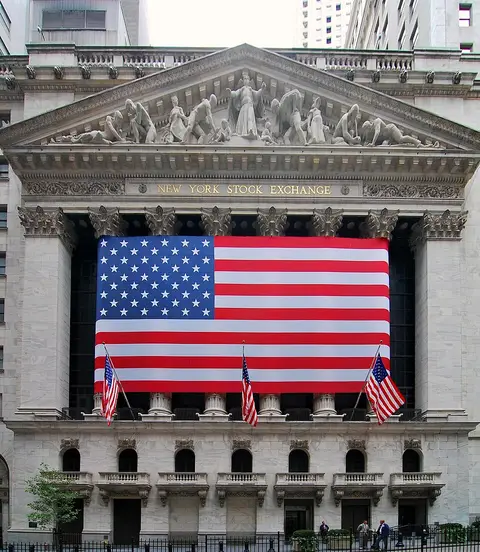 Historic sites03
New York Stock Exchange
11 Wall St · New York● Website● Phone Historic sites04
You need a free account to leave reviews and photos – that keeps comments genuine and lets you edit them later.
A legend from the moment it was finished in 1931, the Empire State Building was easily the tallest building not just in New York, but the entire world for many years before being overtaken by another New York landmark - the twin towers of the World Trade Center. With the destruction of those two buildings, the Empire State Building was once again the tallest building in the city, but that lasted less than eleven years. But even though it's no longer the tallest, it remains iconic and one of the city's biggest tourist attractions. Expect long lines, and a lot of them - you'll have to wait in line to pass through a security checkpoint, wait in line to get tickets, wait in line for the elevators, and then make your way through the crowd on the outdoor observation deck on the 86th floor. One way to deal with the lines is to buy an express line ticket, which will bring you to the front of any line, but it will more than double the cost of your ticket. Another option is to visit very early in the day or late in the evening, when the lines will be considerably shorter. Despite the long lines and inevitable tourist kitsch, the views are excellent and the experience of being outdoors on top of New York City is a great one. Hawkers outside the building may try to tell you there is a very long line inside and that they can get you tickets to cut the line for some exorbitant price; before believing them, go inside and check the actual wait time which is clearly written on the electronic boards.
Source: Wikivoyage, „Manhattan/Midtown East“ · authors per page history · CC BY-SA 4.0