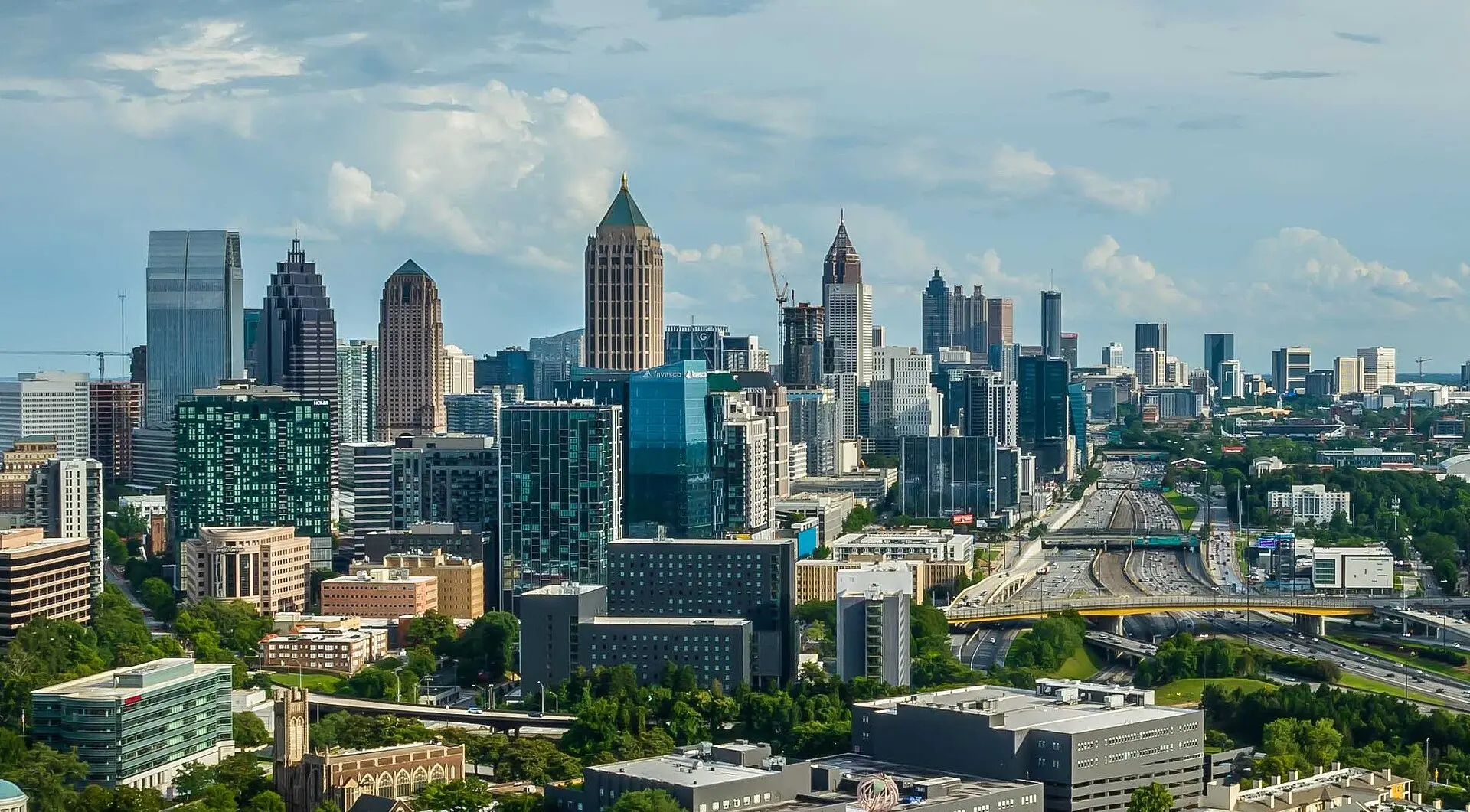
Discover Atlanta: Civil Rights, the BeltLine, and Soul Food
Travel guide · editorialOn Auburn Avenue stands the modest birth home of Martin Luther King Jr., and just a few steps away is the church where he preached – Atlanta is the cradle of the civil rights movement. A trip to Atlanta also takes you into a modern Southern metropolis with a green tree canopy, a loop trail on an old rail corridor, and one of the most influential music scenes in the US. For a city break in the American South, Atlanta is an exciting place to start.
Railroad, Fire, and Rebirth
Atlanta began in 1837 as the end of a railroad line and was initially called simply "Terminus." As a hub for the Confederacy, the city was captured by General Sherman in 1864 and largely burned down – a scene made world-famous by "Gone with the Wind." Atlanta then rose again as a symbol of the "New South," which is what the phoenix on the city seal represents. In 1886, a pharmacist invented Coca-Cola here. In the 20th century, the city became the center of the civil rights movement around King, later hosted the 1996 Olympic Games, and became home to CNN. In 2026, Atlanta was also one of the host cities of the FIFA World Cup.
Attractions in Atlanta
The Martin Luther King Jr. National Historical Park includes the birth home, Ebenezer Baptist Church, and the King Center, where King and his wife Coretta are buried. The National Center for Civil and Human Rights tells the story of the fight for equality in a powerful way, including a simulation of a lunch counter sit-in. Around Centennial Olympic Park you'll find the Georgia Aquarium, one of the largest in the world and home to whale sharks, and World of Coca-Cola, with a tasting room for beverages from around the globe. The BeltLine, a bike and walking path on a former railroad loop, connects neighborhoods such as Old Fourth Ward, Inman Park, and Ponce City Market, a converted Sears warehouse with a food hall and rooftop terrace.
Neighborhoods from Midtown to Reynoldstown
Midtown is the cultural heart of the city, with the High Museum of Art, the Moorish-style Fox Theatre, and Piedmont Park, Atlanta's green lung. Atlantic Station was built on the site of an old steel mill as a new district with shops, a movie theater, and residential towers. On the eastern stretch of the BeltLine, Reynoldstown has transformed from a former working-class neighborhood into a sought-after place to live, with cafés, art, and the graffiti-covered Krog Street Tunnel nearby. Little Five Points is the alternative neighborhood with vintage shops and record stores, Virginia-Highland has bungalows and bistros, and Buckhead offers luxury hotels and shopping malls.
Museums, Music, and Food in Atlanta
The High Museum of Art, housed in a white building designed by Richard Meier, shows American art, Southern folk art, and photography. The Atlanta History Center, with a restored cyclorama painting of the Battle of Atlanta, the Jimmy Carter Presidential Library, and the College Football Hall of Fame round out the offerings. Musically, Atlanta is a stronghold of hip-hop and R&B, from OutKast to today's trap stars. Restaurants in Atlanta serve classic soul food: fried chicken, mac and cheese, collard greens, peach cobbler – Georgia is the "Peach State." Lemon pepper wings are a local cult favorite, and along Buford Highway dozens of Korean, Vietnamese, Chinese, and Mexican restaurants line up, making it one of the best international food strips in the South.
Green Atlanta
Thanks to its dense tree cover, Atlanta is also known as the "City in a Forest." Besides Piedmont Park, worthwhile stops include the Atlanta Botanical Garden with its canopy walk, the Chattahoochee River National Recreation Area for kayaking and hiking, and the historic Oakland Cemetery, where "Gone with the Wind" author Margaret Mitchell is buried. The BeltLine is planned to be expanded into a complete loop around the city center in the coming years.
Getting Around, When to Go, and Day Trips
Hartsfield-Jackson is one of the busiest airports in the world and a hub for Delta. The MARTA rail system runs directly from the terminal to Downtown, Midtown, and Buckhead. For many destinations, though, Atlanta is built around the car, and traffic can be slow. The best times to visit are spring, when dogwoods and azaleas bloom, and fall. Summer is hot and humid. Day trips lead to Stone Mountain with its huge granite relief carving, to the foothills of the Appalachians in north Georgia with waterfalls and wineries, or to Savannah on the coast, about a four-hour drive away.