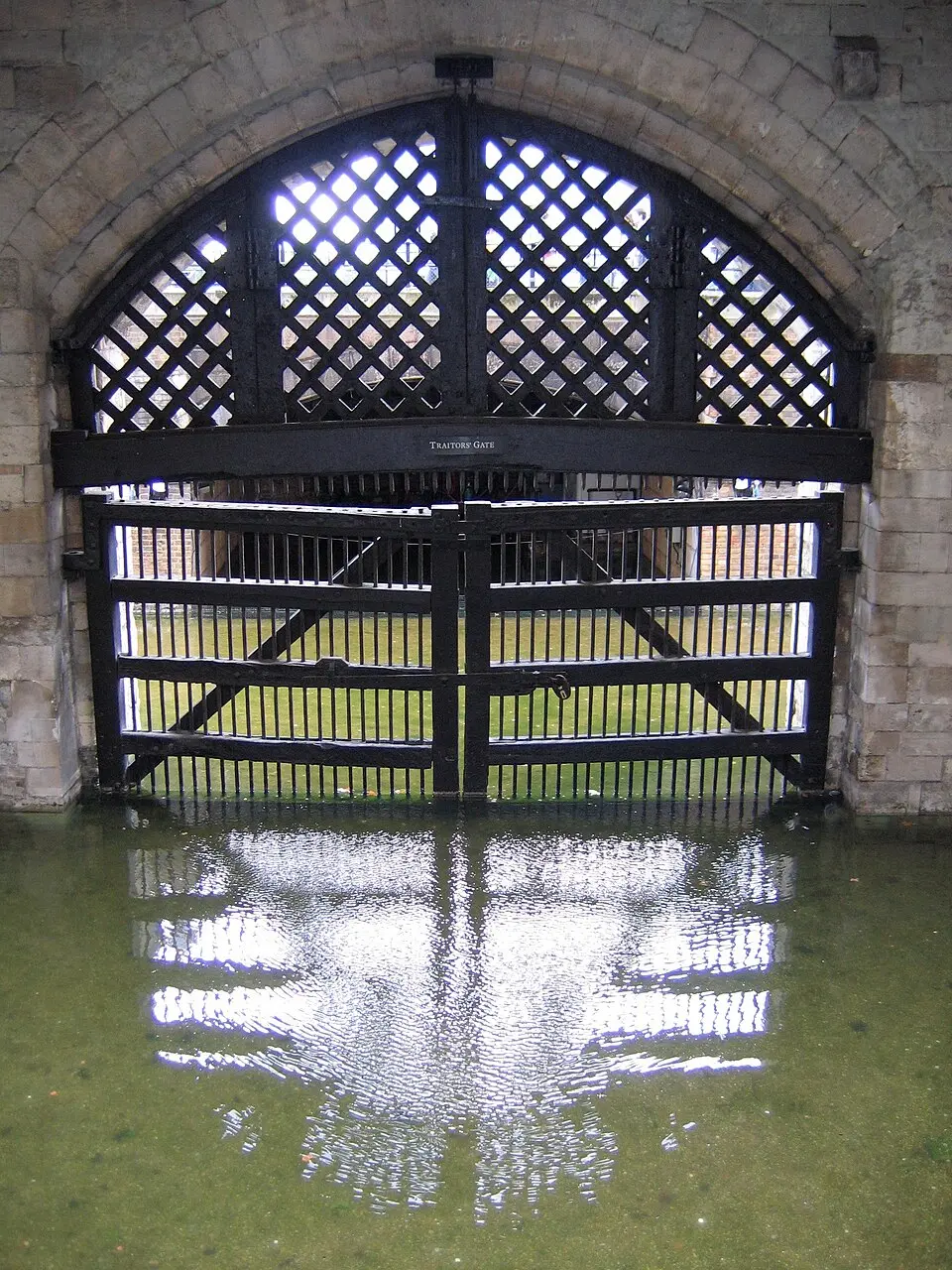
About St Thomas’s Tower
St Thomas's Tower, popularly known as Traitors' Gate, is the historic water gate of the Tower of London's fortress complex. Built under King Edward I in the 13th century, it served for centuries as the main entrance to the castle from the Thames. The name comes from Thomas Becket, the patron saint of London. The direct connection to the river has long since been walled up, but the basin inside the gate has been filled with water again since the late 20th century. The architecture of the low structure, protected by small turrets and jutting out from the wall, is unique in England and may have been inspired by the outer ward of the old Louvre in Paris. Originally, the tower reached directly into the Thames, so it could be approached by boat.
Inside, the most impressive feature is the wide arch on the lower level, considered the widest medieval arch in the United Kingdom and once designed to let boats pass through. The upper floor once housed the king's living quarters, which were fitted with stained-glass windows, painted walls, and stone tiles. Over the centuries, the tower was altered several times, including extensive renovations under Henry VIII and Gothic Revival restorations in the 19th century by Anthony Salvin, who also rebuilt the eastern section, which was in danger of collapse. The facade and many interior elements therefore date from this later period, while remnants of the medieval natural stone survive on the water side.
The upper part of the tower has been open to visitors since 1993. The great chamber has been left largely as it was in 1993, while the antechamber, together with the adjoining Wakefield Tower, has been restored to a lavish medieval setting. Here, visitors can watch a presentation in which actors offer glimpses of life in the medieval Tower. The name Traitors' Gate arose because prisoners charged in matters of state, often arriving from Westminster, were brought across the river and through this gate into the fortress, which gave it a fearsome reputation over the centuries.
At a glance
- Category
- Sight › Historic sites
- Rating
- no reviews yet · write a review
- Address
- —
London, United Kingdom - District
- London Borough of Tower Hamlets
- Phone
- —
- Website
- —
- —
- Coordinates
- 51.50754° N · -0.07705° E
- Data quality
- confidence 0.91
- Identifier
- ID dfc8c478-f0f…
Location & surroundings
Toggle layersFAQ about St Thomas’s Tower
quick answersWhat is St Thomas’s Tower in London?
St Thomas’s Tower is the historic water gate of the Tower of London, located in the London borough of Tower Hamlets and popularly known as Traitors’ Gate. It was built in the 13th century under King Edward I and served for centuries as the main entrance to the fortress from the Thames. It is named after Thomas Becket, the patron saint of London.
Why is St Thomas’s Tower also called Traitors’ Gate?
St Thomas’s Tower in London earned the name Traitors’ Gate because prisoners accused in matters of state were brought to the Tower of London by boat along the Thames and through this gate. Many of them came from Westminster. Over the centuries, this gave the gate a fearsome reputation.
What can you see at St Thomas’s Tower?
At St Thomas’s Tower in the Tower of London, you can visit the upper part of the tower, which has been open to visitors since 1993. The large chamber has been left largely as it was in 1993, while the antechamber, together with the adjoining Wakefield Tower, has been restored to a lavish medieval setting. There, an installation with actors shows what life was like in the medieval Tower. On the lower level is an arch considered the widest medieval arch in the United Kingdom, which was once built to allow boats to pass through.
What is special about the architecture of St Thomas’s Tower?
The low, turreted St Thomas’s Tower in London juts out from the wall of the Tower of London and is unique in England in this form. The outer ward of the old Louvre in Paris may have served as its model. The facade and many interior elements date from renovations under Henry VIII and from Gothic Revival restorations by Anthony Salvin in the 19th century, but remnants of the medieval natural stone are still preserved on the water side. The direct connection to the Thames is now walled up, but the basin inside the gate has been filled with water again since the late 20th century.
What can you see around St Thomas’s Tower?
Around St Thomas’s Tower in London, you’ll find many other sights of the Tower of London, most of them less than 230 feet away. These include the Bloody Tower (about 79 feet), The Medieval Palace (about 82 feet), the Wakefield Tower (about 95 feet), the Torture Room (about 118 feet), The Tower’s Mint (about 151 feet), the Bell Tower, Tower Green, and the Byward Tower. Also nearby are the Blood Swept Lands and Seas of Red memorial (about 177 feet) and Tower Wharf (about 197 feet); travelguide195 also lists around 128 restaurants within 500 meters.
Ratings & comments
none yetNear St Thomas’s Tower
closest 5 per category · 2 kmRestaurants
Museums
Hotels
More:Historic sites in London (3,142)Sights in London Borough of Tower Hamlets (234)All sights in London (3,487)
300 places within 2 km loaded.
You need a free account to leave reviews and photos – that keeps comments genuine and lets you edit them later.