About The Tower’s Mint
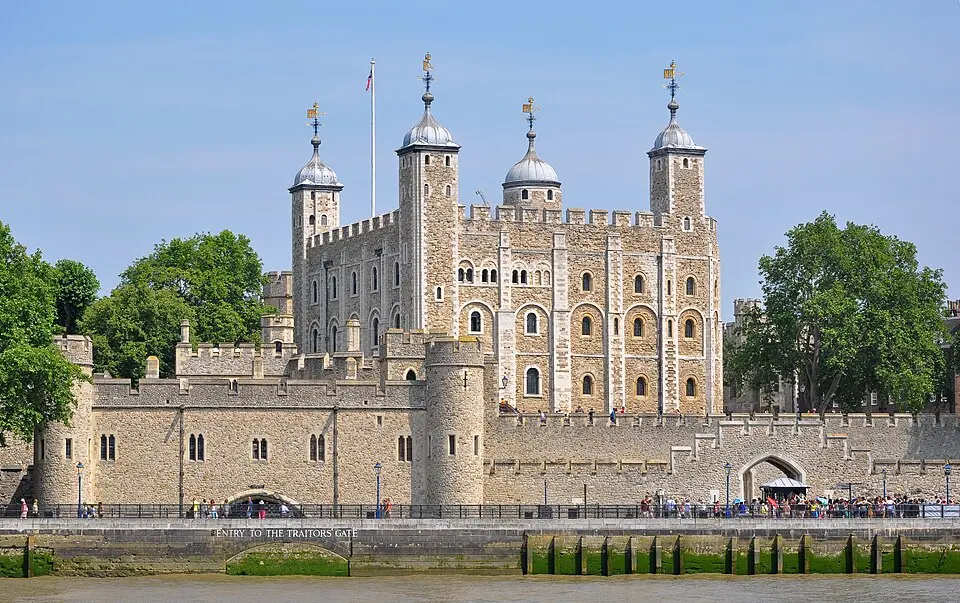
The Tower of London is an imposing fortified complex on the north bank of the Thames, at the southeastern edge of the City of London. Both a royal palace and a fortress, the site belongs to the British Crown and is managed by the organization Historic Royal Palaces. The complex is closely interwoven with the history of England and Great Britain and served a wide range of purposes over the centuries, including royal residence, armory, mint, prison, zoo, and garrison. Since 1988, the Tower has been protected as a UNESCO World Heritage Site, and for more than six centuries it has drawn visitors from around the world who want to explore its rich history.
The fortress dates back to the 11th century, when William the Conqueror, after conquering England in 1066, had a castle built to secure his power over the potentially hostile population of London. The original structure consisted of wooden palisades and earthen ramparts built on a mound beside the Thames. Beginning in 1077, this wooden fortification was replaced by the massive stone White Tower, which still forms the heart of the complex today. Over the centuries, the fortress was continually expanded. Henry III and Edward I in particular were instrumental in shaping its present appearance, strengthening the walls, building new towers, and digging a moat to improve the defensive capabilities of the concentric castle.
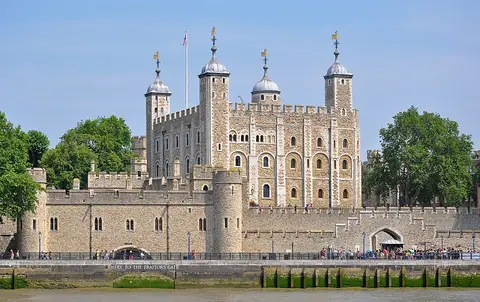
The architecture of the Tower is a fascinating mosaic of different eras. The innermost area, known as Coldharbour, is dominated by the White Tower, an almost square keep of limestone and marlstone whose walls are several yards thick at the base. Surrounded by further walls and towers, the inner ring extends to include buildings such as the Waterloo Barracks and the Church of St Peter ad Vincula. The outer ring protects the complex with additional towers and bastions, some of which date back to the Middle Ages but were also redesigned in the Gothic Revival style in the 19th century. This historicist redesign led to the demolition of many older buildings, which were replaced with new, medieval-looking structures to create a unified appearance.
A central aspect of the Tower's history is its role as a royal residence. Until the 16th century, English kings used the complex as a residence from time to time. Edward I established the tradition of spending the night before the coronation at the Tower, a custom that was maintained for more than three centuries. Over time, however, the Tower was used less and less as a permanent residence, as other palaces such as Windsor Castle and Westminster better met the growing demands of the monarchy. The last king to stay at the Tower voluntarily was Henry VIII, on the occasion of the coronation of his wife Anne Boleyn. After that, monarchs generally stayed at the Tower only for political or security reasons, often as a refuge in times of crisis.
Beyond its residential function, the Tower served for centuries as an important arsenal and weapons depot. The royal Wardrobe, which was responsible for the king's personal belongings, gave rise to the Board of Ordnance, which managed the equipment of the armed forces. During the Hundred Years' War, supplies of arrows and bowstrings, which were vital to the English longbowmen, were stored here. Later, the Tower also served as a depot for firearms and ammunition, which led to conflicts with the city authorities, since storing explosives near the City was considered dangerous. This military use continued into the 20th century, when the Tower was used mainly for training officers and housing troops.
A dark chapter in the Tower's history is its use as a prison and place of execution. From 1101 to 1941, high-ranking prisoners were held here, including kings, nobles, and political opponents. Famous inmates included Richard II, Henry VI, and the "Nine Days' Queen," Lady Jane Grey. Henry VIII had two of his wives, Anne Boleyn and Catherine Howard, executed here. Most executions took place on Tower Hill outside the fortress gates, while a few, such as that of three mutinous soldiers in 1743, took place within the complex. During World War II, German spies were shot here, including Josef Jakobs, the last person executed at the Tower. The walls of the buildings still bear witness to this era today through the many graffiti and carvings left by prisoners.
The Tower also housed a famous menagerie, which existed from 1235 to 1835. The tradition of keeping animals goes back to Henry III, who received three lions as a gift from Emperor Frederick II. Over the centuries, the collection of wild animals grew, and visitors could view them for an admission fee. Besides big cats and bears, the animals included elephants, rhinoceroses, and eagles. In the 19th century, the menagerie enjoyed a brief heyday under the direction of Alfred Cops, before the animals were moved to the London Zoo after it opened. This history underscores the many functions the Tower served over time.
Today, the Tower is above all a museum and tourist destination. Visitors can see the British Crown Jewels, which are on display in the Jewel House, as well as parts of the Royal Armouries collection, which includes an impressive selection of weapons and armor from different eras. The headquarters and museum of the Royal Regiment of Fusiliers are also part of the complex. The Yeoman Warders, also known as Beefeaters, still live and work at the Tower and lead visitor groups through the fortress. They add to the lively atmosphere and tell the story of the place.
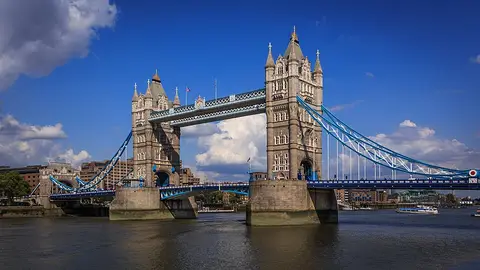
The area around the Tower has changed greatly over time. While the fortress once dominated the cityscape, numerous office towers were built nearby in the 20th century and can visually overshadow it. Tower Bridge, southeast of the fortress, is a striking landmark of the city. Despite the heavy traffic nearby, the open spaces of Tower Hill and the banks of the Thames still offer quiet moments in which you can take in the historical significance of the place at your leisure. Access to the Tower is excellent, with Tube stations, bus connections, and boat piers nearby.
The Tower of London is far more than just a historic fortress. It is a living monument to British history, reflecting the power, conflicts, and cultural developments of the country. From the Norman Conquest to the modern era, the Tower has played a central role and shown many faces along the way. For visitors, it offers the chance to step back into the past and experience the stories of kings, prisoners, and guards. The combination of military history, royal splendor, and gloomy prison cells makes the Tower one of the most fascinating places in London, linking its visitors to the history of England through a deep connection.
At a glance
- Category
- Museum › Museums (general)
- Rating
- no reviews yet · write a review
- Address
- Tower Hill
EC3N 4AB London, United Kingdom - District
- London Borough of Tower Hamlets
- Phone
- —
- Website
- hrp.org.uk
- —
- Coordinates
- 51.50776° N · -0.07761° E
- Data quality
- confidence 0.77
- Identifier
- ID eb1dd9aa-362…
Location & surroundings
Toggle layersRatings & comments
none yetNear The Tower’s Mint
closest 5 per category · 2 kmRestaurants
Museums
Hotels
More:Museums in London Borough of Tower Hamlets (47)All museums in London (825)
300 places within 2 km loaded.
You need a free account to leave reviews and photos – that keeps comments genuine and lets you edit them later.