About Shepherd Gate Clock
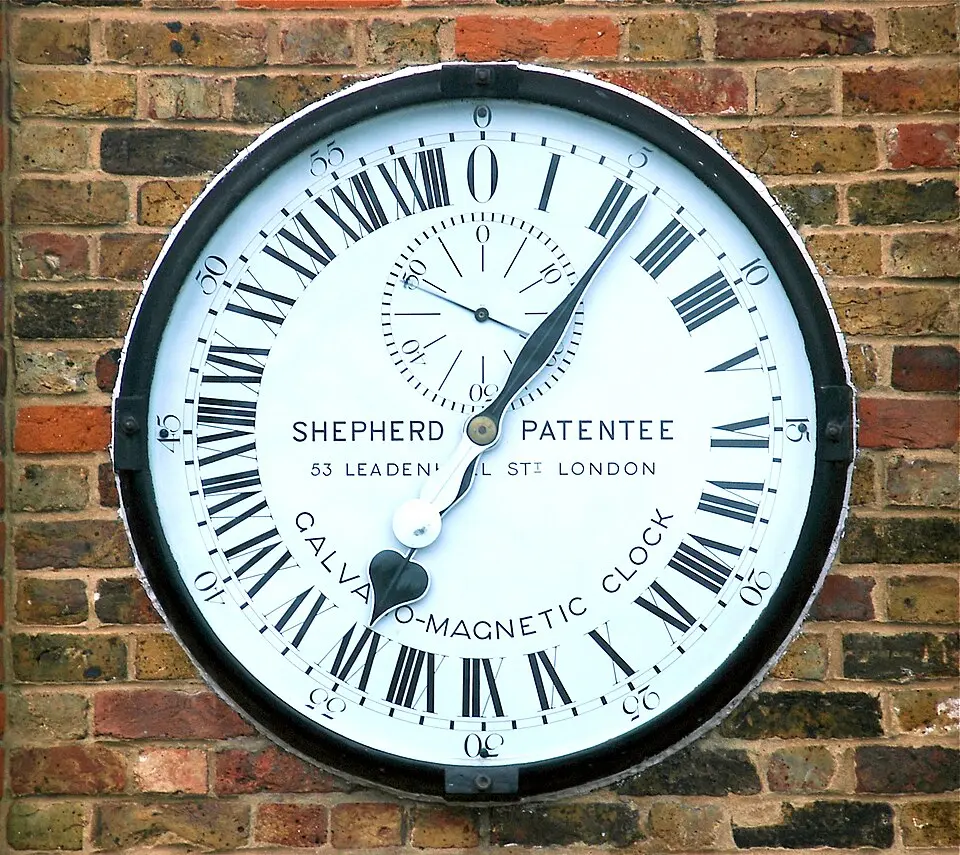
The Shepherd Gate Clock is a historic timepiece built into the right-hand gatepost of the entrance portal of the Royal Observatory Greenwich in London. It is considered an early example of a public electric clock and was originally designed as a so-called slave clock, controlled by a central master clock. Unlike conventional clocks, it had no timekeeping components of its own, such as a pendulum. The dial faces outward and shows an unusual 24-hour format, which was common in observatories. On the inside, behind a glass panel, you can see the mechanism that drives the hands. The clock was designed and installed in 1852 by the English chronometer maker Charles Shepherd Jr.
The project was initiated by the Astronomer Royal, Sir George Biddell Airy, who wanted to establish a uniform time service across the country in order to overcome the discrepancies between local times. The electric clock system consisted of a master clock, three slave clocks inside the building, and the Gate Clock at the entrance. This clock made Greenwich Mean Time available to the public for the first time. The impulses generated by the master clock were transmitted via telegraph cables to railway stations and other locations in England to ensure punctuality in business and shipping. The system also controlled the famous time ball, which allowed ships on the Thames to check their chronometers.
Today, the Shepherd Gate Clock is no longer operated by the original system but by a modern impulse generator. The historic dial had to be replaced during World War II because of war damage. You can see the Gate Clock as part of a visit to the observatory and gain insight into the history of timekeeping. The original master clock and the other slave clocks are on display in the observatory's clock exhibition and document the technical development of electric time signals in the 19th century.
At a glance
- Category
- Sight › Historic sites
- Rating
- no reviews yet · write a review
- Address
SE10 9NE London, United Kingdom- District
- Royal Borough of Greenwich
- Phone
- —
- Website
- —
- —
- Coordinates
- 51.47793° N · -0.00128° E
- Data quality
- confidence 0.85
- Identifier
- ID 90ee5d6a-ed2…
Location & surroundings
Toggle layersFAQ about Shepherd Gate Clock
quick answersWhat is the Shepherd Gate Clock in London?
The Shepherd Gate Clock is a historic electric clock set into the right-hand gatepost of the entrance gate of the Royal Greenwich Observatory in the Royal Borough of Greenwich, London. English chronometer maker Charles Shepherd Jr. designed and installed it in 1852. It is considered an early example of a public electric clock and worked as a slave clock, controlled by a central master clock rather than a pendulum of its own.
Why does the Shepherd Gate Clock in Greenwich have a 24-hour dial?
The Shepherd Gate Clock at the Royal Greenwich Observatory in London shows the time in the 24-hour format because that format was standard in observatories. The dial faces the outside of the gate. On the inside, you can see the mechanism that drives the hands behind a glass panel.
What was the significance of the Shepherd Gate Clock for Greenwich Mean Time?
The Shepherd Gate Clock at the Royal Greenwich Observatory in London made Greenwich Mean Time visible to the public for the first time. The impetus came from the Astronomer Royal, Sir George Biddell Airy, who wanted to overcome the discrepancies between local times with a single time standard across the country. The system consisted of a master clock, three slave clocks in the building, and the Gate Clock; the master clock's impulses were sent via telegraph cables to railway stations and other locations in England. It also controlled the time ball, which ships on the Thames used to check their chronometers.
Is the Shepherd Gate Clock in Greenwich still in its original condition?
Not entirely: Today, the Shepherd Gate Clock at the Royal Greenwich Observatory in London is run by a modern impulse generator rather than the original system. The historic dial had to be replaced because of damage sustained in World War II. You can see the original master clock and the other slave clocks in the observatory's clock exhibition, which documents the development of electric time signals in the 19th century.
What can you see around the Shepherd Gate Clock in London?
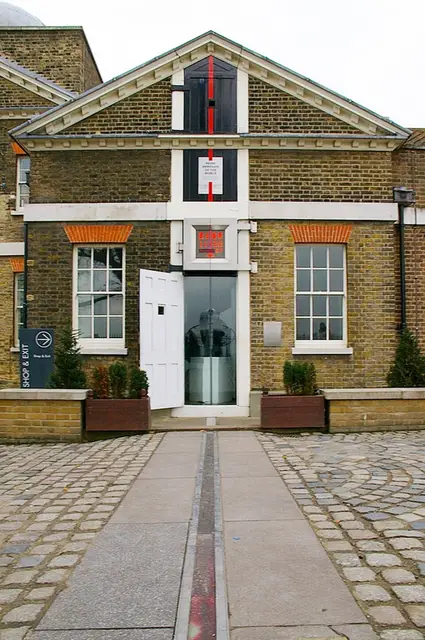
Around the Shepherd Gate Clock in the Royal Borough of Greenwich, London, you'll find several sites related to the history of timekeeping and astronomy. travelguide195 lists, within just a few yards, the Prime Meridian (about 40 ft), Bradley's Meridian Line (about 43 ft), the Royal Museums Greenwich (about 46 ft), and the Great Equatorial Telescope (about 52 ft), among others. Within a 500-meter radius, travelguide195 also lists about 8 restaurants.
Ratings & comments
none yetNear Shepherd Gate Clock
closest 5 per category · 2 kmSights
Restaurants
Museums
Hotels
More:Historic sites in London (3,142)Sights in Royal Borough of Greenwich (95)All sights in London (3,487)
205 places within 2 km loaded.



You need a free account to leave reviews and photos – that keeps comments genuine and lets you edit them later.