About Prime Meridian
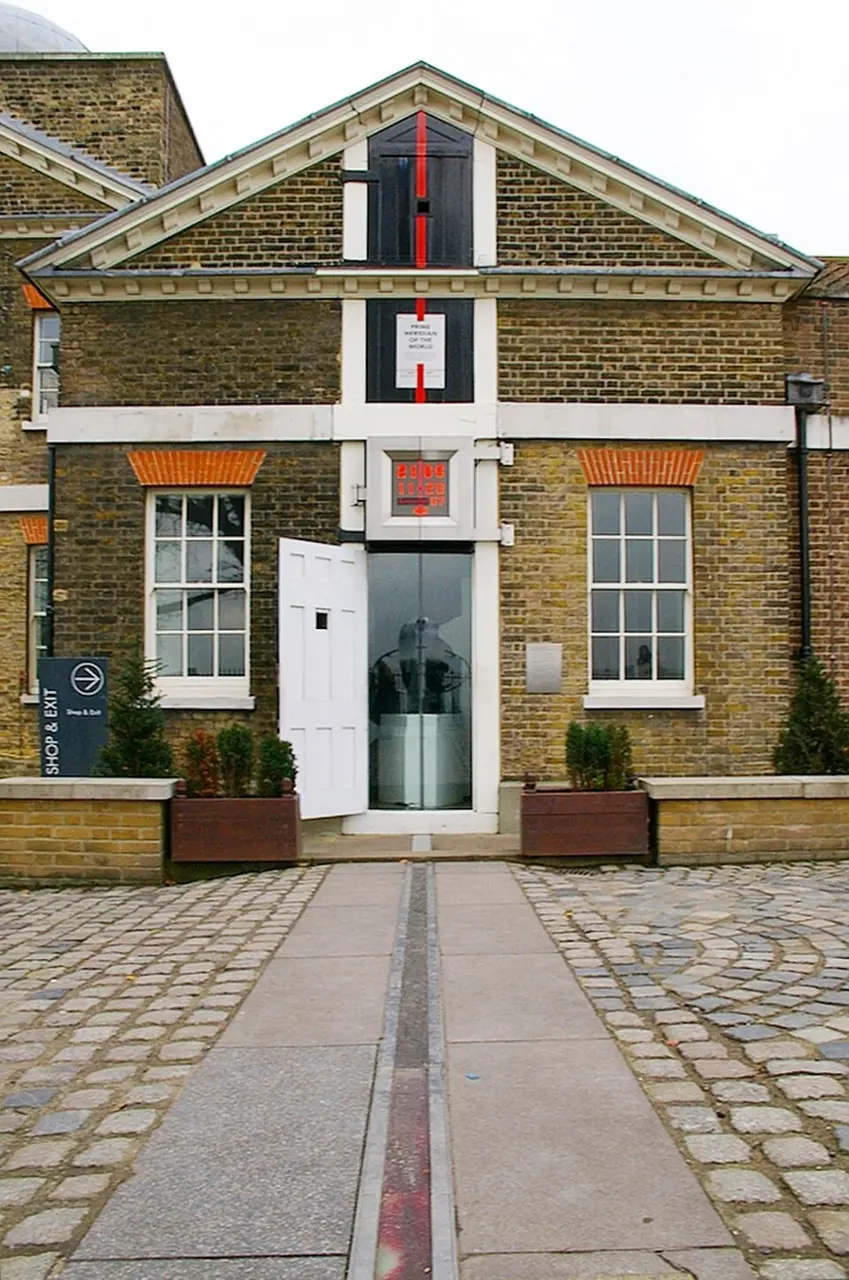
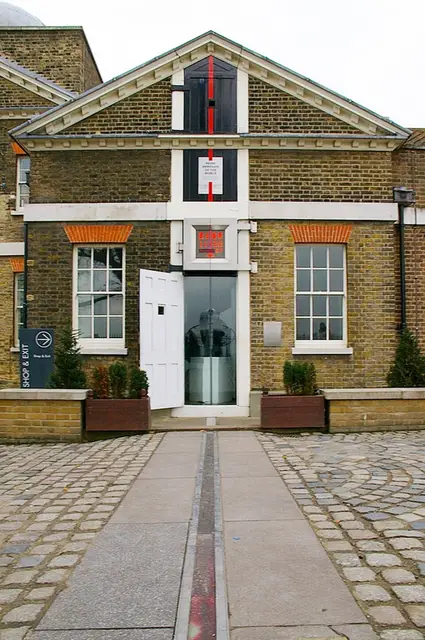
The Prime Meridian in Greenwich, London, is far more than a mere geographic line on a map. It is the historic reference line that divides the world into the Eastern and Western Hemispheres and has formed the basis for international timekeeping and navigation since the 19th century. The line runs through the courtyard of the Royal Observatory in Greenwich, one of the world's most important astronomical institutions. Originally established by Sir George Airy in 1851, the meridian was declared the worldwide standard in 1884 at an international conference in Washington, D.C. This decision, attended by representatives from 25 nations, standardized the measurement of longitude and laid the foundation for today's global time zones.
Today, visitors can explore this historic site as part of the Royal Observatory. In the observatory's courtyard, a stainless steel strip marks the exact course of the Prime Meridian. The line is a popular photo spot, since it lets you symbolically stand with one foot on one side of the world and the other foot on the other. Since 1999, the landmark has also been highlighted by a green laser beam projected into the sky over London at night, making the invisible line visible to onlookers. The observatory itself offers insights into the history of astronomy and the development of timekeeping, and the instruments once used to determine longitude can still be seen today.
Interesting details emerge when you take a closer look at geodesy. Modern satellite navigation systems such as GPS show that the physical marker in Greenwich does not lie exactly on the geodetic Prime Meridian but runs about 102 meters (about 335 feet) to the west of it. This difference does not result from an error in the historic definition but from the complex physics of the Earth. Because the Earth is not a perfect sphere but an ellipsoid, the local vertical, which is determined by gravity, deviates slightly from the mathematical normal pointing to the Earth's center. The historic meridian follows local gravity, while the modern geodetic system is based on the Earth's axis of rotation. This scientific nuance explains why the astronomical and geodetic definitions of the Prime Meridian differ slightly, without diminishing the historic significance of the site.
The Prime Meridian stretches from the North Pole to Antarctica, crossing eight countries in Europe and Africa, including the United Kingdom, France, Spain, Algeria, Mali, Burkina Faso, Togo, and Ghana. Although the modern international reference line, the IERS Reference Meridian, has been officially in use since 1984 and differs slightly from the Greenwich Meridian, the site in London remains the cultural and historic symbol of the starting point of all longitudes. For travelers, a visit to Greenwich is a fascinating blend of science, history, and global orientation that illustrates the complex way humanity has determined its position in the universe.
At a glance
- Category
- Sight › Historic sites
- Rating
- no reviews yet · write a review
- Address
- Royal Observatory, Blackheath Ave
SE10 8XJ London, United Kingdom - District
- Royal Borough of Greenwich
- Phone
- +442083126608
- Website
- www.greenwich-guide.org.uk
- —
- Coordinates
- 51.47791° N · -0.00145° E
- Data quality
- confidence 0.91
- Identifier
- ID 02caabc7-adb…
Location & surroundings
Toggle layersRatings & comments
none yetNear Prime Meridian
closest 5 per category · 2 kmSights
Restaurants
Museums
Hotels
More:Historic sites in London (3,142)Sights in Royal Borough of Greenwich (95)All sights in London (3,487)
205 places within 2 km loaded.
You need a free account to leave reviews and photos – that keeps comments genuine and lets you edit them later.