About London Bridge
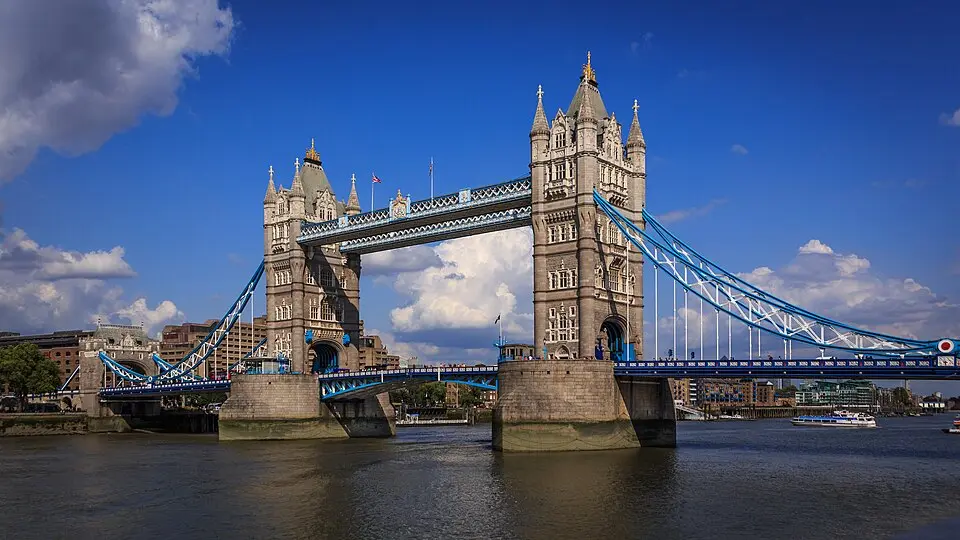
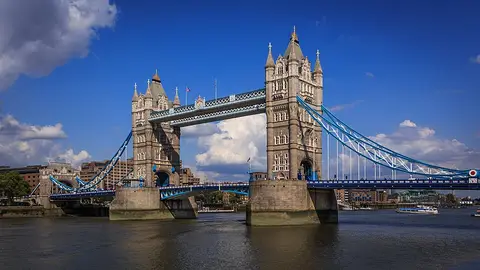
Tower Bridge is one of London's best-known landmarks, linking the districts of Tower Hamlets and Southwark across the River Thames. Although it is often confused with London Bridge, it is a separate structure in the Gothic Revival style that opened in 1894. The bridge consists of two striking towers that rise 65 meters (213 feet) high and are connected by two high-level pedestrian walkways. These walkways sit 43 meters (141 feet) above the water and allow visitors to cross the river even when the roadway is raised for ship traffic. The structure combines a suspension bridge and a bascule bridge, and the movable sections of the roadway can be lifted up to 86 degrees to allow large ships to pass.
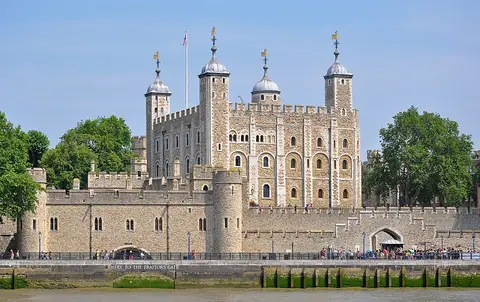
For visitors, Tower Bridge offers a one-of-a-kind experience, as it serves not only as a thoroughfare but is also open as a museum and viewing point. Inside the towers and along the upper walkways, you can see the historic steam engines that originally powered the hydraulic system. A bridge museum documents the construction and history of the structure with pictures and models. Since 2014, there has also been a section with a glass floor, where you can look down 42 meters (138 feet) to the water below. The metal parts of the bridge are painted in the British national colors of red, white, and blue, giving it its distinctive look. Hundreds of thousands of people visit the bridge every year to enjoy the views of the Thames and nearby landmarks such as the Tower of London and City Hall.
The history of Tower Bridge is closely tied to the traffic problems of the late 19th century. Because growing ship traffic ruled out building a fixed bridge, a bascule bridge was designed to keep the docks accessible. Horace Jones's design was approved in 1884, and construction began in 1886. After the architect's death, John Wolfe-Barry took over the project until the bridge was opened in 1894 by the future King Edward VII. Over the decades, the use of the bridge has changed. While the pedestrian walkways were closed for a time, they were reopened to the public in 1982. Today the bridge is raised only rarely, since ship traffic in the city is now mostly tourist-oriented and most boats can pass beneath the closed roadway.
Despite its historical significance, Tower Bridge remains an active part of London's road network. It is part of the inner ring road and is crossed by thousands of vehicles every day, with a speed limit in place to protect the fabric of the structure. On special occasions, such as ceremonial events or the passage of large cruise ships, the bridge is fully opened. These moments are considered special events, as they offer a glimpse of how the bascules work. Tower Bridge thus remains a fascinating testament to 19th-century engineering and a central symbol of London, combining history and modernity in an impressive way.
At a glance
- Category
- Sight › Historic sites
- Rating
- no reviews yet · write a review
- Address
- London Tower Bridge
London, United Kingdom - District
- London Borough of Tower Hamlets
- Phone
- —
- Website
- www.towerbridge.org.uk
- enquiries@towerbridge.org.uk
- Coordinates
- 51.50593° N · -0.07503° E
- Data quality
- confidence 0.89
- Identifier
- ID 20e39eec-5c8…
Location & surroundings
Toggle layersRatings & comments
none yetNear London Bridge
closest 5 per category · 2 kmRestaurants
Museums
Hotels
More:Historic sites in London (3,142)Sights in London Borough of Tower Hamlets (234)All sights in London (3,487)
300 places within 2 km loaded.
You need a free account to leave reviews and photos – that keeps comments genuine and lets you edit them later.