Discover Zurich: Old Town, Lake and Langstrasse
Travel guide · editorialIn summer, bankers in Zurich jump into the Limmat River on their lunch break, let the current carry them along for a stretch, and then climb back out. Switzerland's largest city is wealthier, but also more relaxed, than its reputation suggests, and a city break in Zurich combines a medieval old town with world-class art, lakeside swimming spots, and a surprisingly lively nightlife.
Reformation and Revolutionaries
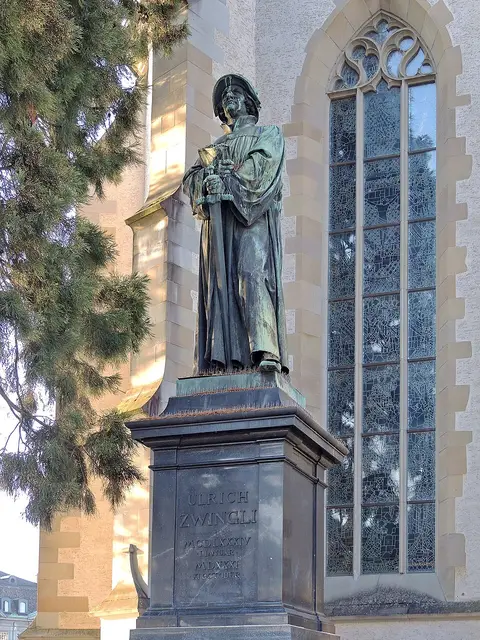
Even in Roman times, Zurich was a customs station, with the fort located on what is now the Lindenhof. In the 16th century, Huldrych Zwingli preached at the Grossmünster and turned the city into a center of the Reformation. Later, Zurich attracted refugees and free thinkers: Lenin lived on Spiegelgasse, and in 1916 artists founded the Dada movement at the Cabaret Voltaire, just a few houses away. In the 19th century, the city grew with banks, insurance companies, and industry, and today it is the country's economic center.
Sights in Zurich
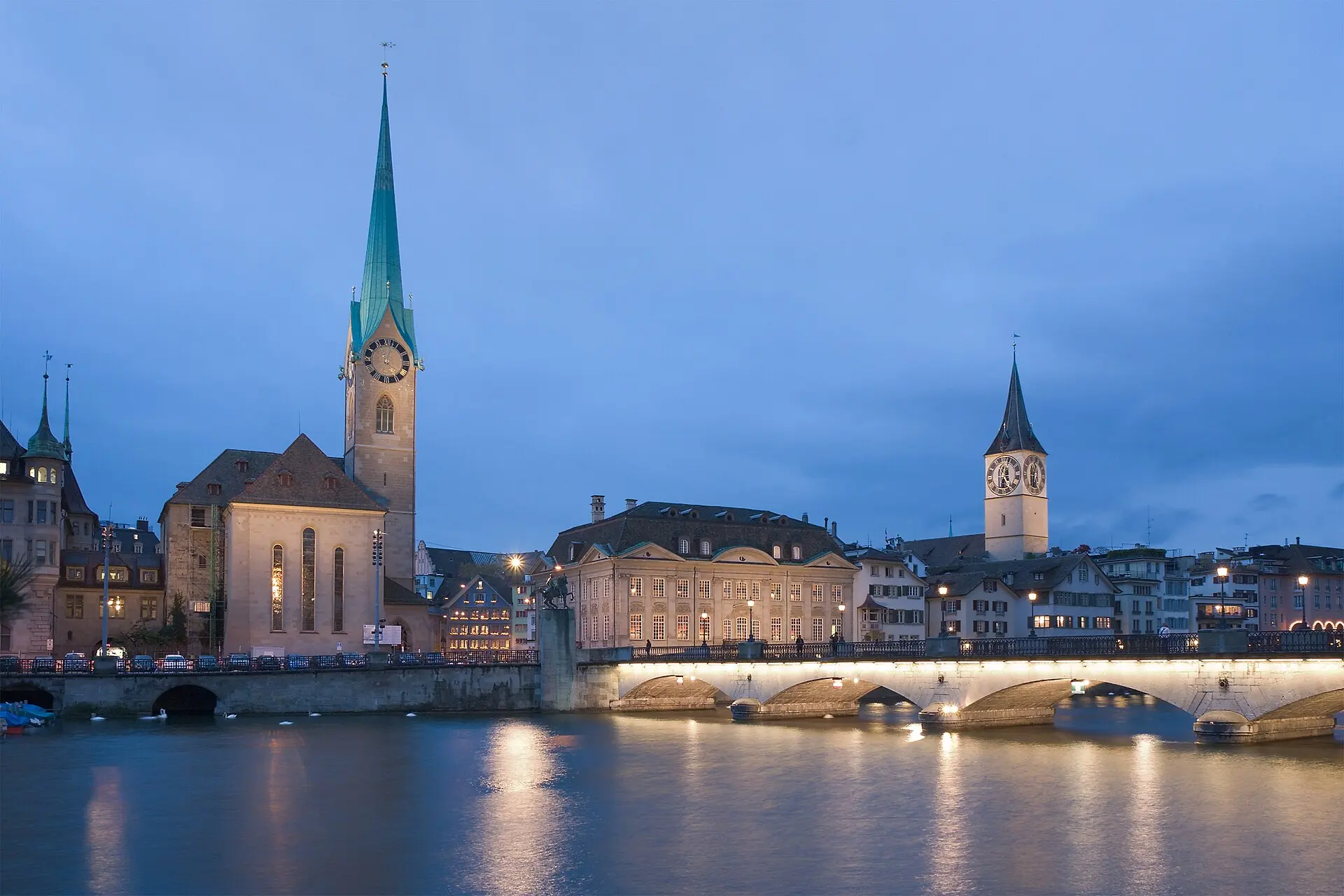
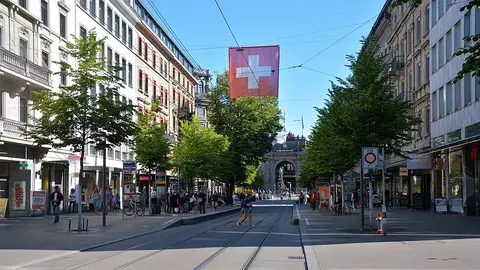
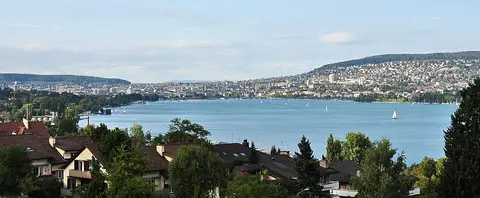
The twin towers of the Grossmünster define the skyline, and if you climb the steps of one tower, you'll look out over the old town, the Limmat, and the lake all the way to the Alps. Across the river are the Fraumünster, with its choir windows by Marc Chagall, and St. Peter's Church, home to the largest church clock face in Europe. The Lindenhof, a quiet square above the Limmat, offers the classic view of the old town. The Kunsthaus Zurich, expanded in 2021 with a new building by David Chipperfield, shows works by Munch, Giacometti, and the Impressionists, while the Swiss National Museum next to the main train station presents Swiss history in a fairy-tale castle. Bahnhofstrasse is one of the most expensive shopping streets in the world.
Neighborhoods: From the Old Town to Kreis 4
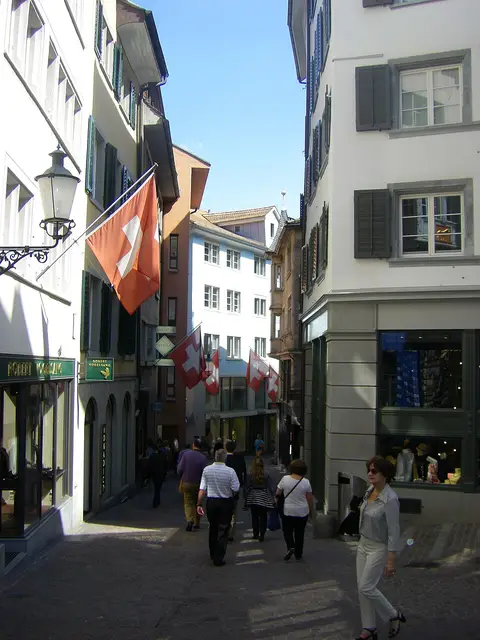
The old town and Niederdorf on the right bank of the Limmat are full of lanes lined with guild halls, antiquarian bookshops, and wine taverns. Kreis 4 around Langstrasse was once the red-light and working-class district and is now a colorful mix of bars, clubs, and international snack stands. In Kreis 5, the former industrial quarter of Zurich-West, old factories have been turned into cultural centers and restaurants, along with the shops under the arches of the viaduct; the Prime Tower and the Freitag Tower made of shipping containers are landmarks of the transformation. Kreise 7 and 8, on the Zürichberg and by the lake, are quieter.
Swimming Spots and Food
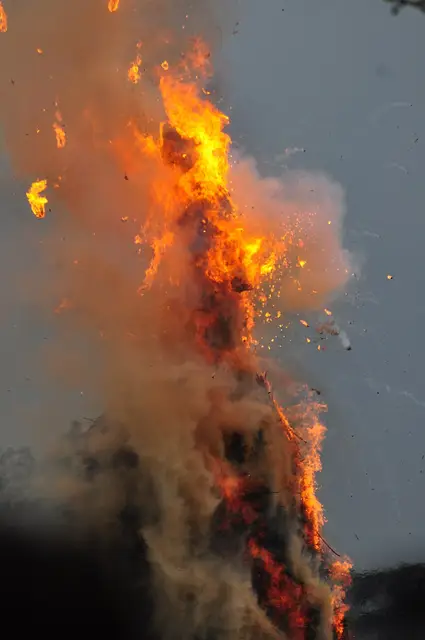
In summer, life belongs to the water: at wooden bathing facilities such as the Frauenbad on the Limmat, the Seebad Utoquai, or the Flussbad Oberer Letten river bath, you can swim and sunbathe right in the middle of the city, and some turn into bars in the evening. Zurich cuisine includes Zürcher Geschnetzeltes (sliced veal in cream sauce) with rösti; to go with it, try Luxemburgerli, small macarons from a long-established confectioner. In April, Sechseläuten drives out the winter, when the head of a snowman figure, the Böögg, explodes atop a bonfire.
Getting There and Best Time to Visit
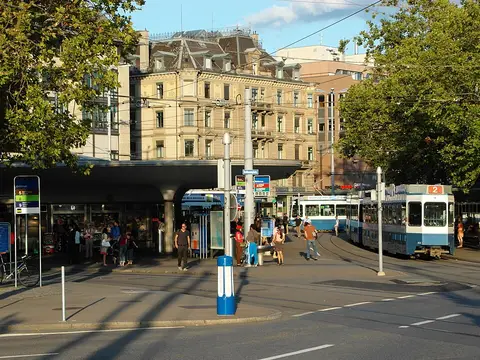
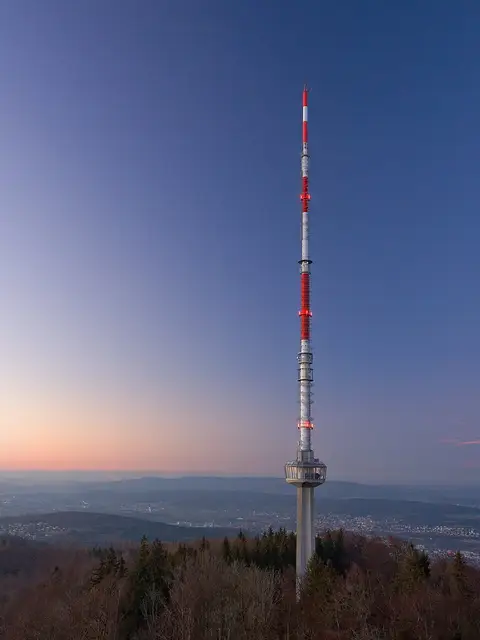
From Zurich Airport, the S-Bahn takes a good ten minutes to reach the main train station, and trams and boats connect the city. Excursions lead up the Uetliberg, the local mountain reached by train, or by boat across the lake to Rapperswil. The best time to visit is from May to September; in August, hundreds of thousands of people dance at the Street Parade.