St. Gallen: Abbey Library, Lake Constance, and the Churfirsten
Travel guide · editorialThe canton of St. Gallen wraps around the Appenzellerland like a ring, stretching from Lake Constance across the Rhine Valley to Lake Zurich and Lake Walen. A vacation in St. Gallen combines one of the world's most famous libraries with lakeshores, thermal baths, and the jagged limestone peaks of the Churfirsten.
A Landscape Between Three Lakes
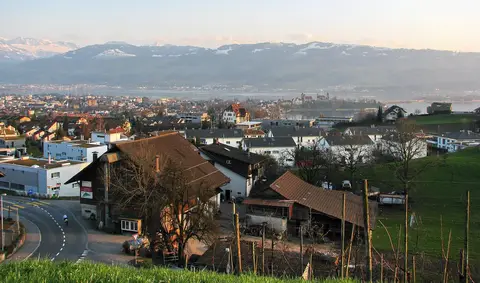
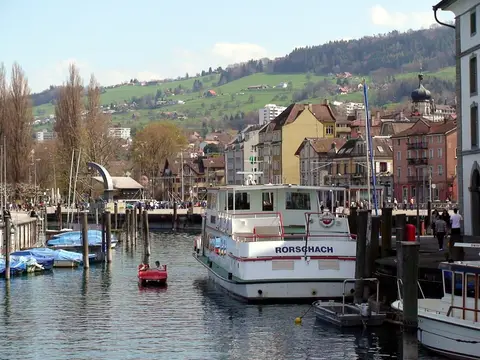
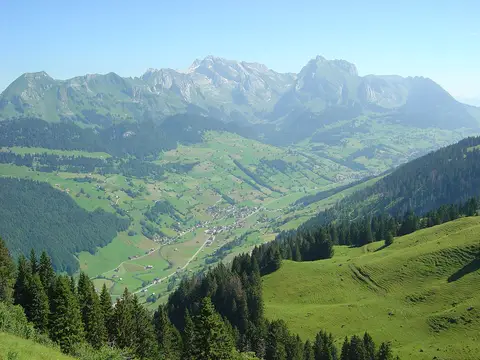
To the north, the canton borders Lake Constance, where Rorschach and its granary stand right on the shore. The St. Gallen Rhine Valley around Altstätten forms the border with Vorarlberg and is known for its Ribelmais corn. In the south, the Churfirsten rise steeply above Lake Walen, with the Toggenburg and the Säntis massif behind them, and the Sarganserland with the Pizol. At the far western end, the canton reaches Lake Zurich at Rapperswil-Jona, connected to Hurden by a wooden footbridge.
Towns and Villages
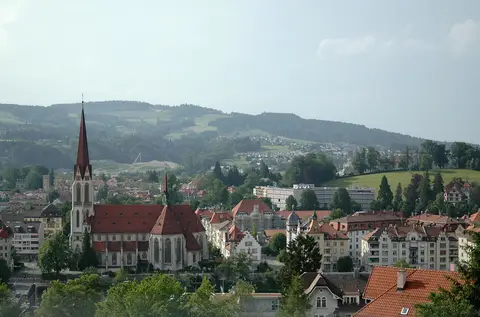
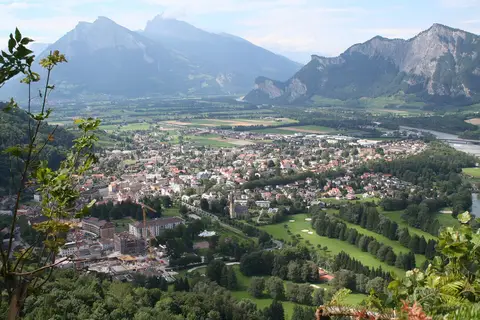
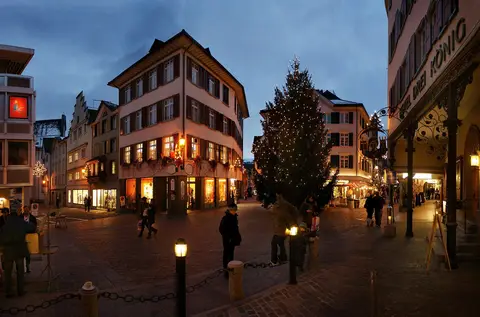
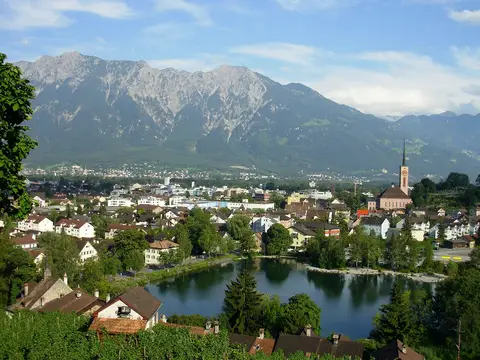
St. Gallen grew up around a hermitage founded by the Irish monk Gallus in the 7th century. Later, the textile industry made the city rich: St. Gallen lace and embroidery were exported all over the world, and the oriel windows on the townhouses of the old town recall this prosperity. The Textile Museum tells the story. Rapperswil-Jona, the "Rose Town," has a castle above the lake and rose gardens with thousands of varieties. Wil has a well-preserved old town on a hill, and Gossau is an industrial and transport hub. In the south, Bad Ragaz is a long-established spa town whose thermal water comes from the Tamina Gorge.
The Toggenburg draws visitors with Wildhaus, the birthplace of the reformer Zwingli, and with the Klangweg (Sound Trail) between Alp Sellamatt and Oberdorf, which features sound installations along the way. On Lake Walen you'll find Walenstadt and Quinten, a village with no road access that can only be reached by boat or on foot and, thanks to its mild climate, produces wine and figs.
Sights in St. Gallen
The Abbey District of St. Gallen is a UNESCO World Heritage Site. The Baroque cathedral and the Abbey Library, with its magnificent Rococo hall where visitors wear felt slippers, preserve manuscripts spanning more than 1,000 years, including the Plan of St. Gall. Other sights in St. Gallen include the "Stadtlounge," a red carpet in the Bleicheli quarter, and the Drei Weieren (Three Ponds) above the city, where people swim in summer. In the region, the Tamina Gorge, the cable car up the Chäserrugg with a summit building by Herzog & de Meuron, and the boat trip on Lake Walen to the Seerenbach Falls are all worthwhile.
Food and Drink
The St. Gallen veal bratwurst is considered Switzerland's most famous sausage and is traditionally eaten without mustard, with a Bürli (bread roll) on the side. It is everywhere at the Olma, the big agricultural fair held in October. Cheese is made in the Toggenburg, Riesling-Silvaner and Pinot Noir grapes are grown in the Rhine Valley, and Ribelmais is turned into Ribel, a dish of toasted cornmeal.
Getting There and Best Time to Visit
St. Gallen lies on the Zurich–Lake Constance rail line and is reachable from Zurich in just over an hour. The regional St. Gallen-Altenrhein Airport offers only a few connections, so most visitors arrive via Zurich. The best time to visit is from May to October; in winter, the ski areas in the Toggenburg and at Flumserberg are the main draw.