About Portico de la Gloria
The Pórtico da Gloria, or Portico of Glory, forms the imposing main portal of the Cathedral of Santiago de Compostela. This Romanesque masterpiece was created by the sculptor Maestro Mateo and his workshop, commissioned by King Ferdinand II of León. Work on this monumental entrance began in 1168, and the king promised the artist an annual payment of one hundred maravedís for a period of two decades. The completion of the central part was celebrated in 1188, a date that was carved into a stone in the cathedral as well as onto the lintel above the richly decorated tympanum to commemorate its conclusion. Although the main part of the portico was finished by then, the complete execution of the three-part ensemble lasted until 1211, when the cathedral was consecrated in the presence of King Alfonso IX of León.
The portal was originally conceived as a four-part design but was converted into a three-part format, which changed the proportions of the entire ensemble. The portico consists of an inner, double-vaulted narthex and an outer western facade. The lateral spandrels were left undecorated, possibly because of the time pressure to finish the gateway in time for the Holy Year of 1182 and the solemn procession of pilgrims. Today the purely Romanesque structure has been slightly altered and is enclosed by a Baroque facade. Before this facade was built, the portico was visible from afar and drew pilgrims up a large staircase to come closer. Without doors, the three large arches, adorned with angels and foliage, framed the view of the ciborium and the altar at the eastern end of the nave.
The architecture of the portico was strongly influenced by the spatial constraints. Because the width was limited by the western edge of the towers, Maestro Mateo designed the work upward and toward greater height. He used an abundance of carved reliefs and three round arches, which correspond to the three aisles of the church and are supported by massive piers with pilasters. The artist's style is unique, combining local traditions, such as those found at the Puerta de las Platerías in Oviedo, with French influences. The iconography and composition show similarities to the cloister of the Abbey of Santo Domingo de Silos. Archbishop Pedro II, a friend of French culture, was an important influence on the design, which is reflected in the expressive yet simple monsters beneath the column bases and in the rough-hewn human figures.
An architectural novelty is the large rib vault, considered the first of its kind in Spain, which combines Cistercian and proto-Gothic structures from France. The portico is more than just an entrance; it functions as a highly symbolic narrative that links the individual pilgrim's experience with universal and eternal meanings. The pilgrimage to Compostela is presented here as an imitation of the life of Christ and as a microcosm of redemption. Through the reenactment of sacred events, the individual pilgrimage attains a transcendent quality. The central arch opening, twice as wide as the two side ones, symbolizes the ultimate goal of true Christians: glory and resurrection.
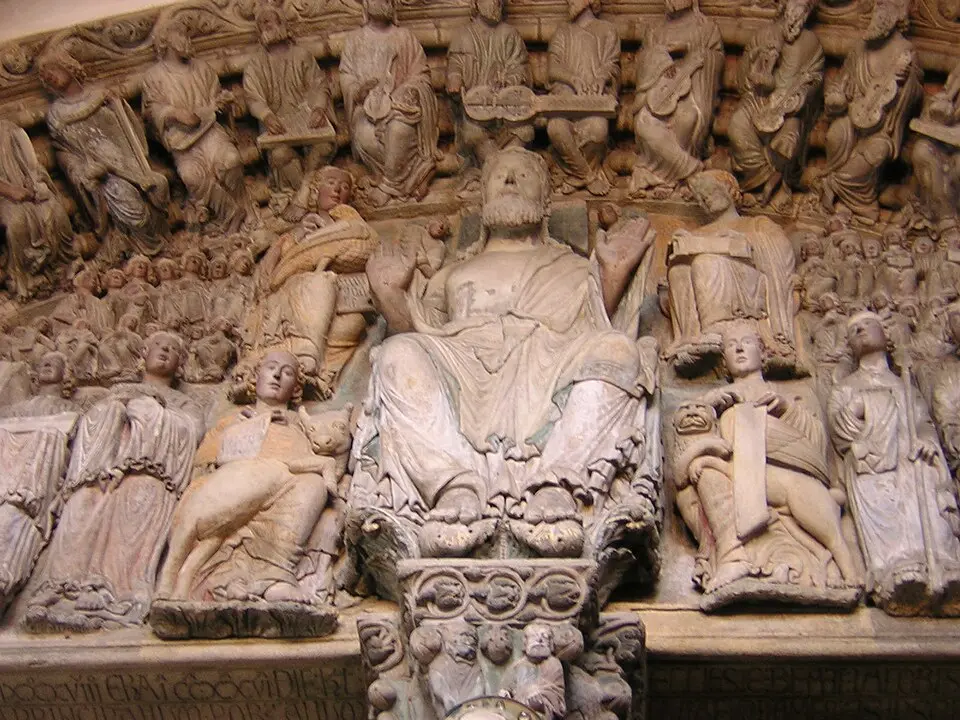
The central tympanum is the heart of the composition and is based on John the Evangelist's description of Christ in the Book of Revelation. In the center sits the Pantocrator, Christ as Judge of the World, at a height of almost four meters (about 13 feet). In his palms and feet he shows the wounds of the Crucifixion. He is surrounded by the four Evangelists, depicted as the Tetramorph with their symbolic creatures: John with the eagle, Luke with the ox, Mark with the lion, and Matthew, who writes on a scroll. Eight angels stand at the base of the tympanum holding the instruments of the Passion, such as the crown of thorns, the nails, the spear, and the reed with the sponge.
Between the angels and the edges of the tympanum, thirty-eight small figures fill the space, interpreted as citizens of the holy city or as the countless souls singing a new song. They are tightly packed; some are praying, others hold scrolls or books and look up at Jesus. At the outermost ends of the tympanum are archangels holding the symbols of the Passion and leading nude figures, representing human souls, to Christ. These nude figures symbolize the Gentiles on Christ's right and the Jews on his left. This arrangement illustrates the prophecy of Isaiah that the barren woman will have more children than the married one.
The central arch zone is supported by a massive composite column, the so-called trumeau, since the lintel of the wide portal requires additional support. On this column sits Saint James, the patron saint of the basilica. In one hand he holds a pilgrim's staff and in the other a scroll inscribed "Misit me Dominus," meaning that the Lord has sent him. His nimbus is set with crystals, which suggests a later addition. Two lions support the legs of his chair. Above his head is a capital depicting the temptations of Christ, while at the base the Holy Trinity and the Tree of Jesse can be seen, an early depiction of the genealogy of Christ on the Iberian Peninsula.
At the foot of the central column, facing the high altar, kneels a secular figure of a young man with curly hair who is said to represent Maestro Mateo himself. He holds a shield bearing the word "Architectus" and an inscription dating the completion of the portal. This figure is known as the "Santo dos croques." There is a tradition that pilgrims and students rub their foreheads against the master's forehead to gain wisdom, a practice that is increasingly restricted because of the wear on the work. The columns of the side doors carry figures of apostles and prophets, adorned with their symbolic attributes and elaborately carved capitals with animals and human heads.
The left, northern door shows scenes from the Old Testament in which the righteous await the coming of the Redeemer. In the center of the lower spandrel, God the Creator blesses the pilgrims and holds the book of eternal truth. Around him are figures such as Adam, Abraham, Jacob, Noah, Moses, and King David. The right, southern door depicts the Last Judgment. On the right side, Hell is shown with demons tormenting the souls of the damned, while on the left side Heaven is shown with the elect and angels. Four angels blow trumpets to announce the Last Judgment.
The four piers of the portico rest on sturdy bases decorated with groups of various animals, including eagles, bears, lions, and indeterminate creatures, as well as three bearded human heads. These grotesque figures symbolize the burden of glory crushing sin, or are interpreted apocalyptically as war, famine, and death, which can only be overcome by human intelligence. The Portico of Glory is considered the artistic high point of the cathedral and is often regarded as the greatest work of Spanish Romanesque sculpture. Maestro Mateo's figures are seen as the first manifestations of the Gothic spirit in European sculpture, characterized by a material, lifelike depiction and a sculptural emphasis on the folds of the garments.
At a glance
- Category
- Sight › Monuments
- Rating
- no reviews yet · write a review
- Address
- Praza do Obradoiro
15782 Santiago, Spain - District
- Santiago de Compostela
- Phone
- —
- Website
- www.santiagoturismo.com
- —
- Coordinates
- 42.88048° N · -8.54562° E
- Data quality
- confidence 0.94
- Identifier
- ID bbf54880-398…
Location & surroundings
Toggle layersFAQ about Portico de la Gloria
quick answersWhat is the Pórtico da Gloria in Santiago de Compostela?
The Pórtico da Gloria, German for "Portico of Glory," is the Romanesque main portal of the Cathedral of Santiago de Compostela on the Praza do Obradoiro. It was created by the sculptor Maestro Mateo and his workshop on commission from King Ferdinand II of León. The portico consists of an inner, double-vaulted narthex and an outer west façade, and today it is enclosed by a Baroque façade.
When was the Pórtico da Gloria in Santiago de Compostela built?
Work on the Pórtico da Gloria of the Cathedral of Santiago de Compostela began in 1168, and the central part was completed in 1188. This date is carved into the lintel above the tympanum and on a stone inside the cathedral. The full decoration of the three-part ensemble lasted until 1211, when the cathedral was consecrated in the presence of King Alfonso IX of León. King Ferdinand II had promised Maestro Mateo an annual payment of one hundred maravedís for two decades.
What is architecturally special about the Pórtico da Gloria in Santiago de Compostela?
The Pórtico da Gloria in Santiago de Compostela has a large ribbed vault, considered the first of its kind in Spain, which combines Cistercian and proto-Gothic structures from France. Because the width was limited by the towers, Maestro Mateo designed the work to rise upward, with three round arches corresponding to the three naves of the church. The style blends local traditions, as seen at the Puerta de las Platerías in Oviedo, with French influences; beneath the column bases you'll find expressive monster figures.
What can you see around the Pórtico da Gloria in Santiago de Compostela?
Around the Pórtico da Gloria in Santiago de Compostela, several sights lie just a few dozen meters away. travelguide195 lists, among others, the roof of the cathedral (Tejado de la Catedral de Santiago, about 23 m), the Pazo Xelmírez (about 40 m), the Palacio de Raxoi (about 41 m), and the Museo Catedral de Santiago (about 50 m).
Are there restaurants and tours near the Pórtico da Gloria in Santiago de Compostela?
Yes, you'll find a wide range of places to eat around the Pórtico da Gloria in Santiago de Compostela. travelguide195 lists about 169 restaurants within 500 meters. The portico is also part of the tour "Santiago de Compostela in One Day: Cathedral, Old Town and Bonaval."
Ratings & comments
none yetNear Portico de la Gloria
closest 5 per category · 2 kmSights
Restaurants
Museums
Hotels
More:Sights in Santiago de Compostela (54)All sights in Santiago (89)
207 places within 2 km loaded.
Don't miss in Santiago
All sights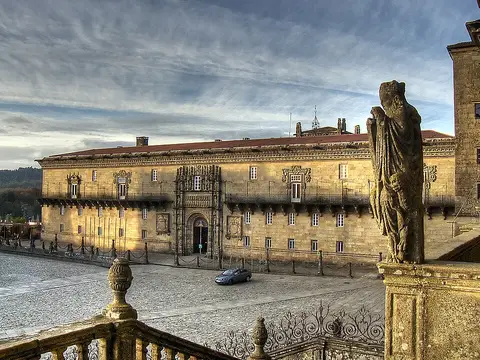 Monuments01
Hospital de los Reyes Católicos
Plaza Do Obradoiro, 1 · Santiago● Website● Phone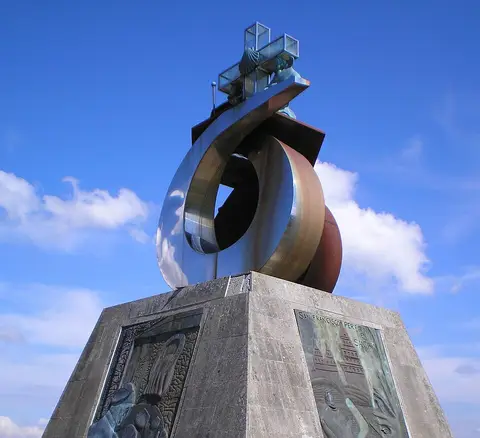 Historic sites02
Monte do Gozo
Monte do Gozo, 15820 · Santiago○ Website○ Phone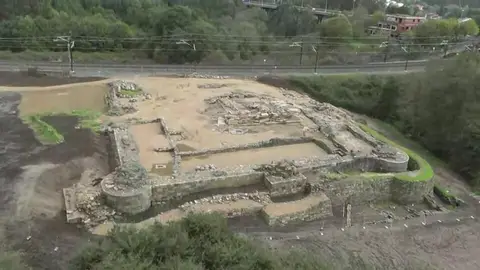 Castles03
Castelo da Rocha Forte
Rúa do Piñeiro, 26 · Santiago● Website● Phone Historic sites04
You need a free account to leave reviews and photos – that keeps comments genuine and lets you edit them later.