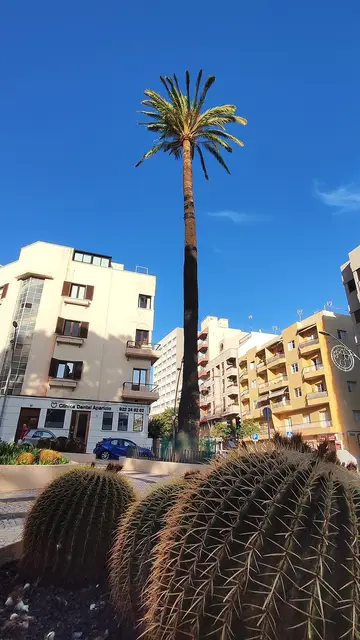
Santa Cruz de Tenerife: Carnival, Auditorio and Anaga
Travel guide · editorialSanta Cruz de Tenerife is the island's capital and co-seat of the Canary Islands government – a city where everyday life matters more than tourism. That is exactly what makes it so appealing: markets, plazas, an architectural landmark on the sea and one of the largest carnivals in the world. A trip to Santa Cruz shows you the real Tenerife.
A port city with history
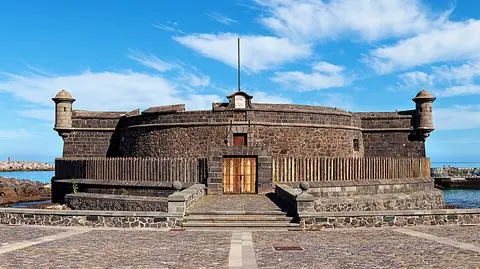
In 1494, the Spanish conquistadors under Alonso Fernández de Lugo landed on this coast and erected a wooden cross – the "holy cross" that gave the city its name. The port became the most important on the island, and in 1797 the British admiral Horatio Nelson tried to seize the city here. The attack failed, and Nelson lost his right arm in the attempt; the cannon that struck him is on display in the Military Museum. In 1927, Santa Cruz became the capital of the province of the western Canary Islands.
Sights in Santa Cruz
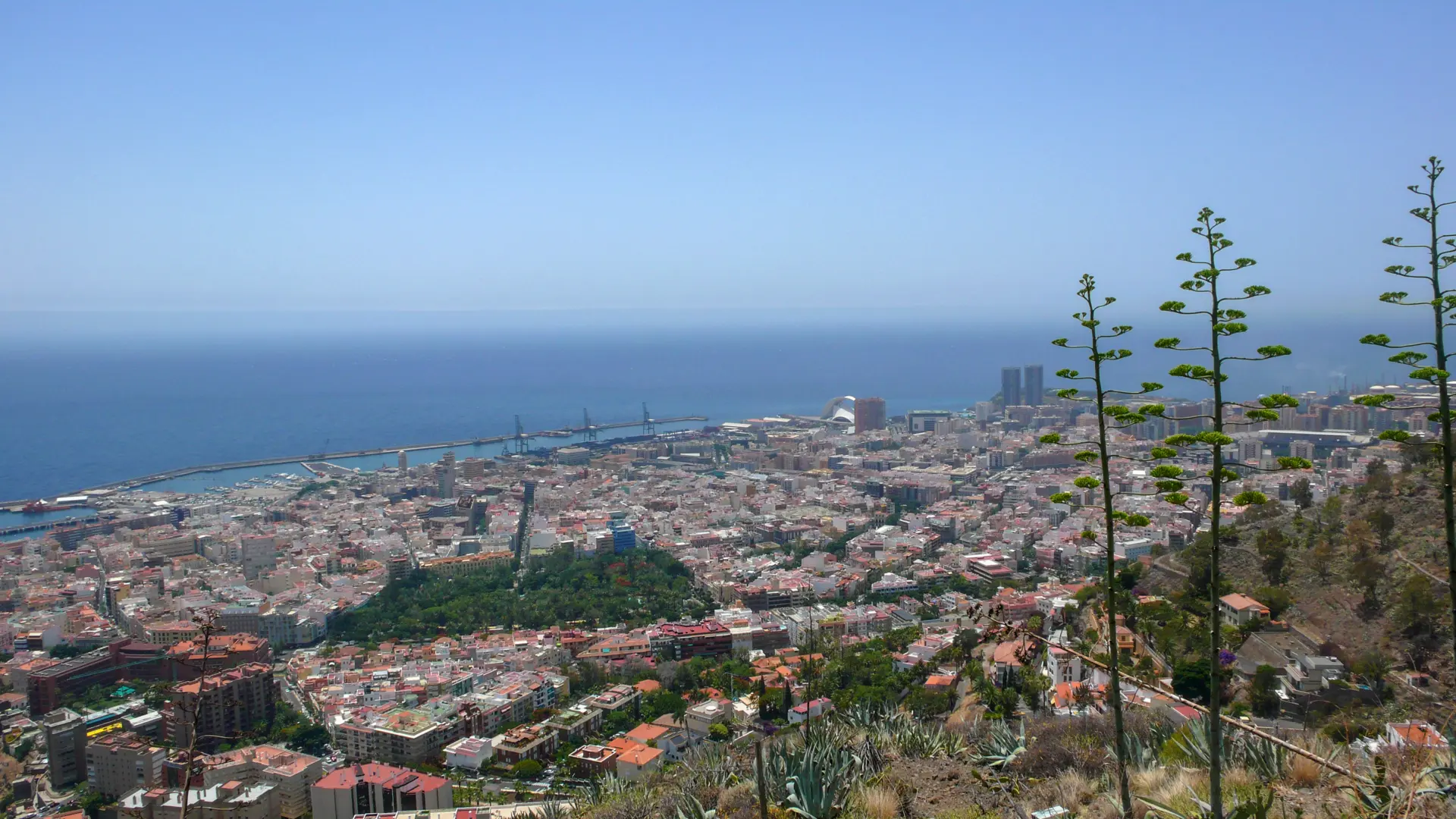
The Auditorio de Tenerife by Santiago Calatrava, with its white roof curving like a wave, is the city's modern landmark and home to the symphony orchestra. Next door is the Parque Marítimo César Manrique, a swimming complex with seawater pools. In the center, the Plaza de España opens up with a large water basin by the harbor, and the Iglesia de la Concepción, the city's most important church, preserves the conquistadors' cross. The TEA, Tenerife Espacio de las Artes, designed by Herzog & de Meuron, shows contemporary art, and the Museo de la Naturaleza y Arqueología displays Guanche finds, including mummies. The Parque García Sanabria, with its fountains, sculptures and tropical plants, is the city's green oasis.
Markets, food and Carnival
The Mercado de Nuestra Señora de África, a colonial-style market hall, is the place for fresh fruit, fish, cheese and flowers. In the small bars all around, you'll find papas arrugadas with mojo, rabbit in salmorejo and fresh fish. In the evening, people gather on Calle de la Noria, an alley lined with restaurants and bars. The highlight of the year is Carnival in February: the celebrations go on for weeks, the election of the Carnival Queen in enormous costumes is a media event, and hundreds of thousands dance in the street carnival. After Rio, the Carnival of Santa Cruz is considered one of the largest in the world.
Beaches and the Anaga Mountains
The city beach of Santa Cruz lies a few miles to the northeast: Playa de Las Teresitas was built up with golden Saharan sand and is lined with palm trees. Behind it begin the Anaga Mountains, a UNESCO biosphere reserve with laurel forests, steep valleys and remote villages such as Taganana and Chamorga. Hiking trails lead to viewpoints like the Pico del Inglés and to secluded beaches like Benijo. Only a few people live in the Anaga area, and some of the trails have remained unspoiled.
Getting around and best time to visit
Tenerife North Airport (TFN) is about 8 miles away, and Tenerife South Airport (TFS) is roughly 37 miles away. A tram connects Santa Cruz with the university town of La Laguna, also a UNESCO World Heritage Site. The climate is pleasant year-round, warm in summer and mild in winter. If you want to experience Carnival, book early.