Navarre: Sanfermines, the Pyrenees and Bardenas Reales
Travel guide · editorialNavarre begins in the beech forests of the Pyrenees and ends in a semi-desert that looks like a Western movie set. A vacation in Navarre takes you to the running of the bulls in Pamplona, along the first stages of the Camino de Santiago in Spain, and to vegetable tables where asparagus and piquillo peppers are the stars.
From the Pyrenees to the Ebro
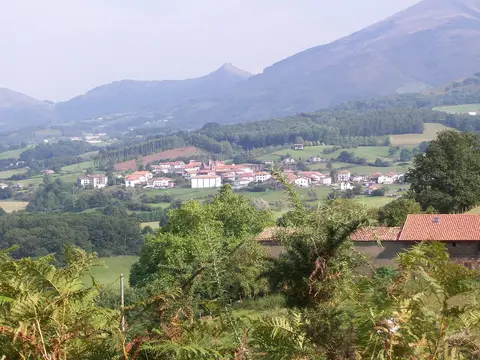
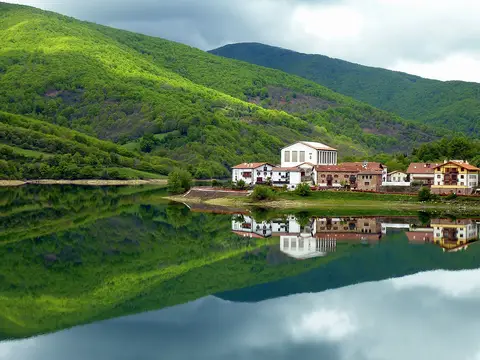
The Comunidad Foral de Navarra, a former kingdom, still has its own tax system and special rights, known as the Fueros. To the north it borders France. Here you'll find green valleys like the Baztan, with its sturdy stone houses and Elizondo as its main town, and the Irati Forest, one of the largest beech and fir forests in Europe, which glows red and gold in autumn. Farther south, central Navarre opens up with vineyards and grain fields, and in the far south lies the Ribera along the Ebro. That's where the Bardenas Reales are, a semi-desert of eroded clay hills and mesas that is protected as a biosphere reserve and has served repeatedly as a film backdrop. Basque is spoken in the north, while in the south it's almost entirely Spanish.
Pamplona and the Sanfermines
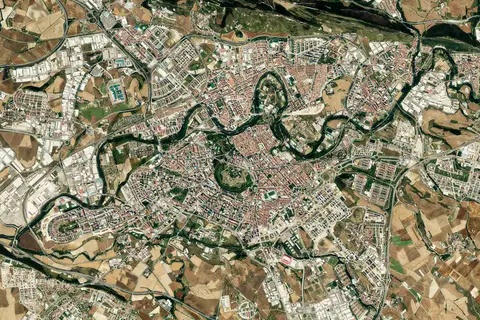
Pamplona, called Iruña in Basque, is a compact city with fortress walls, a Gothic cathedral with a cloister, and the pentagonal citadel, which is now a park. It is world-famous for the Sanfermines, held July 6 to 14. Every morning at 8 a.m., during the encierro, bulls and runners race about 850 meters through the old town to the bullring. Ernest Hemingway made the festival internationally known with his novel The Sun Also Rises, and a statue at Café Iruña on Plaza del Castillo commemorates him. Outside that week, Pamplona is quiet and pleasant for strolling and for pintxos on Calle Estafeta.
Sights in Navarre along the Camino de Santiago
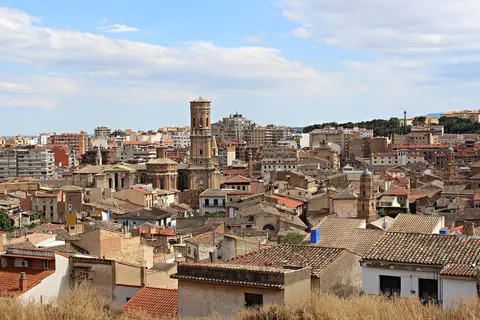
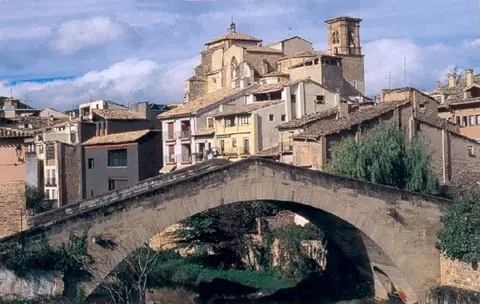
The Camino Francés enters Spain in Navarre: from Saint-Jean-Pied-de-Port it crosses the pass to Roncesvalles with its collegiate church, then runs through the Esteribar Valley via Zubiri to Pamplona. It continues to Puente la Reina with its Romanesque bridge and to Estella-Lizarra, once considered the Toledo of the North for its churches and palaces. Other Navarre destinations include Olite with its labyrinthine 15th-century royal palace, the Cistercian monastery of La Oliva, and the Monastery of Leyre. Tudela, the second-largest city, has a cathedral with a Romanesque portal and a Jewish and Moorish past you can feel in its alleys. Javier is the birthplace of Saint Francis Xavier, and you can tour his castle.
Vegetables, Pacharán and Wine
The Ribera around Tudela is considered the vegetable garden of northern Spain. White asparagus, artichokes, piquillo peppers from Lodosa and small lettuce hearts from Tudela (cogollos) all have protected designations of origin. Menestra, a vegetable stew, is the typical dish, and in spring there are vegetable festivals to go with it. In the mountains, people eat lamb and trout Navarrese-style with ham. The sheep's milk cheese from the Roncal Valley and from Idiazabal is popular. Pacharán, a liqueur made from sloe berries and anise, ends many meals. Navarre is also a wine region in its own right, known for rosados made from Garnacha.
Getting There and Best Time to Visit
Pamplona's small airport has connections to Madrid, and international visitors often arrive via Bilbao or Biarritz. Pamplona is linked by train to Madrid and Zaragoza. The best time to visit is May through October. If you want to experience the Sanfermines, book early; October is ideal for the Irati Forest, and spring or autumn for the Bardenas, since summers get very hot.