Castilla-La Mancha: Don Quixote, Toledo and Windmills
Travel guide · editorialOn the plains of La Mancha, Cervantes had his knight Don Quixote tilt at windmills – and the mills still stand on the hills. A vacation in Castilla-La Mancha combines the World Heritage sites of Toledo and Cuenca with endless vineyards, saffron blooms, and the sheep's-milk cheese known around the world as Manchego.
A Vast Plateau South of Madrid
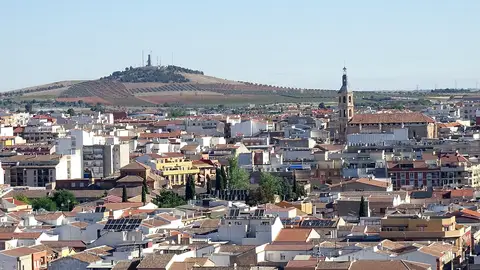
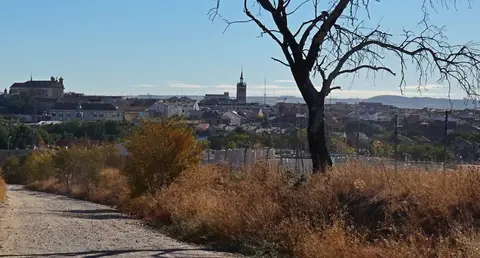
The autonomous community wraps around the Madrid region almost like a horseshoe and stretches from the Sierra de Ayllón in the north to the Sierra Morena in the south. It is made up of the provinces of Toledo, Ciudad Real, Cuenca, Albacete, and Guadalajara. Its heart is La Mancha, a flat plateau at about 2,000 to 2,300 feet (600 to 700 meters), whose name probably derives from the Arabic word for dry land. Here you'll find one of the largest continuous vineyard areas in the world. In the east the terrain turns mountainous: the Serranía de Cuenca has bizarre limestone formations such as the Ciudad Encantada, as well as the source of the Tagus River. Las Tablas de Daimiel National Park protects a wetland full of waterbirds, the Ruidera Lagoons string together turquoise lakes, and deer, griffon vultures, and Spanish imperial eagles live in the Montes de Toledo and Cabañeros National Park.
Toledo: City of Three Cultures
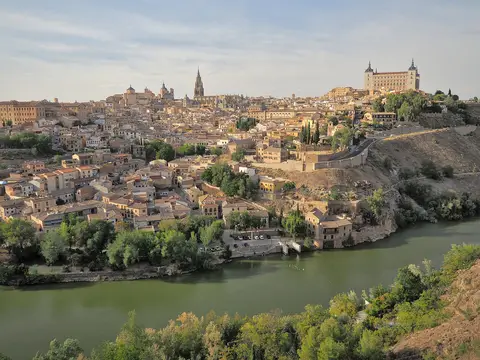
Toledo sits on a rock that the Tagus encircles in a tight loop. The city was the capital of the Visigoths, later an important center of Moorish Al-Andalus, and finally the seat of the Castilian kings. Christians, Muslims, and Jews lived side by side for centuries, and the architecture shows it: works by El Greco hang in the Gothic cathedral, the synagogues of Santa María la Blanca and El Tránsito display Mudéjar stucco, and the small Cristo de la Luz mosque dates from the year 999. El Greco lived and worked here; his painting The Burial of the Count of Orgaz hangs in the Church of Santo Tomé. The Alcázar above the city houses the Army Museum. The old town is a UNESCO World Heritage site and can be reached from Madrid in about half an hour by high-speed train.
Sights in Castilla-La Mancha: Cuenca and the Route of Don Quixote
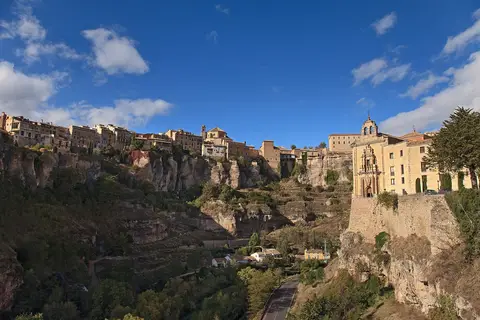
Cuenca is the region's second World Heritage city. Its hanging houses, the Casas Colgadas, jut out over the Huécar gorge on wooden balconies, and one of them holds a museum of abstract Spanish art. The cathedral is considered one of the earliest Gothic buildings in Spain. Among the best-known destinations in Castilla-La Mancha is also the Ruta de Don Quijote: Consuegra and Campo de Criptana have rows of white windmills, El Toboso has Dulcinea's house, and Almagro is home to the Corral de Comedias, a 17th-century playhouse courtyard that hosts a classical theater festival in July. Sigüenza in the province of Guadalajara has a fortified cathedral and a parador in a castle, and Alarcón has a fortress above a bend in the river.
The Cities: Albacete, Ciudad Real, and Talavera
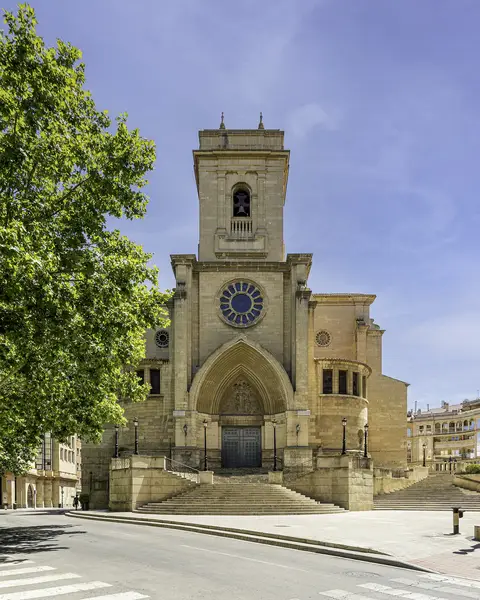
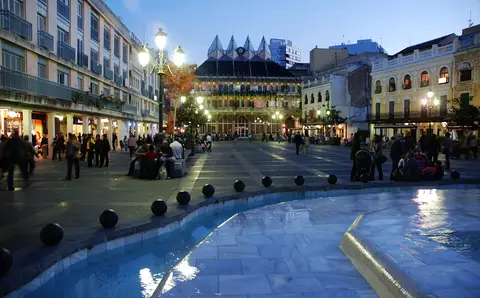
Albacete is the largest city in the region, an administrative and commercial center with a knife-making tradition; a museum of its own is devoted to folding knives, and the city holds a big fair in September. Talavera de la Reina is famous for its ceramics, whose blue-and-yellow tiles decorate churches and train stations all over Spain and which, together with Mexican Puebla ceramics, is recognized as intangible cultural heritage. Ciudad Real and Guadalajara are provincial capitals with small historic centers. Tomelloso and Alcázar de San Juan are wine towns: in Tomelloso, old cave cellars lie beneath many houses, while Alcázar de San Juan is an important railway junction.
Manchego, Saffron, and Wine
Queso manchego is made from the milk of Manchega sheep and is recognizable by its rind with a woven pattern. Saffron from La Mancha is considered one of the finest in the world; in October and November the purple crocus flowers are picked by hand, and Consuegra holds a saffron festival at that time. Typical dishes include pisto manchego, a stew of tomatoes, peppers, and zucchini; gachas, made from flour and paprika; migas, made from fried breadcrumbs; and game dishes from the Montes de Toledo. At Easter there are torrijas, and in Toledo marzipan comes with your coffee. The La Mancha and Valdepeñas wine regions produce large quantities of red and white wine, often at a good price for the quality.
Getting There and the Best Time to Visit
Most visitors arrive via Madrid-Barajas Airport. AVE trains connect Madrid with Toledo, Cuenca, Ciudad Real, Puertollano, Guadalajara, and Albacete. A car makes sense for the windmills and villages. The best times to visit are spring and fall. In summer it gets very hot on the plateau, and in winter temperatures can drop below freezing at night; Toledo is especially photogenic in the clear winter air.