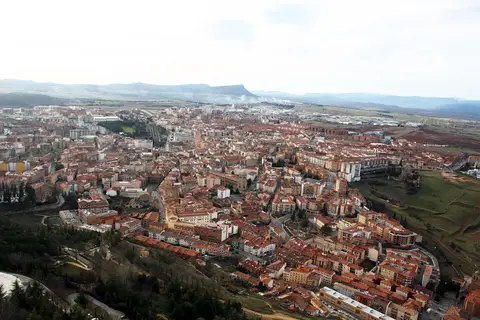
Castile and León: Cathedrals, Castles, and the Meseta
Travel guide · editorialCastile and León is Spain's largest region by area and one of its most sparsely populated. A vacation in Castile and León follows the trail of the kingdoms from which Spain emerged: across wide wheat fields to Gothic cathedrals, Roman aqueducts, and university towns built of golden sandstone.
The Meseta and Its Edges
The autonomous community comprises nine provinces and lies mostly on the northern Meseta, a high plateau at 700 to 1,000 meters (2,300 to 3,300 feet). The Duero River flows through it from east to west before reaching the sea in Portugal as the Douro. Mountains rise all around: the Cantabrian Mountains with the Picos de Europa to the north, the Sierra de Gredos and Sierra de Guadarrama to the south, and the Iberian System to the east. In the far west, in the province of León, lies Las Médulas, a reddish landscape of rock spires created by the Romans during gold mining. The Bierzo region around Ponferrada is a green, mild basin with vineyards that differs markedly from the barren plateau. The climate is continental: "nine months of winter and three months of hell," an old saying goes, with a touch of exaggeration.
Burgos, León, and the Camino de Santiago
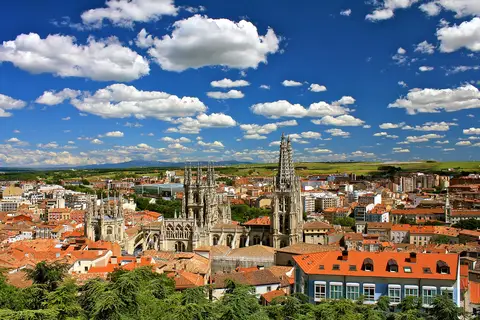
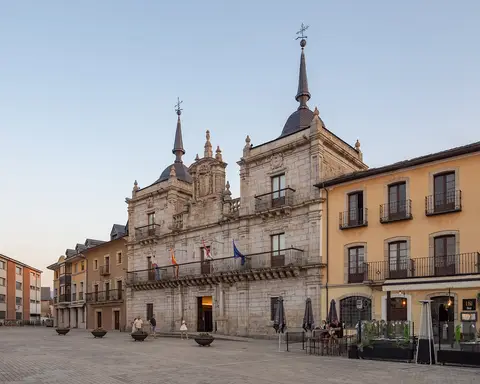
The Camino Francés crosses the region for about 250 miles (400 km), and two of Europe's greatest Gothic churches stand along it. Burgos Cathedral, begun in 1221, is a UNESCO World Heritage Site with its filigree spires; El Cid, who was born nearby, is buried inside. In León, nearly 1,800 square meters (about 19,000 square feet) of medieval stained glass glow in the cathedral, and nearby you'll find the Basilica of San Isidoro with its Romanesque frescoes and Gaudí's Casa Botines. Ponferrada has a Templar castle, and Astorga has a bishop's palace by Gaudí. Along the way are villages such as Castrojeriz and Sahagún with brick churches in the Mudéjar style.
Sights in Castile and León: World Heritage Cities in the South
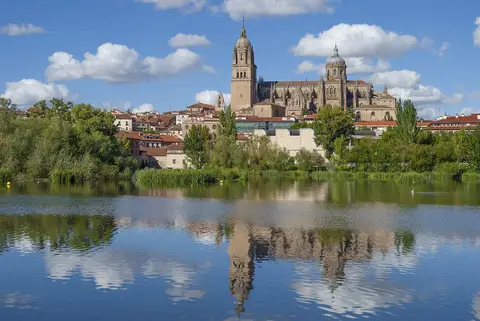
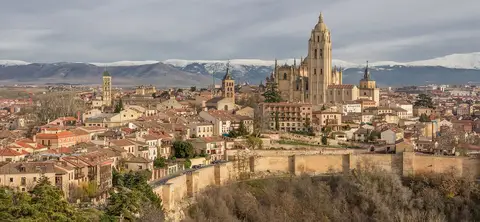
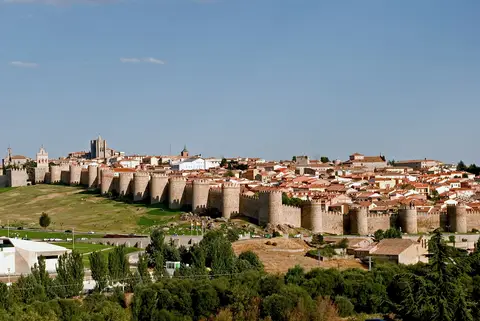
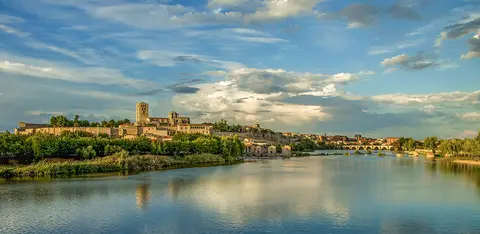
Salamanca has one of Europe's oldest universities, founded in 1218. Its Plateresque façade, where visitors search for a small frog, the Plaza Mayor, arguably Spain's most beautiful, and the old and new cathedrals, built directly against each other, define the city, which is built of golden-yellow Villamayor sandstone. Segovia is known for its Roman aqueduct with more than 160 arches built without mortar and for the Alcázar, which sits on a rocky spur above two rivers. Ávila is surrounded by a fully preserved medieval wall with 87 towers and is the birthplace of Saint Teresa. With more than twenty Romanesque churches, Zamora is considered the city of Romanesque architecture. Other Castile and León destinations include the Monastery of Santo Domingo de Silos with its cloister, Soria with the Ermita de San Saturio, and the Atapuerca excavation site near Burgos, where some of Europe's oldest human remains were found.
Valladolid and Castilian History
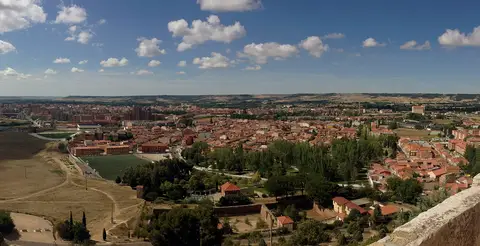
In the 16th century, Valladolid was for a time the capital of Spain. Columbus died here, and Cervantes lived in the city for a while; his house is now a museum. The National Museum of Sculpture in the Colegio de San Gregorio displays painted wooden figures that are carried through the streets during Holy Week processions. Semana Santa in Valladolid, Zamora, and León is among the most solemn and impressive in Spain. Around the cities you'll see hilltop castles that recall the border battles of the Reconquista, such as those in Peñafiel, Coca, and Medina del Campo.
Lechazo, Morcilla, and Ribera del Duero
The cuisine is hearty and meat-focused. Lechazo, milk-fed lamb roasted in a wood-fired oven, is the specialty around Aranda de Duero and Sepúlveda, while cochinillo, roast suckling pig, belongs to Segovia. Burgos is known for morcilla, a blood sausage with rice, and a fresh sheep's milk cheese, León for cecina, air-dried beef, and the stew cocido maragato, which is eaten in reverse order. Sopa castellana with bread, garlic, and egg warms you up in winter. The region leads the way in wine: Ribera del Duero with powerful Tempranillo reds, Rueda with fresh Verdejo, plus Toro and Bierzo. If you want to visit wineries, follow the Duero between Valladolid and Aranda.
Getting There and Best Time to Visit
From Madrid-Chamartín station, a high-speed train reaches Segovia in about half an hour and Valladolid in one hour, with connections onward to León, Burgos, and Zamora. Salamanca and Ávila are also served by rail. For villages and castles, a rental car is advisable. The best times to visit are May, June, September, and October. In midsummer it's hot during the day and pleasantly cool at night; winters are long and frosty, with snow in the mountains.