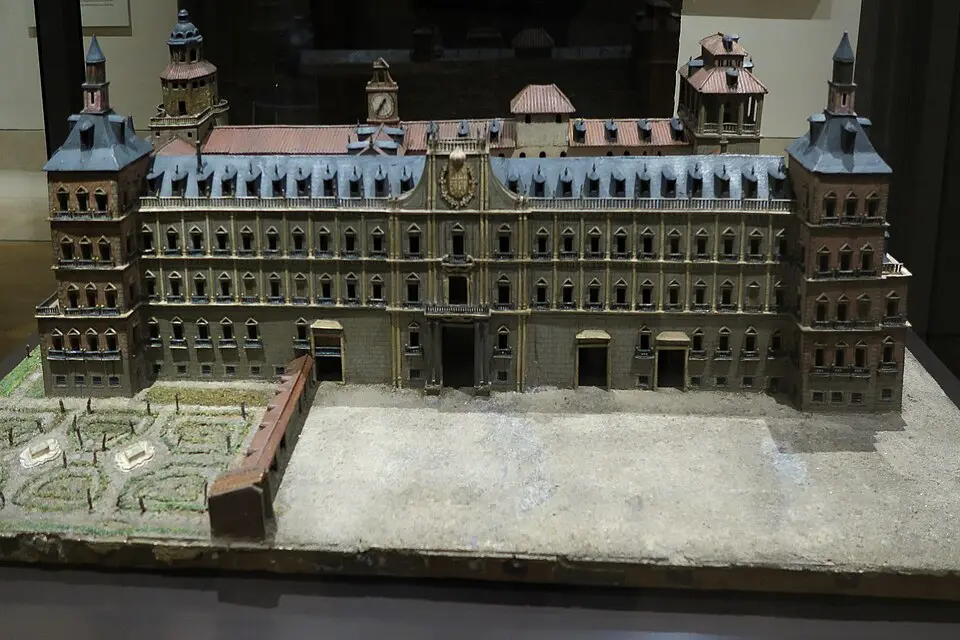
About Real Alcázar de Madrid
For centuries, the Real Alcázar de Madrid was the heart of the Spanish monarchy and the residence of the royal family, until a devastating fire destroyed it in 1734. The building stood on the site where the Royal Palace of Madrid stands today. Originally designed as a fortress, the complex gradually grew into a magnificent palace that accompanied Madrid's rise to capital of the Spanish empire. Despite its role as a royal residence, the building kept its Arabic name, Alcázar, a reminder of its military roots as a castle. The history of this site is closely tied to the development of the city and the Spanish crown, and it reflects changing architectural styles and political upheavals.
The building's roots reach back to the second half of the ninth century, when Muslim rule dominated the region. Between 860 and 880, the Umayyad emir Muhammad I of Córdoba had a fortress built that formed the central core of the Islamic citadel of Mayrit. Besides the castle, this fortified complex also included a mosque and the governor's residence. Its strategic position on a steep hill near the Altos de Rebeque, overlooking the Manzanares River, made the site a crucial defensive point against Christian incursions into the territories of al-Andalus. After Alfonso VI of León and Castile conquered Madrid in 1083, the complex was expanded to meet the growing needs of the royal court.
Under the Trastámara dynasty, the Alcázar developed into the most important fortress of the Crown of Castile and the seat of the court. Kings such as Henry III and John II had the building remodeled to give it a more stately character. John II added the Royal Chapel and the so-called Room of Riches, whose luxurious furnishings underscored the status of the monarchy. These additions considerably enlarged the footprint of the old castle. Henry IV spent a great deal of time here, and his daughter Joanna la Beltraneja was born at the complex. During the War of the Castilian Succession, the Alcázar was besieged and badly damaged, which made further construction work necessary.
A decisive turning point in the building's history came with the reign of Charles I, who, after the destruction caused by the Comuneros uprising, decided to transform the medieval castle into a modern palace. Rather than tearing down the old structure, he used it as the basis for a sweeping expansion that began in 1537. The architects Luis de Vega and Alonso de Covarrubias designed new sections, including the queen's apartments and the royal courtyard. This phase of construction brought unmistakable Renaissance elements to the building, such as arches and columns that let in more light and created a more open feel. The expansion doubled the footprint of the original castle and laid the groundwork for the palace architecture that followed.
Philip II completed the transformation of the Alcázar into a royal palace after permanently moving the court to Madrid. From 1561 to 1598, he had the interiors lavishly decorated, commissioning artists and craftsmen from the Netherlands, Italy, and France. A highlight of this phase was the construction of the Golden Tower, which dominated the palace's southwest corner and recalled the corner towers of the monastery of El Escorial. Philip II organized the building functionally, clearly separating ceremonial areas, the living quarters of the king and queen, and service areas. This layout remained in place until the building was destroyed in the 18th century.
The following kings, Philip III and Philip IV, focused on harmonizing the exterior, which still looked restless because of its mix of medieval and modern elements. The architect Juan Gómez de Mora took over the project of designing the south facade and carried it out in the Baroque style. His work, carried out between 1610 and 1636, gave the building greater balance and brightness. The facade was designed with a series of windows and columns, and the towers were integrated architecturally to create a unified look. Philip IV himself, however, did not enjoy living in the Alcázar and had the Buen Retiro Palace built instead, which somewhat diminished the Alcázar's importance as the main residence.
The last major phase of construction, under Philip V, aimed to redesign the interiors in the French style to reflect the tastes of the new Bourbon court. The main rooms were remodeled on the model of Versailles, in stark contrast to the earlier architecture. French architects led this renovation work, which was meant to turn the palace into a modern European center. But fate abruptly ended these efforts when a fire broke out on Christmas Eve 1734. The blaze, which probably started in a room of the court painter Jean Ranc, quickly spread to the whole building and raged for four days.
The consequences of the fire were catastrophic. The building was reduced to rubble, and the remaining walls had to be torn down because they could no longer bear weight. The loss of cultural treasures was enormous. It is estimated that there were nearly 2,000 paintings in the palace, of which about 500 were lost forever. Among the lost works were important paintings by Diego Velázquez, such as "The Expulsion of the Moriscos," as well as works by Peter Paul Rubens and Titian. Other masterpieces, including Velázquez's famous "Las Meninas," were saved by being taken out of their frames and thrown from the windows. Part of the collection had previously been moved to the Buen Retiro Palace and thus escaped destruction.
After the fire, Philip V ordered a new palace to be built on the same site, known today as the Royal Palace of Madrid. Charles III first used the new building as a residence in 1764. The history of the Real Alcázar de Madrid therefore does not end with the fire but leads into the construction of the city's landmark as we know it today. The old building's architectural features, such as its rectangular layout and the asymmetrical arrangement of its courtyards, did influence the new construction, but the original building has vanished completely.
The Real Alcázar was not just a residence but also a center of cultural and political power. Its art collection was one of the most important in Europe and drew visitors from across the continent. The building's architecture, shaped by different styles over the centuries, reflects the complex history of Spain. From its Muslim beginnings through the medieval fortress to the Baroque palace, the site shows the cultural diversity and political change the country has lived through.
Today the Real Alcázar is remembered as a place of great historical significance that laid the foundation for the present-day royal residence in Madrid. The destruction by the fire of 1734 marked the end of an era, but the memory of the building's splendor and history lives on in the archives, the rescued artworks, and the architecture of the new palace. The site remains a symbol of the power and cultural wealth of the Spanish monarchy.
At a glance
- Category
- Sight › Castles
- Rating
- no reviews yet · write a review
- Address
- —
Madrid, Spain - District
- Centro
- Phone
- —
- Website
- fr.wikipedia.org
- —
- Coordinates
- 40.41806° N · -3.71417° E
- Data quality
- confidence 0.53
- Identifier
- ID 48f47d2e-ff0…
Location & surroundings
Toggle layersFAQ about Real Alcázar de Madrid
quick answersWhat is the Real Alcázar de Madrid?
The Real Alcázar de Madrid was a fortress in Madrid's Centro district in Spain that served for centuries as the residence of the Spanish royal family and the heart of the monarchy. Originally conceived as a fortress, the complex gradually evolved into a magnificent palace and accompanied Madrid's rise to capital of the Spanish Empire. The Arabic name Alcázar still points to the building's military roots as a fortress.
Does the Real Alcázar de Madrid still exist today?
No, the Real Alcázar de Madrid was destroyed by a devastating fire in 1734. In its place stands the Royal Palace of Madrid, the Palacio Real de Madrid. When you visit the site in Madrid, you are standing on the historic grounds of the former fortress and royal residence.
When and by whom was the Real Alcázar de Madrid built?
The roots of the Real Alcázar de Madrid go back to the years between 860 and 880, when the Umayyad emir Muhammad I of Córdoba had a fortress built here. It formed the core of the Islamic citadel of Mayrit, which also included a mosque and the governor's residence. Its location on a steep hill overlooking the Manzanares River made the site an important defensive point of al-Andalus. After Alfonso VI of León and Castile conquered Madrid in 1083, the complex was expanded.
How did the Real Alcázar de Madrid go from fortress to royal palace?
The Real Alcázar de Madrid was gradually transformed from a medieval fortress into a stately palace. Under the Trastámara dynasty, it became the most important fortress of the Crown of Castile, and John II added the Royal Chapel and the so-called Room of Riches. The decisive remodeling was initiated by Charles I, who from 1537 had the architects Luis de Vega and Alonso de Covarrubias design new areas such as the Queen's apartments and the royal courtyard with Renaissance elements. The Alcázar is also known as the birthplace of Joanna la Beltraneja, the daughter of Henry IV.
What can you see around the Real Alcázar de Madrid?
Right at the former site of the Real Alcázar de Madrid, you can visit the Palacio Real de Madrid and other royal sites in the Centro district. travelguide195 lists nearby attractions including the Reales Cocinas del Palacio Real about 48 meters away, the Capilla Real de Madrid about 99 meters away, and the Royal Armoury of Madrid about 159 meters away. If you need a break, travelguide195 lists around 183 restaurants within 500 meters.
Ratings & comments
none yetNear Real Alcázar de Madrid
closest 5 per category · 2 kmSights
Restaurants
Museums
Hotels
More:Sights in Centro (203)All sights in Madrid (606)
300 places within 2 km loaded.
Don't miss in Madrid
All sights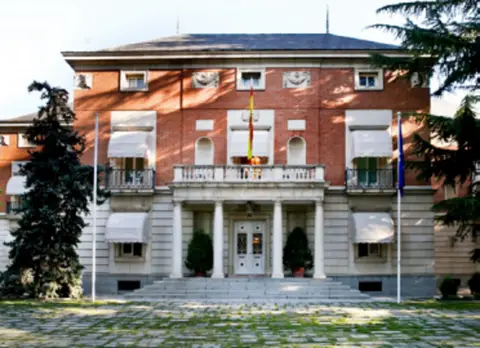 Historic sites01
Palacio de la Moncloa
Avenida Puerta de Hierro, s/n · Madrid● Website● Phone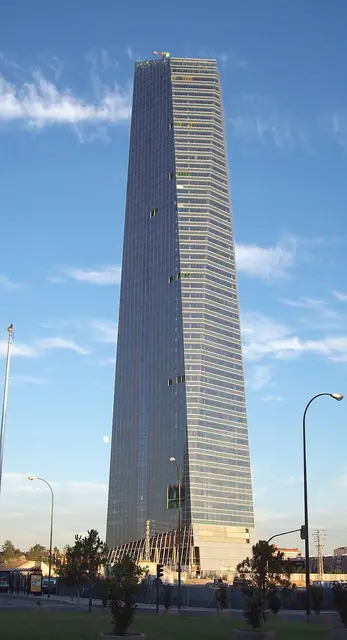 Historic sites02
Torre de Cristal
Paseo de la Castellana, 259 · Madrid● Website● Phone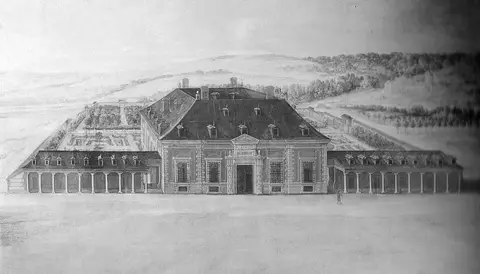 Historic sites03
Palacio de la Zarzuela
Carretera Del Pardo S/N · Madrid● Website● Phone Historic sites04
You need a free account to leave reviews and photos – that keeps comments genuine and lets you edit them later.