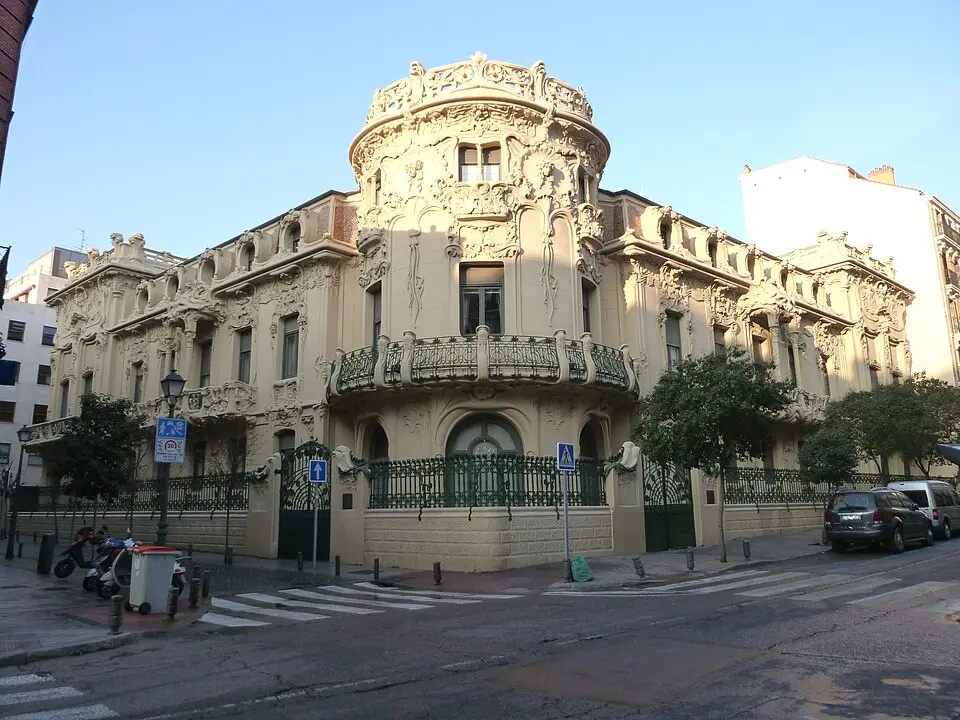
About Palacio Longoria
The Palacio Longoria is an outstanding example of Spanish Art Nouveau in Madrid, built by José Grases Riera between 1902 and 1903. Standing at the corner of Calle Fernando VI and Calle Pelayo, the mansion stands out for its lavishly floral façade, which recalls Parisian models such as the work of Hector Guimard. Architecturally, a round, domed corner projection connects the two slightly recessed wings of the building on the nearly square plot. The building originally served as both the residence and the headquarters of the financier Javier González Longoria. Today the palace, which is not open to the public, belongs to the Spanish Society of Authors, which has owned it since 1950.
At a glance
- Category
- Sight › Historic sites
- Rating
- no reviews yet · write a review
- Address
- Calle de Fernando VI, 4
28004 Madrid, Spain - District
- Centro
- Phone
- +34913499550
- Website
- www.sgae.es
- —
- Coordinates
- 40.42540° N · -3.69657° E
- Data quality
- confidence 0.95
- Identifier
- ID d88983b8-0c1…
Location & surroundings
Toggle layersFAQ about Palacio Longoria
quick answersWhat is the Palacio Longoria in Madrid?
The Palacio Longoria is an urban palace in Madrid and is considered an outstanding example of Spanish Art Nouveau. The architect José Grases Riera built it between 1902 and 1903. The building originally served as both the residence and the headquarters of the financier Javier González Longoria.
Can you go inside the Palacio Longoria in Madrid?
No, the Palacio Longoria in Madrid is not open to the public. The palace has belonged to the Spanish Society of Authors since 1950. You can still admire the facade from the outside at Calle de Fernando VI, 4 in the Centro neighborhood, at the intersection with Calle Pelayo.
What makes the architecture of the Palacio Longoria special?
The Palacio Longoria in Madrid stands out above all for its lavishly floral Art Nouveau facade, which recalls Parisian models such as Hector Guimard. A round, domed corner projection connects the slightly recessed wings of the building. The palace stands on a roughly square plot.
What can you see around the Palacio Longoria in Madrid?
Around the Palacio Longoria in Madrid, you'll find several historic buildings and museums within walking distance. Just about 113 meters away is the Edificio Modernista Casa de los Lagartos, and after roughly 195 meters you reach the National Museum of Romanticism. travelguide195 also lists the Palacio de los Condes de Guevara (about 193 meters), the Antiguo Palacio del Marqués de Matallana (about 206 meters), and the Palacio del Duque de Veragua (about 256 meters) nearby.
Are there tours and restaurants near the Palacio Longoria?
Yes, the Palacio Longoria in Madrid is part of the tour "Madrid Beyond the Landmarks: Chamberí, Malasaña and Conde Duque." When you need a break, you'll have plenty of choices: travelguide195 lists around 485 restaurants within 500 meters of the palace.
Ratings & comments
none yetNear Palacio Longoria
closest 5 per category · 2 kmSights
Restaurants
Museums
Hotels
More:Historic sites in Madrid (466)Sights in Centro (203)All sights in Madrid (606)
300 places within 2 km loaded.
Don't miss in Madrid
All sights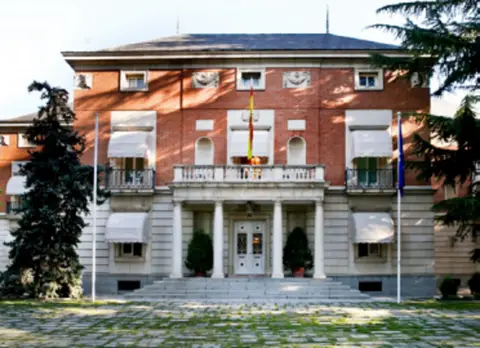 Historic sites01
Palacio de la Moncloa
Avenida Puerta de Hierro, s/n · Madrid● Website● Phone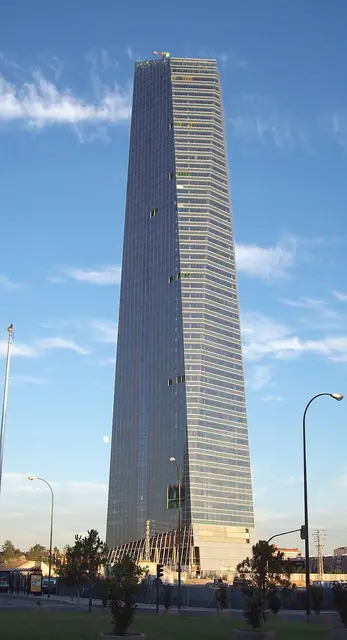 Historic sites02
Torre de Cristal
Paseo de la Castellana, 259 · Madrid● Website● Phone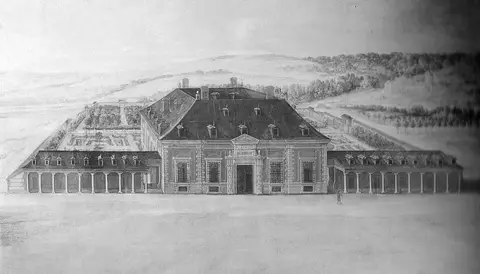 Historic sites03
Palacio de la Zarzuela
Carretera Del Pardo S/N · Madrid● Website● Phone Historic sites04
You need a free account to leave reviews and photos – that keeps comments genuine and lets you edit them later.
Exceptionally ornamental art nouveau building, erected 1902–03 for the banker and politician Javier González Longoria. It was designed by the Catalan architect Jose Grasses Riera and is considered to be one of the most important and beautiful examples of Spanish modernismo . Today, it houses the Spanish society of authors and editors. It can only be visited from the outside, but you may cast a glance at the entrance hall and staircase.
Source: Wikivoyage, „Madrid/Malasaña-Chueca“ · authors per page history · CC BY-SA 4.0 · as of 4/11/2017