Mureș: Sighișoara, Salt Lakes and Szekler Land
Travel guide · editorialMureș County (Romanian: Mureș) lies in the heart of Transylvania, where Saxon fortified towns, Hungarian Szekler villages and Romanian shepherding traditions sit side by side. If you are planning a vacation in Mureș, you will find one of Europe's most beautiful medieval old towns, salt lakes for swimming and a county seat full of Art Nouveau splendor.
Between the Mureș Valley and the Görgény Mountains
The Mureș River runs through the county from northeast to southwest and has carved a broad, fertile valley. To the north and east rise the volcanic Görgény and Călimani Mountains, with dense beech and spruce forests where bears still live. The south belongs to the hill country of the Târnava Mare, a landscape of vineyards, orchards and hay meadows dotted with villages and fortified churches. Around a third of the population speaks Hungarian, and many places have two or three names.
Târgu Mureș: Palace of Culture and Teleki Library
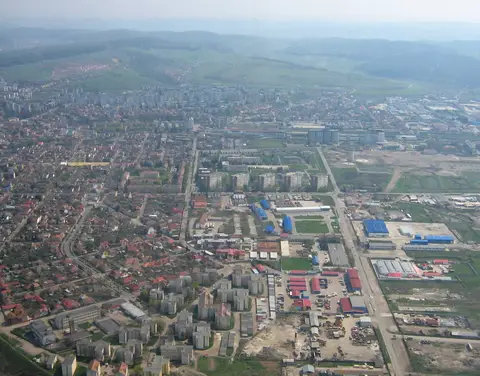
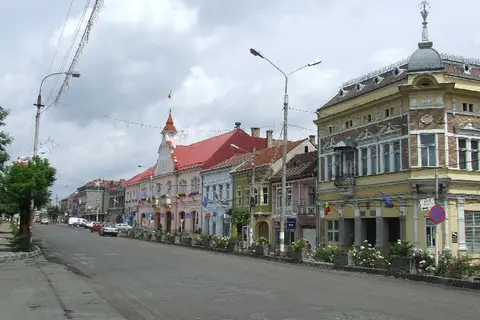
The county seat, Târgu Mureș (known in German as Neumarkt am Mieresch), is a lively university city with a well-known medical school. Its landmark is the Palace of Culture from 1913, an Art Nouveau building with a colorfully glazed roof; its Hall of Mirrors is decorated with stained-glass windows depicting Hungarian folk legends. Right next door stands the equally colorful Prefecture building. The Teleki Library, founded in the late 18th century by Count Sámuel Teleki, preserves tens of thousands of old volumes, including incunabula. Cafés line Rose Square, and the fortress with its bastions invites a stroll.
Sights in Mureș: Sighișoara and the Fortified Churches
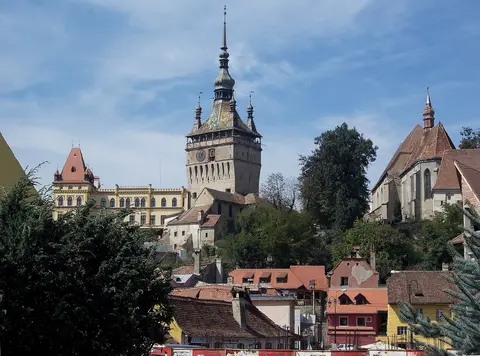
The best-known stop is Sighișoara, a UNESCO World Heritage Site since 1999. The inhabited citadel on the hill, with its 64-meter Clock Tower, the covered Scholars' Stairs and the Church on the Hill, is among the best-preserved fortified towns in Europe. At the House with the Stag's Antlers and the supposed birthplace of Vlad Dracul, the legend of Dracula is kept alive; every summer a medieval festival fills the streets with life. If you arrive early in the morning, you will have the cobblestone lanes of the Upper Town almost to yourself, and from the cemetery next to the Church on the Hill you can look out over the rooftops of the Lower Town as far as the Târnava Mare valley. Just a few kilometers away, Saschiz has a fortified church that is also a World Heritage Site. Reghin is known for violin making: workshops there craft instruments from the resonance wood of the Görgény forests.
Swimming in Bear Lake at Sovata
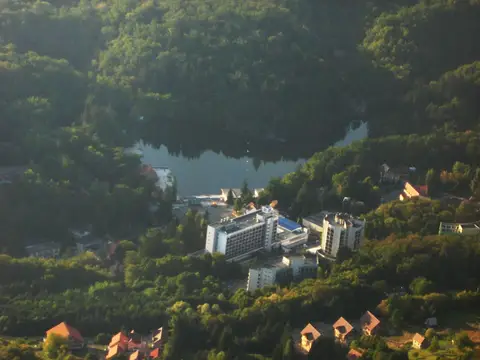
The spa town of Sovata in the east lies in a basin with several salt lakes. The most famous is Bear Lake (Lacul Ursu), a rare heliothermal lake: beneath a layer of fresh water, the salty water stores the sun's heat, so that at a depth of a few meters it reaches well over 86°F in summer. Around the lake stand wooden villas in the Szekler style and spa hotels. Swimming is permitted only in designated areas because the ecosystem is fragile, and hiking trails lead through beech forests to smaller salt lakes and salt cliffs. It gets crowded in high summer, while June and September are quieter.
Food, Getting There and Best Time to Visit
Tables are laden with goulash and paprikash from Hungarian cuisine as well as sarmale and polenta with sheep's cheese. At markets, chimney cake (kürtőskalács) is baked over charcoal, and fresh white wines ripen along the Târnava. Târgu Mureș Airport has connections to Germany, and the Brașov–Cluj-Napoca rail line runs through Sighișoara. The best time to visit is between May and October; in July Sighișoara is full of festival visitors, and in September the forests of the Görgény Mountains turn color.