Maramureș: Wooden Churches, a Steam Train, and the Merry Cemetery
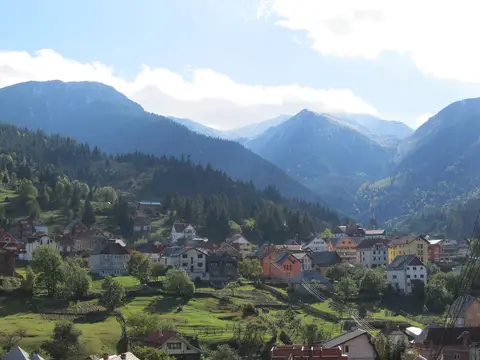
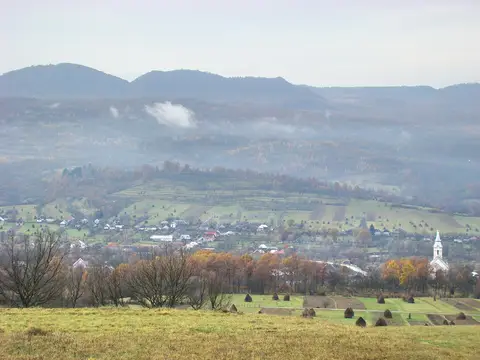
Travel guide · editorialIn the far north of Romania, on the border with Ukraine, Maramureș has preserved a rural culture that has long since vanished elsewhere. On a vacation in Maramureș, you'll see horse-drawn carts on village streets, carved farmyard gates, and churches whose slender wooden steeples pierce the sky.
Wooden Churches and Carved Gates
Eight wooden churches in the region are on the UNESCO World Heritage list, including the churches of Ieud, Bârsana, Budești, Desești, Poienile Izei, and Surdești. Most were built from oak in the 17th and 18th centuries, and their interiors are covered with colorful, naive-style murals. Bârsana Monastery, a newer complex in the traditional style, shows how alive the craft of carpentry has remained. Almost every farmstead has a massive wooden gate decorated with rope motifs and sun symbols – a status symbol that families have held on to for generations.
Sights in Maramureș
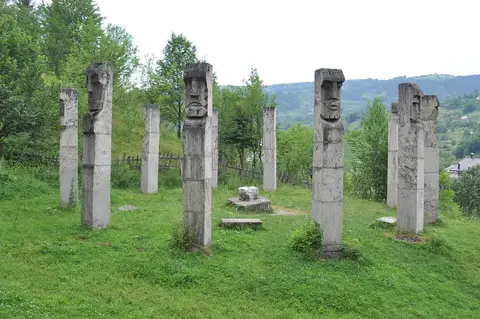
In Săpânța, near the border, you'll find the Merry Cemetery: brightly painted wooden crosses tell the lives and deaths of the departed in pictures and rhymed verse, often with a touch of humor. The tradition was started by the carver Stan Ioan Pătraș. In Sighetu Marmației (Marmaroschsiget), the memorial in the former political prison commemorates the victims of communism; the town is also the birthplace of Nobel Peace Prize laureate Elie Wiesel. From Vișeu de Sus, the Wassertal Railway, a narrow-gauge forest railway once operated by Zipser Germans, steams through a narrow valley into the forests. Baia Mare itself was a mining town for gold and silver for centuries; the medieval Stephen's Tower and the Mineralogy Museum bear witness to this.
The Mountains around Borșa
In the east of the county rise the Rodna Mountains with Pietrosul Rodnei and the Maramureș Mountains. Borșa and its district Băile Borșa are starting points for hikes and, in winter, for skiers; the Prislop Pass leads into Bukovina. In Moisei, a memorial commemorates the victims of a massacre in 1944. In summer, shepherds drive sheep and cattle up to the high pastures, and on holidays many villagers still wear their traditional costumes to church.
Life in the Villages
The valleys of the Iza, Mara, and Cosău rivers are considered the heart of Maramureș. Blacksmiths, weavers, and woodcarvers still work here, and wooden fulling mills, where wool blankets are felted, turn along the streams. In Ieud or Botiza, families rent out rooms and invite guests to watch the haymaking or bake bread in a wood-fired oven. On Sundays, many villagers go to church in traditional dress, the men often wearing small straw hats. If you travel with an open mind, you'll experience hospitality that quickly turns into an invitation to schnapps and bacon.
Cuisine, Getting There, and Best Time to Visit
Visitors are often greeted with Horincă, a double-distilled plum brandy. It's served with Balmoș, polenta with sheep's cheese and butter, as well as stews with mushrooms and cabbage. The small Baia Mare airport has only a few connections; it's more common to arrive via Cluj-Napoca or Satu Mare. A rental car is almost essential for reaching the villages. The best time to visit is May to October; folk traditions are on fullest display at Easter, on the Feast of the Assumption on August 15, and at Christmas.