The Azores: Nine Volcanic Islands in the Middle of the Atlantic
Travel guide · editorialA vacation in the Azores takes you to nine volcanic islands in the middle of the Atlantic, roughly 1,400 kilometers west of Lisbon. Crater lakes in shades of blue and green, steaming hot springs, hydrangea hedges, and whales off the coast make this autonomous region a destination for nature lovers.
Landscape and Islands
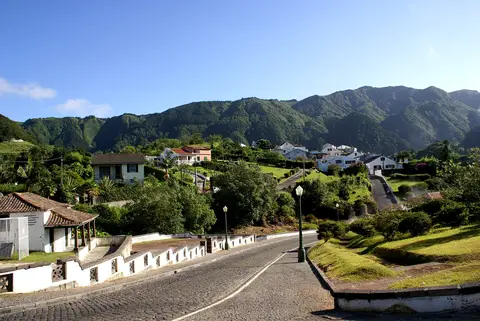
The Azores are spread across about 600 kilometers in three groups: São Miguel and Santa Maria in the east; Terceira, Graciosa, São Jorge, Pico, and Faial in the center; and Flores and Corvo in the west. All of them are volcanic in origin, and volcanic activity is still noticeable today in hot springs, fumaroles, and lava fields. On Pico, the volcano of the same name rises to 2,351 meters, the highest mountain in Portugal. The climate is oceanic and mild but changeable: sun, fog, and rain can alternate within an hour, which is what makes the islands so green.
Sights on São Miguel
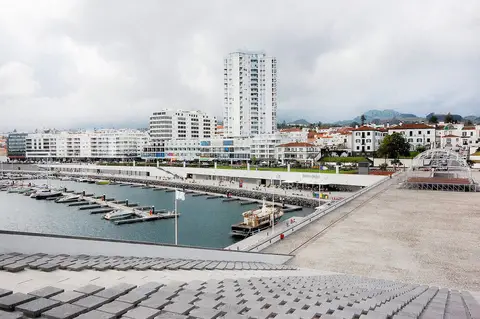
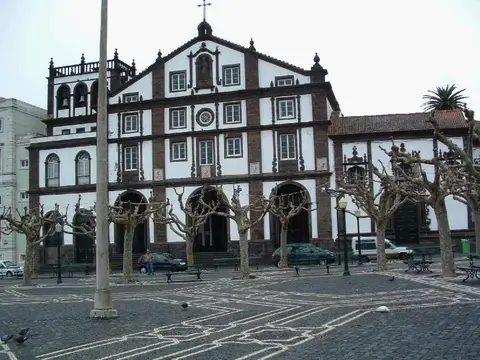
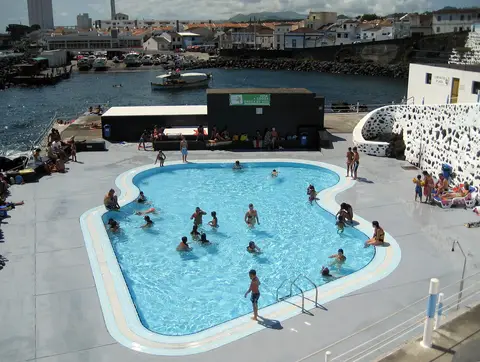
The main island is home to Ponta Delgada, with its black-and-white paved streets, the three city gates, and the main church of São Sebastião. In the west, the crater of Sete Cidades opens up with a blue lake and a green lake, and from the Vista do Rei viewpoint you can see both. In the middle of the island lies Lagoa do Fogo, a crater lake with no development around it. Furnas in the east is a valley full of steaming springs: in Terra Nostra Park you can bathe in a warm, iron-rich pool, and by the lake the cozido is cooked in holes in the ground using volcanic heat. On the north coast, black and green tea grows on the only tea plantations in Europe, such as the one at Gorreana. Lagoa on the south coast is a small town with a pottery tradition and a seawater swimming pool.
Terceira, Faial, and Pico
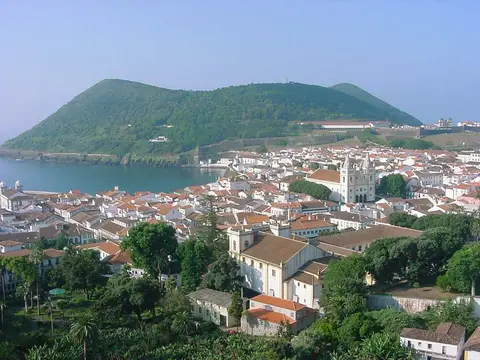
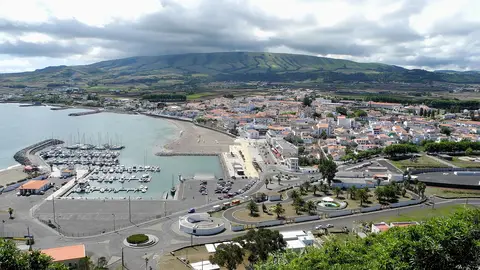
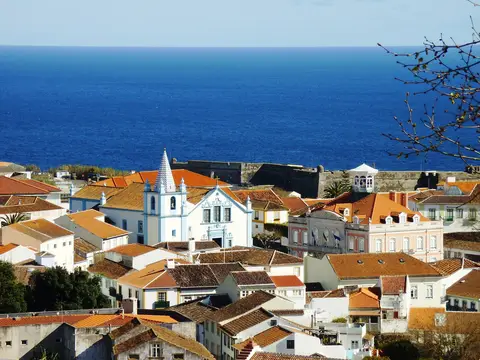
Angra do Heroísmo on Terceira has been a UNESCO World Heritage Site since 1983; the Renaissance town with its colorful houses was a port of call for ships from America and India for centuries. Praia da Vitória on the east coast has a long sandy beach. In June the island celebrates the Sanjoaninas, and in summer it holds street bull runs with the bulls held on ropes. Faial is home to Horta, with its famous marina, where sailors from around the world paint pictures on the walls, and the Peter Café Sport. Across the channel, Pico looms; its wine-growing landscape with lava-stone walls is also a World Heritage Site, and boat tours for whale and dolphin watching depart from here.
Food and Drink
Cozido das Furnas, made with meat, sausage, and vegetables, is the best-known dish. Other specialties include lapas, grilled limpets with garlic butter, as well as tuna and cheeses such as the sharp Queijo São Jorge. On São Miguel, pineapples are grown in greenhouses and are considered especially flavorful. In early summer, the islands celebrate the Festas do Espírito Santo with processions and soup for everyone.
Getting There and Best Time to Visit
Direct flights from Lisbon and Porto, and in summer also from Central Europe, land in Ponta Delgada and on Terceira; the regional airline SATA flies between the islands, and in summer ferries run within the central group. The best time to visit is from May to September, when the hydrangeas bloom and the sea, at around 68 to 73 degrees Fahrenheit (20 to 23 °C), is warm enough for swimming. Whale watching is most rewarding from April to October.