Lublin: Renaissance Towns and Vistula Banks in Eastern Poland
Travel guide · editorialLublin Voivodeship lies in eastern Poland on the border with Belarus and Ukraine, a region of gentle hills, loess gorges, and Renaissance towns. A vacation in Lublin takes you to Zamość, the "ideal city," to the artists' town of Kazimierz Dolny on the Vistula, and into the forests of Roztocze.
Highlands, the Bug, and the Vistula
The region stretches between the Vistula in the west and the Bug in the east, which forms the border with Ukraine and Belarus. The Lublin Upland, with its fertile loess soils and deep sunken lanes, occupies the middle, the forested ridge of Roztocze rises in the south, and the lake district of Łęczna and Włodawa, known as Polesie Lubelskie, lies in the northeast. Around two million people live here, many of them still in the countryside. The city of Lublin is an important university center with five institutions of higher education. Throughout history, the region has often stood at the crossroads of cultures: Poles, Ruthenians, Jews, and Armenians lived side by side, and in 1569 the Union of Lublin between Poland and Lithuania was signed here.
Sights in Lublin
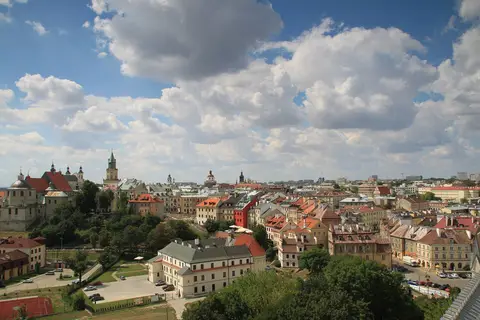
Lublin's Old Town sits on a hill and is entered through the Kraków Gate. Narrow lanes, townhouses, and the Crown Tribunal shape its character. On the neighboring hill stands the castle, whose Chapel of the Holy Trinity preserves Byzantine-Ruthenian frescoes from the 15th century, a rare blend of Gothic and Orthodox traditions. On the edge of the city lies the Majdanek Memorial, a German concentration and extermination camp, whose barracks and mausoleum stand shockingly close to the city. The Grodzka Gate recalls Jewish Lublin, which once became a center of Hasidism.
Zamość, Kazimierz Dolny, and Roztocze
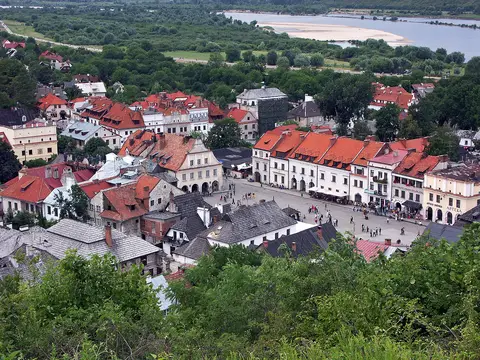
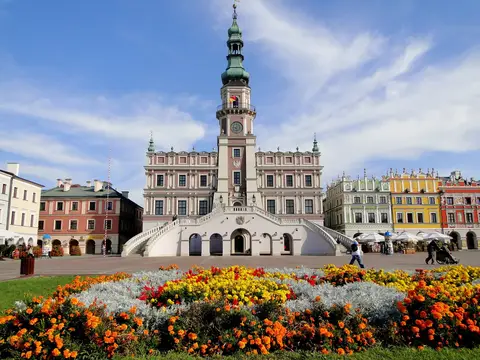
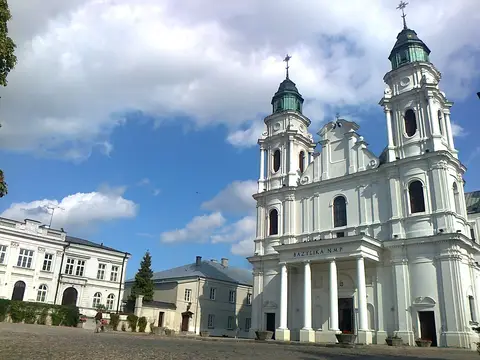
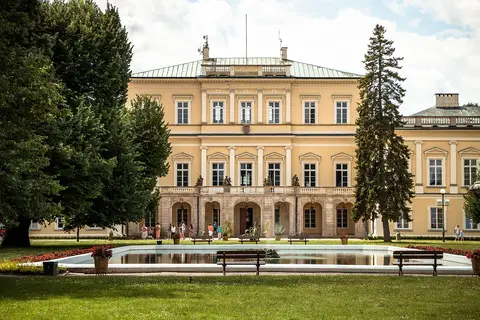
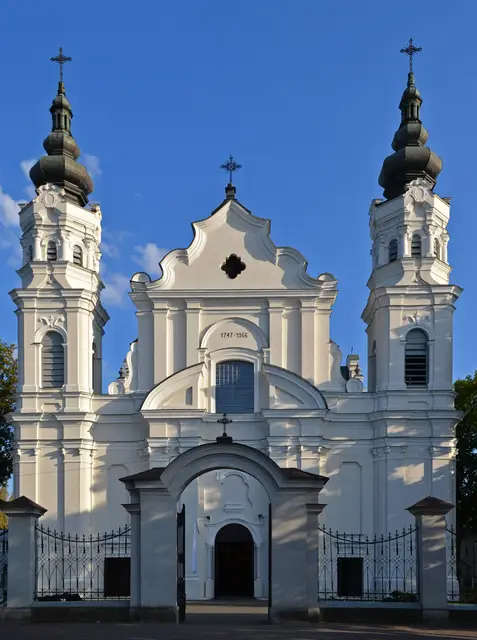
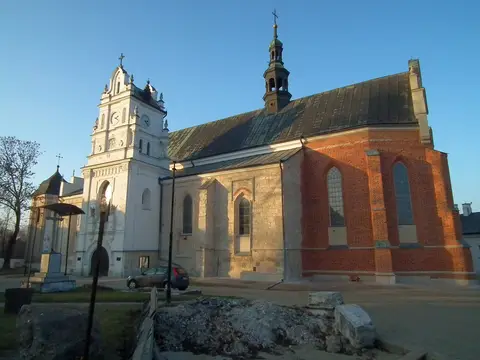
Zamość was planned in the late 16th century by Chancellor Jan Zamoyski on an Italian model. The square Great Market, with its town hall and pastel-colored arcaded houses, is a UNESCO World Heritage Site. Kazimierz Dolny on the Vistula is a small town with Renaissance facades, granaries, and galleries, a summer destination for painters and day-trippers from Warsaw; nearby are Janowiec Castle and Puławy Palace with its landscape park. Roztocze National Park near Zwierzyniec protects beech and fir forests where Konik horses live semi-wild; the Wieprz River is good for paddling. In the east, in Włodawa, a synagogue, an Orthodox church, and a Catholic church stand side by side. Chełm has underground chalk tunnels that you can explore on guided tours.
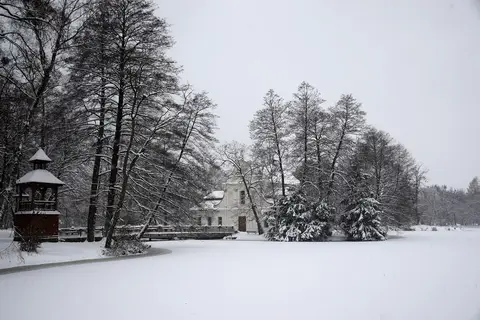
In Zwierzyniec, a Baroque church stands on a small island in a pond, and in nearby Szczebrzeszyn a beetle statue commemorates a famous Polish tongue twister.
Food, Getting There, and Best Time to Visit
The cebularz, a flat yeast pastry topped with onions and poppy seeds, is the symbol of Lublin and comes from Jewish cuisine. In Kazimierz Dolny, you can buy rooster-shaped breads, and forszmak lubelski, a hearty stew of meat, tomatoes, and pickles, appears on many menus. Lublin Airport (LUZ) offers a few international connections, and trains from Warsaw take about two hours. The best time to visit is May through September; in August, the Jagiellonian Fair draws musicians and craftspeople to Lublin's Old Town.