North Macedonia: Lake Ohrid, Monasteries and Mountains
Travel guide · editorialNorth Macedonia has no coastline, but it does have Lake Ohrid, one of the oldest lakes in the world, along with monasteries full of Byzantine frescoes and mountain ranges that hardly anyone knows. A vacation in North Macedonia is affordable, unhurried and surprisingly varied for a country you can drive across in a single day.
Ohrid and Lake Ohrid
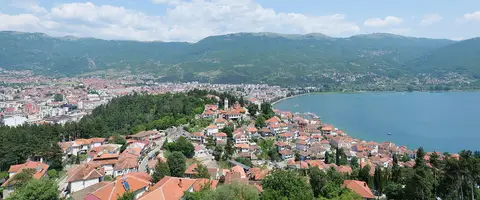
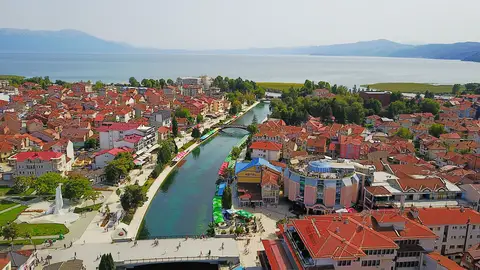
Lake Ohrid is several million years old, up to 288 meters (945 feet) deep and so clear that on calm days you can see far down into the water. It is home to species found nowhere else, including the Ohrid trout. The town of Ohrid climbs from the shore up a hill to Tsar Samuil's Fortress. In between stand churches dating from the 11th to the 14th century, and the houses have overhanging wooden upper floors. The little church of Sveti Jovan Kaneo on a rocky outcrop above the water is the most photographed sight in the country, and Plaošnik, where Saint Clement founded one of the first Slavic schools in the 9th century, is regarded as the cradle of Cyrillic literacy. The lake and the town, together with the Albanian shore, are on the UNESCO World Heritage List. A few miles further on lies Struga, where the Black Drin flows out of the lake and an international poetry festival takes place every August. Finally, on the southern shore stands Sveti Naum Monastery, surrounded by springs, peacocks and rowboats.
Skopje: Bazaar and Monuments
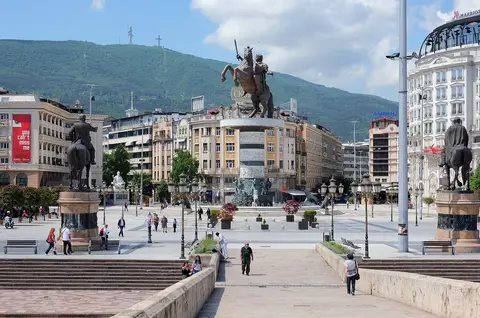
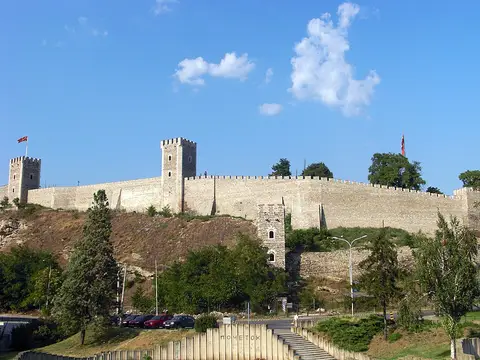
The capital is a city of contrasts in the literal sense: on one side of the Vardar River is the Skopje 2014 project, with dozens of statues, a triumphal arch and neoclassical facades; on the other side is the Ottoman-era stone bridge and, beyond it, the Čaršija, one of the largest surviving bazaars in the Balkans. Tea houses, goldsmiths, mosques and caravanserais such as Kapan An line its lanes. Kale Fortress looms over it all. The 1963 earthquake destroyed large parts of the city, and the old train station, its clock stopped at 5:17 a.m., serves as a reminder. Skopje is also the birthplace of Mother Teresa, and a memorial house stands on the pedestrian street. Excursions lead to Matka Canyon, where you can paddle a kayak between rock walls to caves and medieval monasteries.
Bitola, Prilep and the South
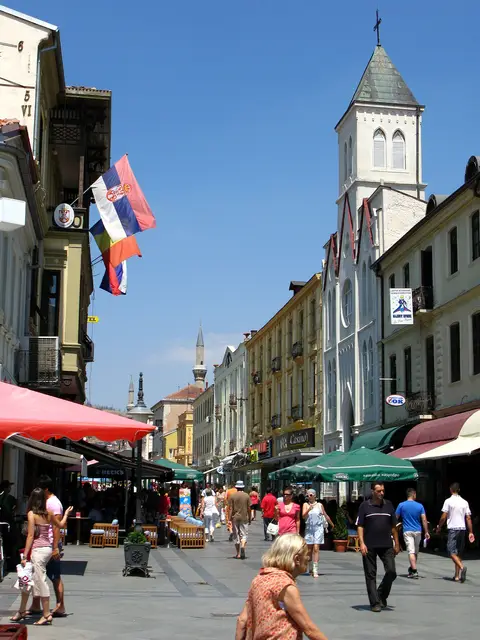
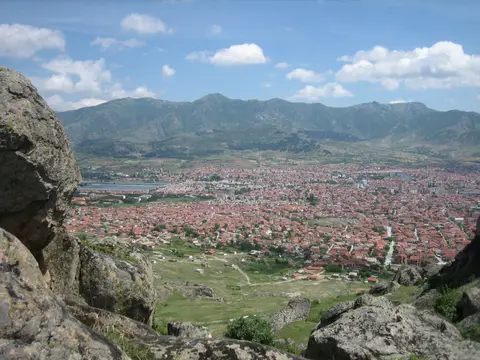
Many of North Macedonia's attractions lie off the beaten path, and the south shows this particularly clearly. Bitola, known as the city of consuls in the 19th century, has the pedestrian street Širok Sokak, a promenade lined with cafés and pastel-colored facades. Right on the edge of town are the excavations of Heraclea Lyncestis, with floor mosaics from the early Christian era. Behind the city rises Pelister National Park, famous for the Molika pine, a tree species endemic to the Balkans. Prilep is the center of tobacco growing, surrounded by bizarre granite rock formations and the Treskavec Monastery high above the town. In the southeast, around Strumica and the Tikveš wine region near Kavadarci, the feel becomes more Mediterranean: peppers, tomatoes and grapes grow here, supplying the country and well beyond its borders.
Mountains, Monasteries and the Albanian-Influenced West
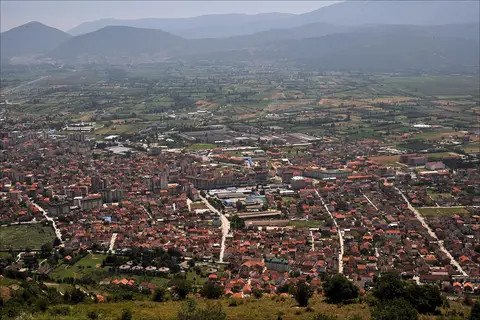
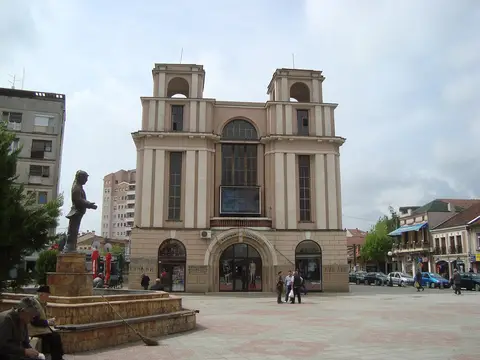
Around a quarter of the population speaks Albanian, mainly in the west around Tetovo and Gostivar. Tetovo is home to the Painted Mosque, whose walls are decorated inside and out like a carpet. Above it rises the Šar Mountains, with the Popova Šapka ski resort and peaks over 2,700 meters (8,860 feet). In Mavrovo National Park stands Sveti Jovan Bigorski Monastery, with an iconostasis whose wood carvings depict hundreds of figures. Every July the village of Galičnik celebrates a traditional wedding in which a couple marries according to ancient ritual while half the country looks on. Further east, Štip has a quiet, student-town atmosphere thanks to its old town and university, and Kumanovo, near the Serbian border, is known for its music and lively kafana culture.
Food and Drink
The cuisine is hearty and heavily vegetable-based. Tavče gravče, white beans baked in a clay pot, is considered the national dish; in autumn, many families cook down huge batches of ajvar made from roasted peppers, and the aroma hangs over entire neighborhoods. Other staples include shopska salad with grated sheep's cheese, stuffed peppers, pastrmajlija, an oblong flatbread topped with meat from the Štip area, and fried trout at Lake Ohrid. Wine from the Tikveš region, especially the red Vranec grape, is inexpensive and good. To finish, you drink rakija, often distilled by the host.
Getting Around and Best Time to Visit North Macedonia
Distances between North Macedonia's destinations are short: it is about three hours by car from Skopje to Ohrid, and a little less to Bitola. Buses connect all the larger towns reliably and cheaply, while trains play hardly any role. With a rental car you can also reach remote monasteries and mountain villages. The best time to visit North Macedonia is May and June as well as September, when daytime temperatures run between 72 and 82°F (22 to 28°C). Lake Ohrid is inviting for swimming from June to September, with the water reaching about 73°F (23°C) in August. In July and August it often gets hotter than 95°F (35°C) in Skopje and the Vardar Valley. Winter is cold, with heavy snow in the mountains, and in Skopje dense smog can settle over the city in January.