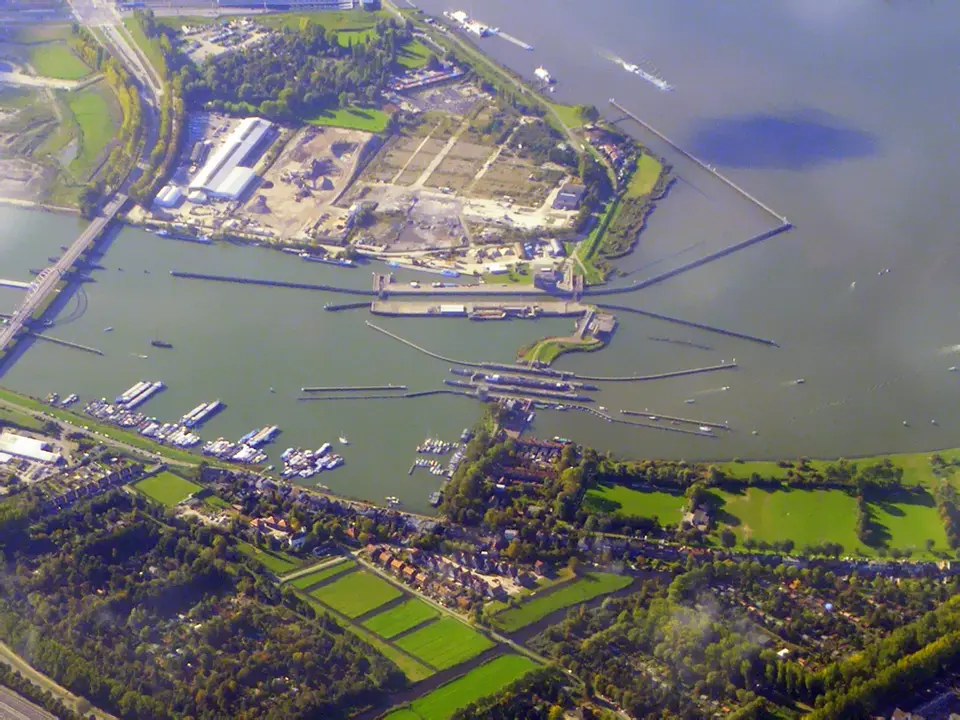
About Oranjesluizen
The Oranje Locks are a key piece of hydraulic engineering in Amsterdam, connecting the North Sea Canal and the Amsterdam-Rhine Canal with the Markermeer. Located northeast of the city center, four locks allow inland vessels to pass through to the IJsselmeer and on into the Wadden Sea. The complex serves not only shipping but is also essential to the region's water management, since it keeps too much salt water from entering the freshwater system and holds the water level in the canal steady. The locks date back to the construction of the North Sea Canal, which was meant to replace the silted-up route via the Zuiderzee. King William III laid the foundation stone in 1870, and the complex was named after the Dutch royal House of Orange. Originally there were three locks, which went into operation in 1872 and were modernized over the years through various technical upgrades, such as replacing iron gates with wooden or steel ones.
As shipping traffic grew in the 1970s, the capacity of the old complex was no longer sufficient, which led to the opening of the much larger Prins Willem-Alexander Lock in 1995. This modern structure uses innovative sliding gates that glide on a cushion of water, allowing large push convoys to pass through efficiently. At the same time, the historic complex underwent a comprehensive renovation between 1997 and 2000 to extend its service life and preserve its cultural value. The lock islands were raised, new hydraulically operated gates were installed, and the lock floors were repaired. Today the vessels share the facilities: The new lock mainly serves commercial shipping, while the historic chambers are used by pleasure boats and smaller inland vessels. Around 120,000 vessels pass through this important piece of infrastructure every year; it is managed by the Rijkswaterstaat agency.
For visitors, the Oranje Locks offer a unique experience, as a tourist path runs across the entire complex. Pedestrians can cross the IJ dam and get a direct view of the impressive gates and the action in the locks. The path runs along narrow walkways between the historic locks and continues across the broader gates of the modern complex. The nearby Schellingwoude Bridge also offers a wide panorama over the entire complex and the Outer IJ. A small memorial with an old fog bell recalls the history of the site. The complex is also ecologically significant, as special fish passes allow aquatic life to get through, which would otherwise be blocked by the dam and the ships' propellers.
At a glance
- Category
- Sight › Historic sites
- Rating
- no reviews yet · write a review
- Address
1023 Amsterdam, Netherlands- District
- Noord
- Phone
- +31206946161
- Website
- nl.wikipedia.org
- —
- Coordinates
- 52.38163° N · 4.96095° E
- Data quality
- confidence 0.89
- Identifier
- ID 46e614aa-9f3…
Location & surroundings
Toggle layersRatings & comments
none yetNear Oranjesluizen
closest 5 per category · 2 kmSights
Hotels
Cocktail bars
None within 2 km.
More:Historic sites in Amsterdam (397)Sights in Noord (24)All sights in Amsterdam (475)
116 places within 2 km loaded.
You need a free account to leave reviews and photos – that keeps comments genuine and lets you edit them later.