State of Zacatecas: A Silver City in Rose-Colored Stone
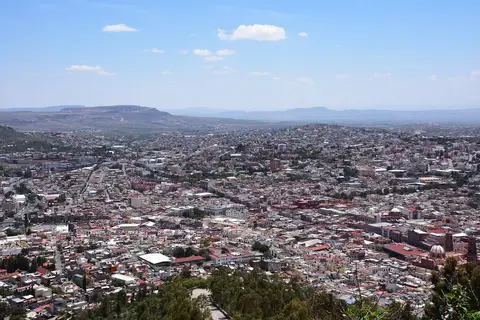
Travel guide · editorialA vacation in the state of Zacatecas takes you into the heartland of Mexico's silver history. The capital sits at about 7,900 feet (2,400 meters) in a narrow gorge, its churches and palaces of rose-colored sandstone rank among the most beautiful colonial buildings in the Americas, and the backcountry holds Pueblos Mágicos and pre-Columbian ruins.
Highlands, Steppes, and Canyons
Zacatecas lies in the middle of northern Mexico on the Altiplano, a high plateau of pastureland, bean and chili fields, and dry mountain ranges. In the south, deep canyons cut through the landscape, including the Juchipila Valley and the Tlaltenango Valley, which are warmer and more fertile. In the west, the Sierra Madre Occidental extends into the state. The climate is dry, with big swings between day and night; in the capital, temperatures can drop below freezing in winter.
The Capital, Zacatecas
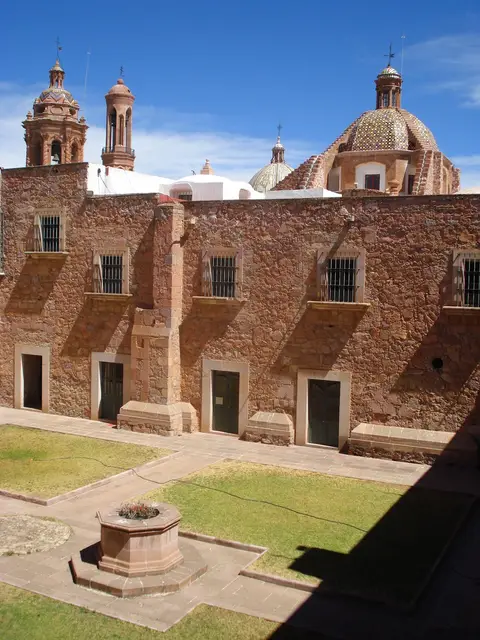
After the discovery of rich silver veins in 1546, Zacatecas became one of the most important cities in New Spain. The historic center is a UNESCO World Heritage Site. Its cathedral, with a lavishly ornamented Churrigueresque facade, is considered a masterpiece of Mexican Baroque. The former Jesuit church houses the Museo Pedro Coronel, with art from around the world, while the Museo Rafael Coronel displays a large collection of masks in a former convent. A cable car connects Cerro del Grillo with Cerro de la Bufa, where the Battle of Zacatecas took place in 1914, in which Pancho Villa defeated Huerta's troops. A museum commemorates the event. At the El Edén Mine, you ride a small train into old tunnels. The neighboring town of Guadalupe has a large Franciscan monastery with an important collection of colonial painting.
Sights in the State of Zacatecas
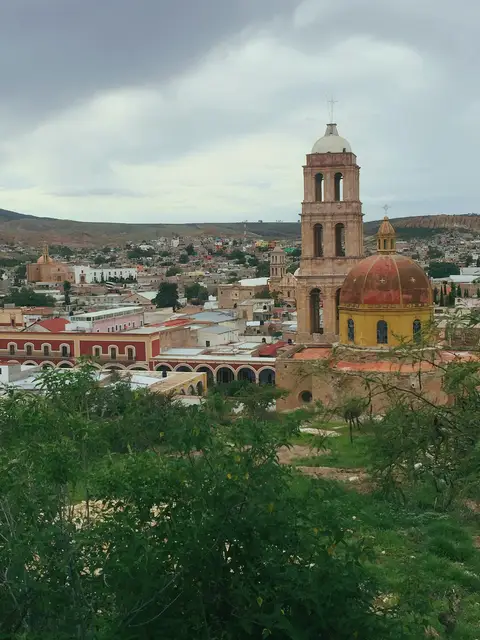
Among the most rewarding Zacatecas destinations is Jerez, a Pueblo Mágico with a small theater modeled on European examples and the hometown of the poet Ramón López Velarde. Sombrerete, another old mining town, lies near the Sierra de Órganos, whose rock formations resemble organ pipes and have served as film backdrops. South of the capital rises the ruin site of La Quemada, also known as Chicomoztoc, with a hall of columns and terraces on a hilltop. Teúl de González Ortega has another archaeological site and mezcal distilleries. Fresnillo, the largest city, is still one of the world's largest silver mining districts and draws many of the faithful on pilgrimage to Plateros.
Culture and Daily Life
The culture of Zacatecas is shaped by mining and emigration: a large share of families have relatives in the U.S., whose remittances are transforming many villages. Musically, tamborazo brass-band music is typical, parading through the streets at festivals. In summer, the Morismas de Bracho take place, a multi-day spectacle reenacting battles between Moors and Christians. The callejoneadas, nighttime processions through the alleys with music and mezcal, are a special tradition of the capital.
Food and Drink
Typical dishes include asado de boda, a wedding stew of pork in chili sauce, reliquias, gorditas, and enchiladas zacatecanas. Zacatecas is one of Mexico's major producers of beans and chilies. Mezcal from the region has a designation of origin, and in the south around Huitzila it is distilled from agave. Sweets include melcocha and queso de tuna, made from prickly pears.
Getting There, Safety, and Best Time to Visit
Zacatecas Airport has connections to Mexico City, Tijuana, and the U.S.; Aguascalientes is about a two-hour bus ride away. Parts of the state are affected by violence from criminal groups; some governments advise against nonessential travel, so you should check current travel advisories and avoid overland travel at night. The best time to visit is between March and November; winter is sunny but cold. In September, the capital celebrates its big Feria Nacional with concerts, bullfights, and exhibitions, and the Morismas can be seen at the end of August. Because of the altitude, don't plan too much for your first day, as the steep lanes of the old town challenge even experienced walkers. Two to three days are enough for the city, Guadalupe, and a trip to Jerez.