Tlaxcala: Mexico's Smallest State
Travel guide · editorialA vacation in Tlaxcala takes you to Mexico's smallest state, which played a surprisingly big role in the country's history. Between the colonial capital, the colorful murals of Cacaxtla, and the La Malinche volcano, you can discover a quiet highland region far from the main tourist crowds.
Location and Landscape
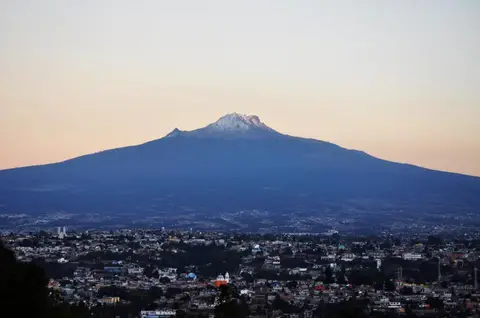
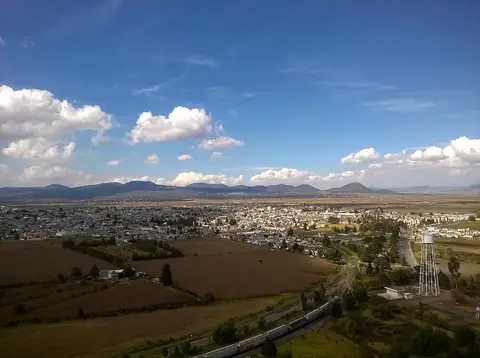
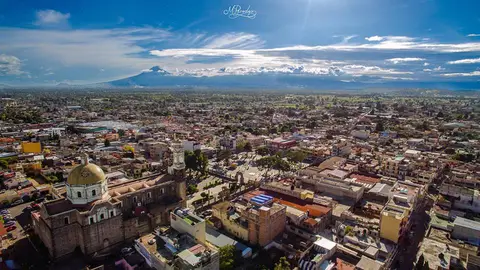
Tlaxcala lies at over 7,200 feet (2,200 meters) in the central highlands, about two hours east of Mexico City and directly north of Puebla. The countryside is characterized by agave and corn fields, pine forests, and old haciendas. To the south rises the extinct La Malinche volcano, around 14,400 feet (4,400 meters) high, which can be climbed without mountaineering gear and is a popular training peak for higher summits.
Tlaxcala City and Its History
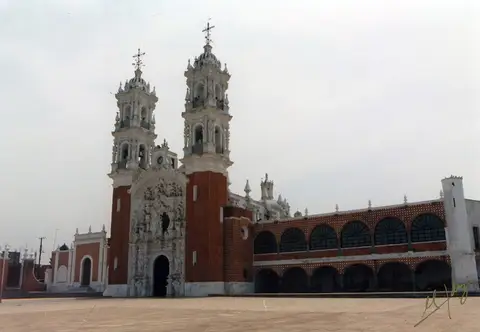
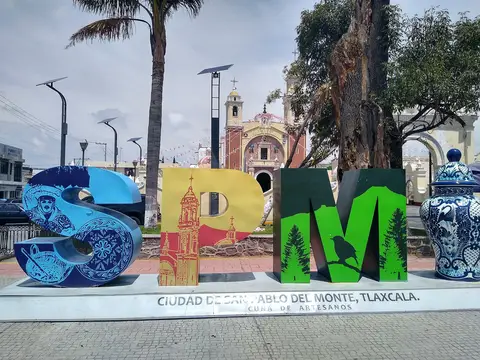
The Tlaxcalans long resisted the Aztec Empire and allied themselves with Hernán Cortés in 1519, which contributed decisively to the fall of Tenochtitlan. In return, Tlaxcala received special privileges under Spanish rule. The capital, officially Tlaxcala de Xicohténcatl, is one of the first Spanish foundations on the mainland. The Franciscan monastery with its Mudéjar wooden ceiling is among the earliest in the Americas, and in the Government Palace, large-scale murals by Desiderio Hernández Xochitiotzin tell the story of the region. A little higher up stands the Basilica of Ocotlán, one of Mexico's most magnificent Baroque churches, with a white facade and red brick towers.
Sights in Tlaxcala
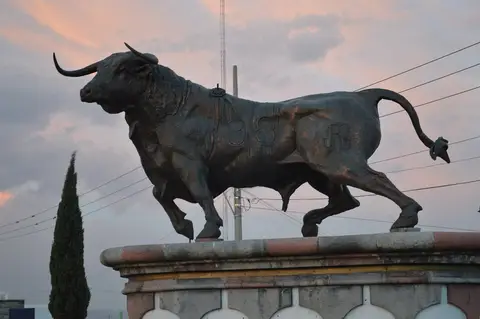
The archaeological site of Cacaxtla is famous for its exceptionally well-preserved murals from the 7th to 9th centuries, which depict a battle and figures with jaguar and bird attributes; a large roof protects the site. Nearby is Xochitécatl with a round pyramid. Huamantla, a Pueblo Mágico, is known for the night when nobody sleeps: in August, carpets of dyed sawdust and flowers stretch for miles along the streets, followed by a running of the bulls similar to the one in Pamplona. From June to August, millions of fireflies light up the forest of Nanacamilpa, a spectacle you can see on guided evening tours. Apizaco, the largest city, grew up as a railroad junction on the line from Mexico City to Veracruz and has a small railroad museum. Santa Ana Chiautempan is known for woolen fabrics and sarapes, Zacatelco and Ocotlán for their church festivals. Around Tlaxco in the north, you can visit old pulque haciendas, some of which now host overnight guests.
Food, Getting There, and Best Time to Visit
In Tlaxcala, pulque is still made on haciendas, and the cuisine includes mixiotes, meat cooked in agave skin, tlatlapas, a bean soup, and escamoles. Calpulalpan in the west is considered a pulque stronghold. The state has no airport of its own; Puebla and Mexico City have the nearest ones. Buses connect Tlaxcala with both cities. The best time to visit is between October and May, when the sky is clear and the views of La Malinche, Popocatépetl, and Iztaccíhuatl are unobstructed. For the fireflies, on the other hand, the summer months are ideal, when the start of the rainy season keeps the forest damp. Because of the high elevation, nights can be cool all year round, and frosty in winter.