Querétaro: Colonial City, Vineyards and the Sierra Gorda
Travel guide · editorialA trip to Querétaro combines one of Mexico's most elegant colonial cities with vineyards, cheese makers and the green mission valleys of the Sierra Gorda. The small state, officially the Estado Libre y Soberano de Querétaro de Arteaga, lies only about a two-hour drive north of Mexico City and is one of the country's most economically dynamic regions.
From the Highlands to the Sierra Gorda
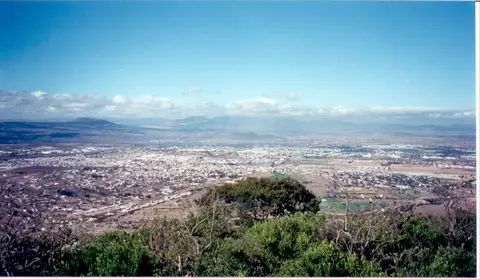
Southern Querétaro is part of the Bajío, a fertile, dry and sunny high plateau at roughly 5,900 to 6,600 feet (1,800 to 2,000 meters). This is where you'll find the capital, San Juan del Río and the wine and cheese villages. To the north, the land climbs into the Sierra Gorda, a biosphere reserve that packs deep canyons, cloud forests and semi-deserts into a small area. Between these two worlds, near Bernal, rises a huge monolith, the Peña de Bernal, counted among the largest freestanding rocks in the world.
Santiago de Querétaro
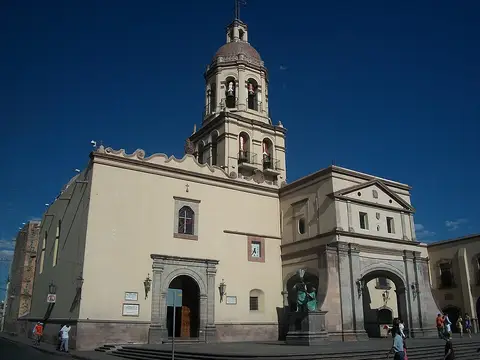
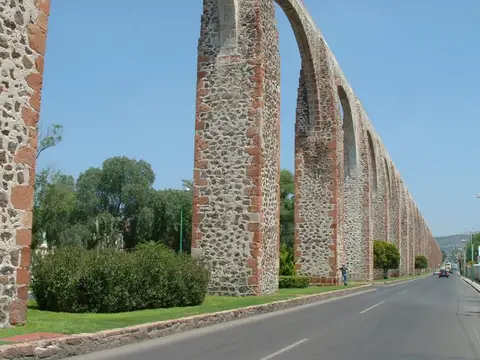
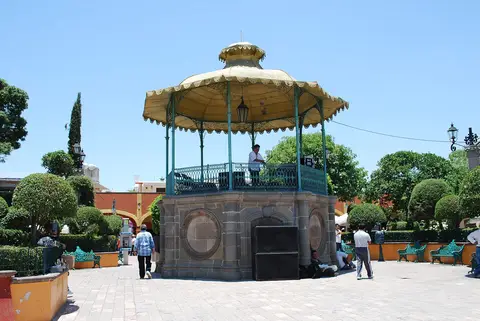
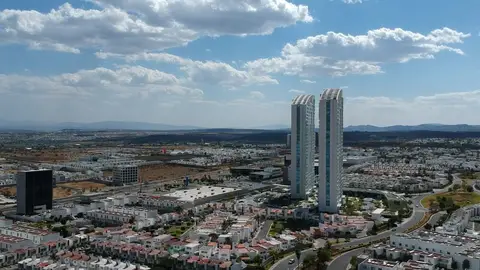
The capital's historic center is a UNESCO World Heritage Site. Its landmark is the 18th-century aqueduct, whose 74 arches stretch about 1.3 kilometers (0.8 miles) through the city. Ochre-colored lanes, squares such as the Jardín Zenea and the Plaza de Armas, and the Santa Cruz convent define the center. The city plays a special role in Mexican history: the conspiracy for independence was hatched here in 1810, and the Corregidora Josefa Ortiz de Domínguez warned the insurgents. In 1867 Emperor Maximilian was executed on the Cerro de las Campanas, and in 1917 the constitution that is still in force today was drafted in Querétaro. Modern districts such as Juriquilla in the north and El Pueblito in the south show the rapid growth of the metropolis, which lives off the aerospace, automotive and IT industries.
Things to See in Querétaro
Besides the capital, Bernal is one of the most popular destinations in Querétaro. The village at the foot of the monolith is a Pueblo Mágico; climbers ascend to the summit, while walkers hike to a viewpoint halfway up. Tequisquiapan, also a Pueblo Mágico, has a quiet main square, wickerwork crafts and thermal baths. In the Sierra Gorda stand five 18th-century Franciscan missions, including Jalpan and Landa, whose lavishly decorated facades blend indigenous and Baroque motifs; they are World Heritage Sites as well. Nature lovers visit the Sótano del Barro, a huge shaft where macaws nest, or the waterfalls near Pinal de Amoles. San Juan del Río, the second-largest city, is known for its opal and gemstone cutters.
Wine, Cheese and Regional Cuisine
Over the past few decades Querétaro has become Mexico's second most important wine region, especially for sparkling wines. Between Tequisquiapan, Ezequiel Montes and Colón, wineries such as Freixenet México and many smaller estates welcome you for tastings. The Ruta del Arte, Queso y Vino links the wineries with cheese makers who produce fresh cheeses as well as aged varieties. Typical dishes include gorditas de migajas, enchiladas queretanas and nopales in many variations. In the Sierra Gorda you can try zacahuil, a giant tamale that cooks overnight in an earth oven. At the end of May and the beginning of June, Tequisquiapan holds a large wine and cheese fair.
Getting There, Climate and Best Time to Visit
The international airport lies east of the capital, with flights from Mexico City, Monterrey, Cancún and the U.S. Mexico City is quickly reached via Highway 57, and buses run every half hour. San Miguel de Allende, in the neighboring state of Guanajuato, is also just an hour away. The climate is mild year-round; the best time to visit is between October and May. In summer, short, heavy downpours often fall in the afternoon, and the Sierra Gorda turns especially green. In winter, nights in the highlands can get chilly. If you want to experience the wine region, the best time to come is during the harvest in July and August, when many estates host festivals with music and grape stomping. Plan at least two days for the missions of the Sierra Gorda, since the road over the mountains to Jalpan is winding and slow, but rewards you with views over canyons and cloud forests.