Nayarit: Riviera, Surf Towns, and Huichol Culture
Travel guide · editorialA vacation in the state of Nayarit usually begins on the Riviera Nayarit, the stretch of coast north of Puerto Vallarta with surf towns, humpback whales, and long sandy beaches. Inland you'll find volcanoes, lagoons, and the mountain region of the Huichol, whose colorful art made from yarn and glass beads is known around the world.
Between the Pacific and the Sierra Madre
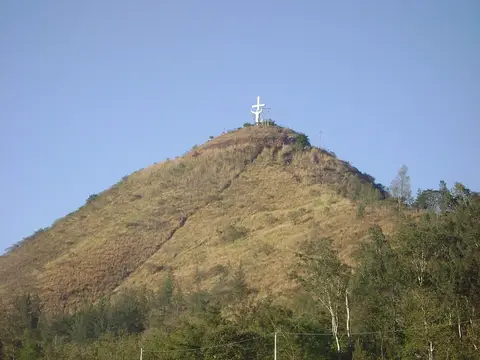
Nayarit is a narrow state on Mexico's west coast. In the south it borders Jalisco on the Bahía de Banderas, where the Río Ameca, which forms the boundary, empties into the sea. Farther north the coast flattens out and is shaped by mangroves, lagoons, and river mouths, as in the Marismas Nacionales area. To the east the Sierra Madre Occidental rises, and in the center you'll find extinct volcanoes such as Sangangüey and the crater lake of Santa María del Oro. The climate is tropical, with hot, humid summers and dry, sunny winters.
The Riviera Nayarit
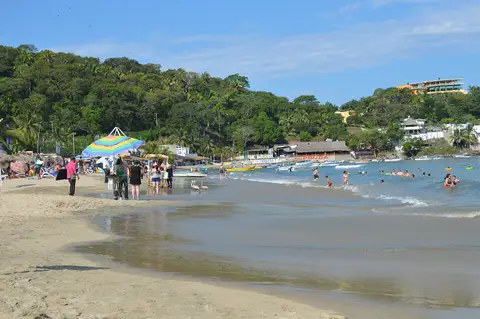
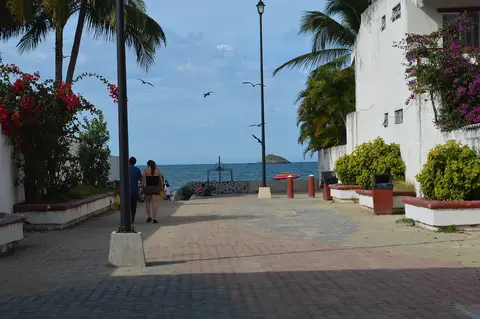
The coast between Nuevo Vallarta and San Blas is home to some of Nayarit's best-known destinations. Nuevo Nayarit and Nuevo Vallarta are dominated by large resorts and golf courses that connect directly to the Puerto Vallarta metro area. Bucerías has grown from a fishing village into a relaxed town with a long beachfront promenade and many winter visitors from North America. Punta de Mita is an exclusive peninsula with luxury hotels. Sayulita, a Pueblo Mágico, is the heart of the surf scene, with colorful pennants strung over the lanes and beginner-friendly waves right at the edge of town; nearby are the quieter San Pancho and Lo de Marcos. Farther north, Rincón de Guayabitos offers a sheltered bay that is popular with Mexican families.
Sights in the State of Nayarit
Off the coast lie the Islas Marietas, a national park with the famous Playa Escondida, a beach inside a collapsed rock crater that you can reach only by swimming through a tunnel; access is strictly limited. Between December and March, humpback whales come to the Bahía de Banderas to calve. In the north, San Blas is worth a visit: an old colonial port with fortress ruins, from which boat trips lead through the mangroves of La Tovara, home to crocodiles and herons. The island of Mexcaltitán, set in a lagoon, is considered by some to be the mythical Aztlán, the original homeland of the Aztecs; its streets turn into canals during the rainy season. Inland, the crater lake of Santa María del Oro is ideal for swimming and kayaking. Near Ixtlán del Río stands the pre-Columbian site of Los Toriles, with a round temple.
Tepic and the Huichol
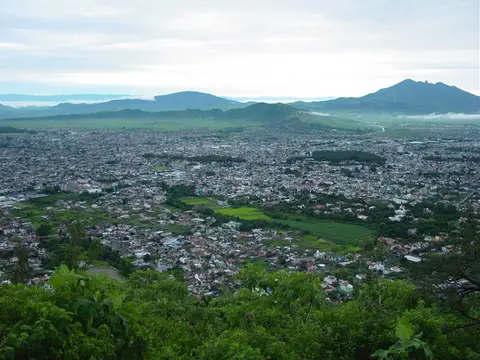
The capital, Tepic, sits at about 900 meters (about 2,950 feet) in a fertile valley and has a quiet, easygoing feel. The cathedral with its neo-Gothic towers, the regional museum, and the Museum of the Four Peoples, which presents the cultures of the Huichol, Cora, Tepehuano, and Mexicanero peoples, are the main points of interest. The Wixárika, as the Huichol call themselves, live in remote mountain villages and make yarn paintings and figures covered with thousands of tiny colored glass beads, known as chaquira. Their motifs, such as deer, corn plants, and peyote blossoms, come from a religion in which the annual pilgrimage to the desert of San Luis Potosí plays a central role. Together with neighboring Xalisco, Tepic forms a small metropolitan area.
Food and Drink
Nayarit's best-known dish is pescado zarandeado, a butterflied fish brushed with chili paste and grilled over mangrove wood. Shrimp from San Blas and the lagoons are eaten as ceviche, dried, or as tamales de camarón. In Mexcaltitán you can try tlaxtihuilli, a shrimp broth made to an old recipe. Fresh coconuts, mangoes, and jackfruit from the coastal plantations round out the menu.
Getting There and Best Time to Visit
Most visitors land in Puerto Vallarta, whose airport is only a few minutes from the Nayarit border. Tepic has a smaller airport with connections to Mexico City and Tijuana. A new highway links the coast with Guadalajara, and buses run regularly between the coastal towns. The best time to visit is between November and April: dry, sunny, and whale season. From June to October it is hot and muggy, with rain and occasional hurricanes; the mosquitoes in the mangroves of San Blas are notorious then.