Morelos: Eternal Spring at the Gates of the Capital
Travel guide · editorialFor many residents of Mexico City, a vacation in Morelos means a weekend getaway: beyond the Ajusco Pass, a good hour south of the capital, the air grows warmer and the light softer. Mexico's second-smallest state draws visitors with the mild climate of Cuernavaca, monasteries on the slopes of Popocatépetl, thermal baths, and the mountain village of Tepoztlán.
Location and Landscape
Morelos lies in a basin south of the chain of volcanoes that encircles the high valley of Mexico City. From the cool north at over 3,000 meters (9,800 feet), the land drops south to around 900 meters (2,950 feet), where sugarcane and rice fields dominate. In the northeast rises Popocatépetl, whose eruptions at times carry ash over the villages. The Sierra de Tepoztlán, with its reddish, sheer rock walls, is the landscape's signature landmark. Numerous streams and springs feed swimming lakes and balnearios (spa resorts).
Cuernavaca, the City of Eternal Spring
The state capital owes its nickname to the balanced climate that the Aztecs already prized. Hernán Cortés had a fortress-like palace built here, which now houses a museum; the Diego Rivera murals on the upper floor tell the story of the conquest. The 16th-century cathedral and monastery are part of the World Heritage–listed early monasteries on the slopes of Popocatépetl. Emperor Maximilian once retreated to the Jardín Borda, and the Robert Brady Museum displays an American artist's collection in an old mansion. Many wealthy residents of Mexico City own weekend homes with gardens, and numerous language schools attract international students. Together with Jiutepec, Temixco, and Tejalpa, Cuernavaca forms a tightly interwoven metropolitan area.
Sights in Morelos
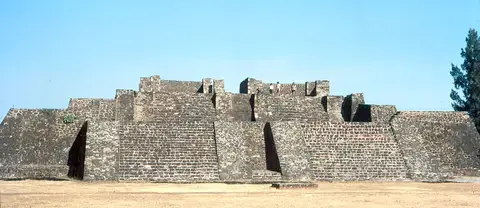
Tepoztlán is the best-known of the Morelos destinations. From the village, a steep trail leads to the Tepozteco, a small Aztec pyramid high above the valley that was dedicated to the god of pulque. On weekends, the market and alleys fill with visitors, crafts, and ice cream stands offering unusual flavors. West of Cuernavaca lies Xochicalco, a fortified city on a hilltop that flourished after the decline of Teotihuacan; its Pyramid of the Feathered Serpent and an observatory in a cave are part of the UNESCO World Heritage Site. In the northeast, monasteries such as Tepoztlán, Yecapixtla, and Tlayacapan line up one after another. Oaxtepec is known for its large thermal complexes, and Las Estacas near Tlaltizapán offers a crystal-clear river for swimming and snorkeling.
History and Culture
Morelos is closely tied to Emiliano Zapata, the peasant leader of the Revolution, who was born in Anenecuilco near Cuautla and fought for land reform. His motto, Tierra y Libertad, still shapes the region's self-image today; a memorial honors him in Chinameca, where he was assassinated in 1919. Cuautla was already the scene of a famous siege during the War of Independence. During carnival in Tepoztlán, Tlayacapan, and Yautepec, the Chinelos dance in embroidered velvet robes and bearded masks.
Food and Drink
The cuisine makes the most of the abundance of the warm climate: cecina de Yecapixtla, thinly sliced salted beef, is famous across the country. It is served with tlacoyos, quesadillas with squash blossoms and huitlacoche, pozole, and mole. Molasses and sweets come from the sugarcane fields. In Tepoztlán, handmade ice cream and fresh pulque are part of the weekend routine.
Getting There and Best Time to Visit
Morelos is reachable from Mexico City via the highway in one to two hours, depending on traffic; buses depart frequently from the Taxqueña South Terminal. The small airport near Cuernavaca has only a few connections. As in other parts of Mexico, you should check on the local security situation. The best time to visit is between October and May, when it is dry and sunny; April and May are the hottest months, and from June to September it usually rains in the afternoon. That is when the jacarandas and bougainvilleas in Cuernavaca bloom especially lushly, and the water parks and balnearios are in high season. If you want to experience Tepoztlán without the crowds, come on a weekday; on weekends, cars from the capital back up on the access road. Carnival in February or March is the best time to see the Chinelos dance.