Hidalgo: Pastes, Hot Springs, and Tula
Travel guide · editorialA vacation in Hidalgo takes you barely more than an hour from Mexico City, yet you'll find a world all its own: mining towns with an English heritage, the stone warriors of Tula, hot springs in the Mezquital Valley, and cloud forests in the Huasteca. The state is small but remarkably diverse.
Landscapes Between the Highlands and the Huasteca
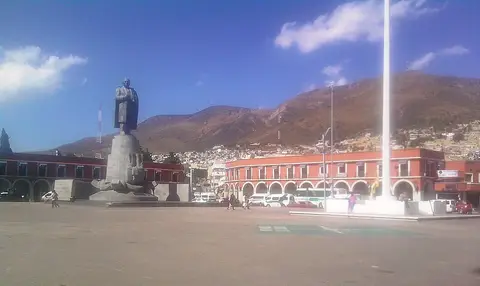
Hidalgo lies north of the capital and stretches from the dry high plains of the Mezquital Valley down to the hot, humid Huasteca in the northeast, where Huejutla de Reyes is the main center. In between rises the Sierra de Pachuca with its pine and fir forests, the heart of which is El Chico National Park, one of the oldest protected areas in the country, with rock formations that attract climbers. The Barranca de Metztitlán is a biosphere reserve full of columnar cacti. Pachuca sits at about 2,400 meters (7,900 feet) and is known for its constant breeze as the windy beauty, la Bella Airosa.
Pachuca and Real del Monte
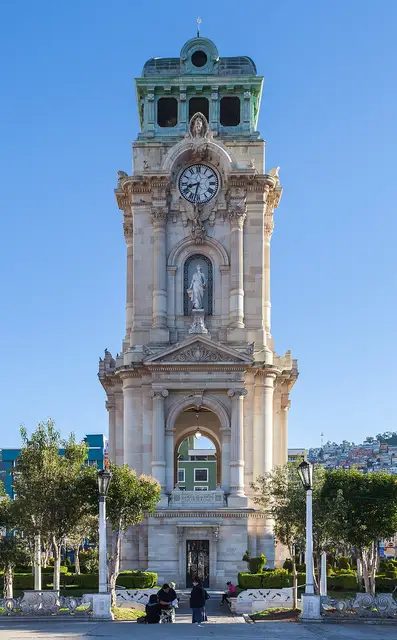
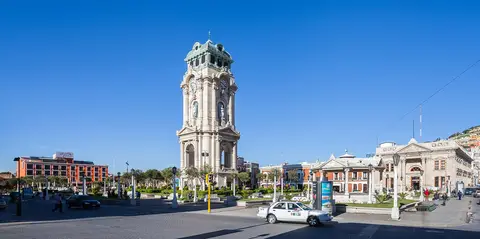
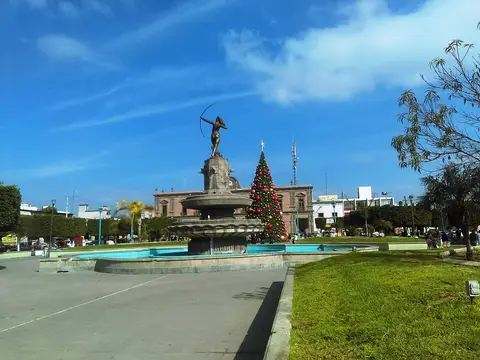
The state capital owes its existence to silver. In the 19th century, miners from Cornwall came to work the mines, and they brought two things with them that are now considered typical of the region: soccer, for which Pachuca is regarded as the cradle in Mexico, and pastes, filled pastries modeled on Cornish pasties. At the center stands the Reloj Monumental, a clock tower from 1910. You can visit a soccer museum and the old mining facilities. Just a few miles uphill lies Mineral del Monte, usually called Real del Monte, a Pueblo Mágico with steep lanes, red roofs, and an English cemetery. Mineral del Chico is also a former mining village, on the edge of the national park.
Sights in Hidalgo
The best-known archaeological site is Tula, once the capital of the Toltecs between about 900 and 1150. On Pyramid B stand the Atlantes, basalt warrior figures about 4.6 meters (15 feet) tall that once supported the roof of a temple. In the Mezquital Valley around Ixmiquilpan, numerous thermal springs bubble up; parks such as Tolantongo, where warm, turquoise water flows from a cave into terraced pools, are among the most popular destinations in Hidalgo. Huasca de Ocampo has the Prismas Basálticos, hexagonal basalt columns over which a waterfall plunges, as well as old haciendas such as Santa María Regla. Actopan has a 16th-century Augustinian monastery with important murals. Tulancingo is known for wool fabrics and dairy products.
Culture and Daily Life
A large share of the Otomí, who call themselves Hñähñu, live in the Mezquital Valley. They weave ayate cloths from agave fiber and run many of the thermal parks as community cooperatives. In the Huasteca, many people speak Nahuatl, and the music of huapango fiddlers accompanies festivals. Industry is concentrated around Tula, with its refinery and cement plants, and around Tizayuca, which is growing quickly thanks to its proximity to the new capital-region airport.
Food and Drink
Besides pastes, filled with potatoes and ground meat or sweet with rice and pineapple, Hidalgo is known for barbacoa: lamb wrapped in agave leaves, slow-cooked overnight in an earth oven, and served on Sundays with consommé. In the Mezquital, escamoles (ant eggs) and chinicuiles (agave worms) are eaten as delicacies. Pulque, the fermented agave drink of the Aztecs, is still served in many pulquerías here. In the Huasteca you'll find zacahuil and bocoles made from corn.
Getting There and Best Time to Visit
Felipe Ángeles Airport near Zumpango in the State of Mexico lies close to the border with Hidalgo, and Pachuca is quickly reached from there; Mexico City's main airport (MEX) is also only about 56 miles (90 km) away. Buses run from the Terminal Norte in Mexico City to Pachuca every few minutes. The best time to visit is the dry season between October and May. In the highlands, winter nights can get bitterly cold, which is exactly when the thermal baths are most pleasant. From June to September, rain showers are common in the afternoon. Tolantongo and other thermal parks get very crowded on weekends and during holidays; a weekday visit is much more relaxed. If you combine Real del Monte and El Chico National Park, you can comfortably stay overnight in Pachuca.