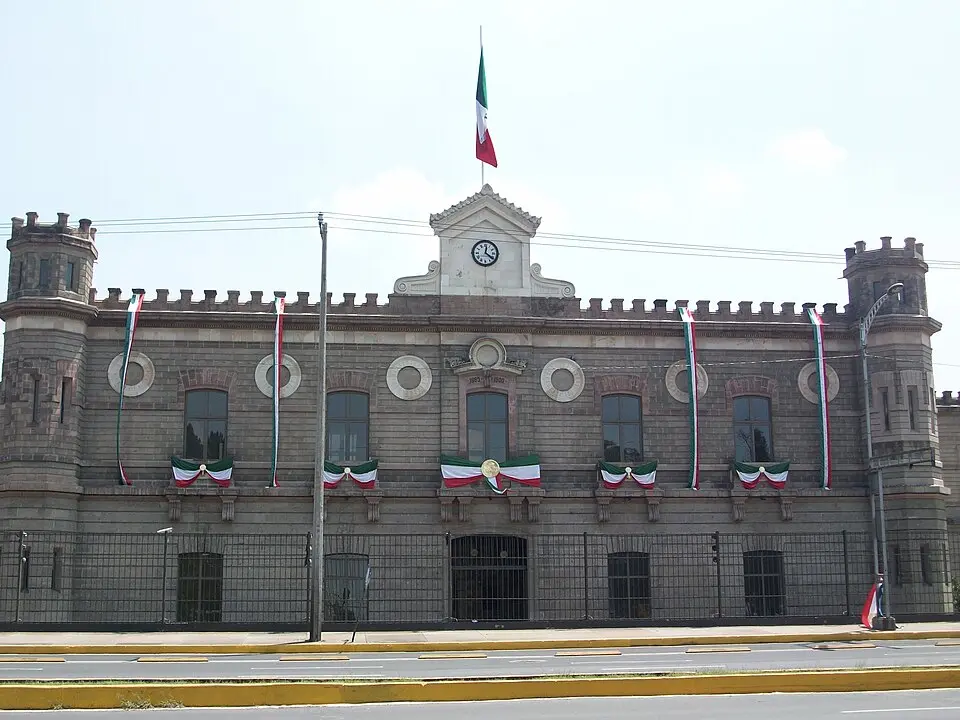
About Palacio de Lecumberri
The Palacio de Lecumberri in Mexico City is now a place of historical reckoning, located in the Venustiano Carranza borough. The imposing building was constructed as a prison between 1885 and 1900 and served that purpose until 1976. Over its long history as a penitentiary, which earned the nickname "Black Palace" because of arbitrary convictions and inhumane conditions, it held numerous well-known figures, including the painter David Alfaro Siqueiros, the writer José Revueltas, and the revolutionary Pancho Villa. In the 1970s, the prison's reputation was ruined for good by several spectacular escape attempts, some of which involved guards.
Today the building houses Mexico's National Archive, which opened in 1982 after extensive renovations. Here you can view the country's most important historical documents, including a significant collection of Indigenous colonial maps recognized as UNESCO World Heritage. A visit offers a striking contrast to the site's grim past. While the architecture still recalls the severe function of a prison, the complex now serves to preserve Mexico's cultural and political memory. The transformation from a place of repression to a center of historical documentation makes the Palacio de Lecumberri a fascinating destination for travelers interested in the country's complex history.
At a glance
- Category
- Sight › Historic sites
- Rating
- no reviews yet · write a review
- Address
- 4a. Cda. San A. Tomatlan
15280 Mexico City, Mexico - Phone
- +525551339900
- Website
- www.agn.gob.mx
- —
- Coordinates
- 19.43637° N · -99.11319° E
- Data quality
- confidence 0.94
- Identifier
- ID 86d19e48-91a…
Location & surroundings
Toggle layersFAQ about Palacio de Lecumberri
quick answersWhat is the Palacio de Lecumberri in Mexico City?
The Palacio de Lecumberri is a former prison in Mexico City that now houses Mexico's National Archive. The imposing building was constructed between 1885 and 1900 and served as a penitentiary until 1976. It is located in the Venustiano Carranza borough, at 4a. Cda. San A. Tomatlan.
Why is the Palacio de Lecumberri called the "Black Palace"?
The Palacio de Lecumberri in Mexico City earned the nickname "Black Palace" because of arbitrary convictions and inhumane conditions during its years as a prison. Well-known inmates included the painter David Alfaro Siqueiros, the writer José Revueltas, and the revolutionary Pancho Villa. In the 1970s, the prison's reputation was ruined for good by several spectacular escape attempts, some of which involved guards.
What can you see at the Palacio de Lecumberri today?
At the Palacio de Lecumberri in Mexico City, you can now visit Mexico's National Archive, which opened in 1982 after extensive renovations. Here you can view the country's most important historical documents, including a significant collection of indigenous colonial maps recognized as a UNESCO World Heritage item. The architecture still recalls the strict function of the former prison.
What can you see around the Palacio de Lecumberri?
Near the Palacio de Lecumberri in Mexico City, you'll find a memorial project and a museum. travelguide195 lists the "Rotonda a los Presos Políticos" project, which commemorates political prisoners, about 228 meters away, across from Lecumberri, as well as the Museo Legislativo about 860 meters away. If you need a break, travelguide195 lists around 41 restaurants within 500 meters.
Ratings & comments
none yetNear Palacio de Lecumberri
closest 5 per category · 2 kmSights
Restaurants
Museums
More:Historic sites in Mexico City (2,578)All sights in Mexico City (2,702)
219 places within 2 km loaded.
Don't miss in Mexico City
All sights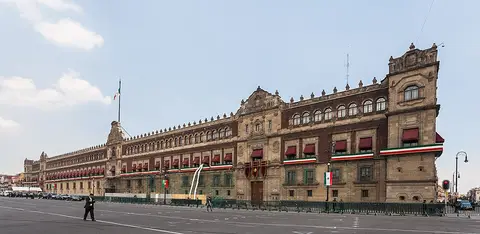 Historic sites01
Palacio Nacional
Avenida Pino Suarez · Mexico City● Website● Phone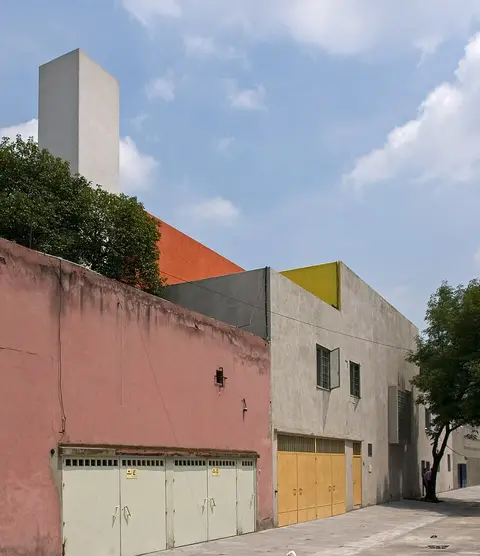 Historic sites02
Casa Estudio Luis Barragán
Gral. Francisco Ramírez 12 · Mexico City● Website● Phone Historic sites03
Av. Paseo de Reforma
Av. P.º de la Reforma 25 · Mexico City○ Website● Phone Monuments04
You need a free account to leave reviews and photos – that keeps comments genuine and lets you edit them later.