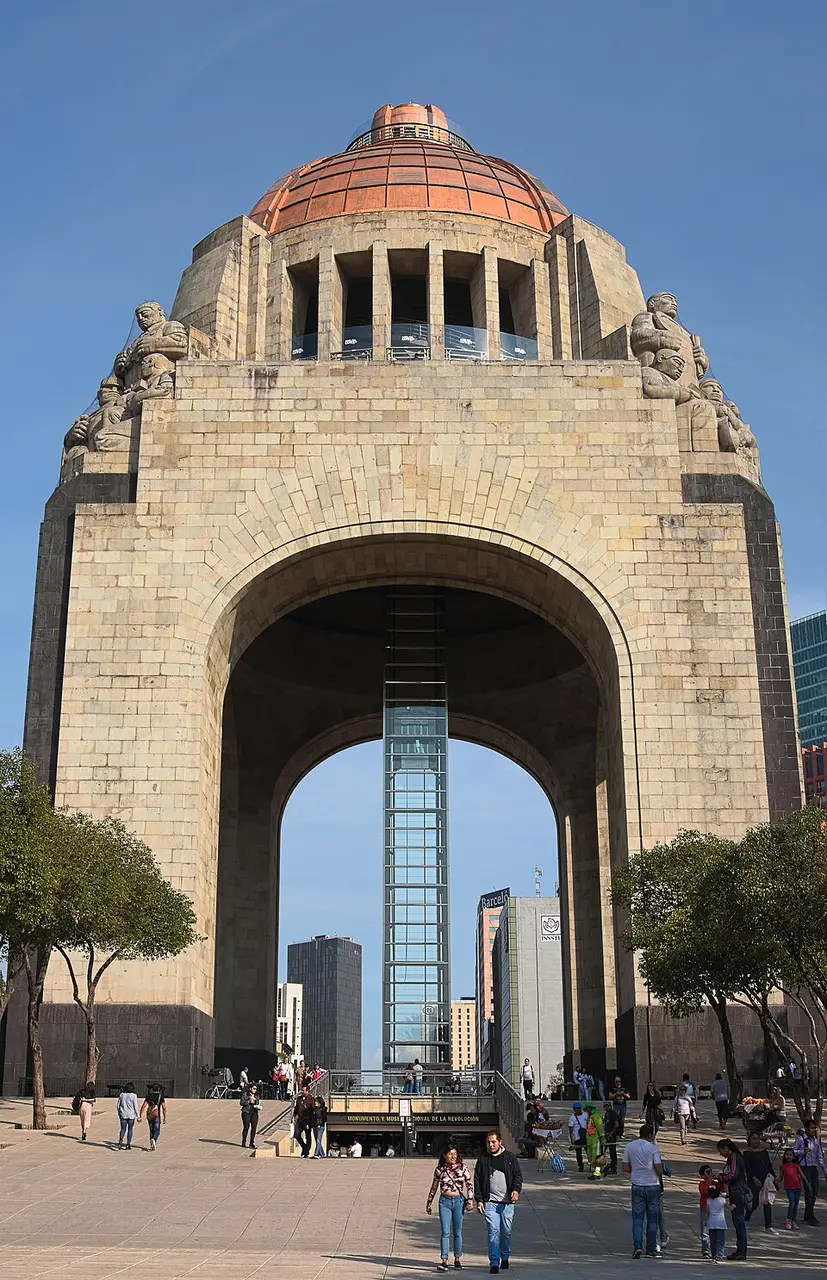
About Monument to the Revolution
The Monumento a la Revolución in Mexico City's Cuauhtémoc district commemorates the Mexican Revolution and serves as a mausoleum for some of its leading figures. The 65-meter-tall structure was built in the 1930s from the steel frame of an unfinished neoclassical legislative palace. Mexican architect Carlos Obregón Santacilia designed the dome, which you can climb, in a blend of Art Deco and revolutionary style. Reliefs on the corner piers symbolize key laws of the era. The crypts hold the remains of prominent revolutionaries such as Pancho Villa and Lázaro Cárdenas. The monument's basement also houses the National Museum of the Revolution, which introduces visitors to the country's history.
At a glance
- Category
- Sight › Monuments
- Rating
- no reviews yet · write a review
- Address
- Pl. de la República s/n
06030 Mexico City, Mexico - District
- Tabacalera
- Phone
- +525555922038
- Website
- www.mrm.mx
- —
- Coordinates
- 19.43616° N · -99.15463° E
- Data quality
- confidence 0.96
- Identifier
- ID b7a3c964-6b5…
Location & surroundings
Toggle layersFAQ about Monument to the Revolution
quick answersWhat is the Monument to the Revolution in Mexico City?
The Monument to the Revolution (Monumento a la Revolución) in Mexico City is a memorial commemorating the Mexican Revolution and also serves as the final resting place of several of its leading figures. The 65-meter-high (213-foot) structure was built in the 1930s from the steel frame of an unfinished neoclassical legislative palace. On the corner pillars you'll find reliefs symbolizing key laws of the revolutionary era.
Who is buried at the Monumento a la Revolución in Mexico City?
The crypts of the Monumento a la Revolución in Mexico City hold the remains of important revolutionaries. Among the best known are Pancho Villa and Lázaro Cárdenas. That makes the monument not only a place of remembrance but also a national mausoleum.
Who designed the Monument to the Revolution in Mexico City?
The Monument to the Revolution in Mexico City was designed by the Mexican architect Carlos Obregón Santacilia. He created the walk-in dome in a blend of Art Deco and revolutionary style. He used the steel frame of a legislative palace that was never completed as his foundation, and in the 1930s it became today's monument.
Where is the Monument to the Revolution in Mexico City?
The Monument to the Revolution stands on the Plaza de la República (Pl. de la República s/n) in the Tabacalera neighborhood of Mexico City's Cuauhtémoc borough. The monument is a stop on several tours on travelguide195, such as "From the Zócalo to the Revolución: A Walk Through the Centro Histórico" and "Mexico City in Layers: From Tlatelolco to the Revolution." The food tour "From Tlayudas to Skybar: A Day of Eating in Centro and Juárez" also brings you here.
What can you see around the Monument to the Revolution in Mexico City?
Right at the Monument to the Revolution in Mexico City is the Museo Nacional de la Revolución, housed in the monument's basement, which introduces you to the country's history; travelguide195 lists it about 80 meters (260 feet) away. About 340 meters (1,100 feet) away runs the Paseo de la Reforma, one of the city's best-known grand avenues. For a break, travelguide195 lists around 234 restaurants within 500 meters (about 1,600 feet).
Ratings & comments
none yetNear Monument to the Revolution
closest 5 per category · 2 kmSights
Restaurants
Museums
Hotels
More:Monuments in Mexico City (105)Sights in Tabacalera (19)All sights in Mexico City (2,702)
300 places within 2 km loaded.
Don't miss in Mexico City
All sights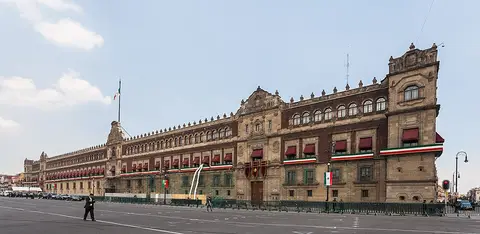 Historic sites01
Palacio Nacional
Avenida Pino Suarez · Mexico City● Website● Phone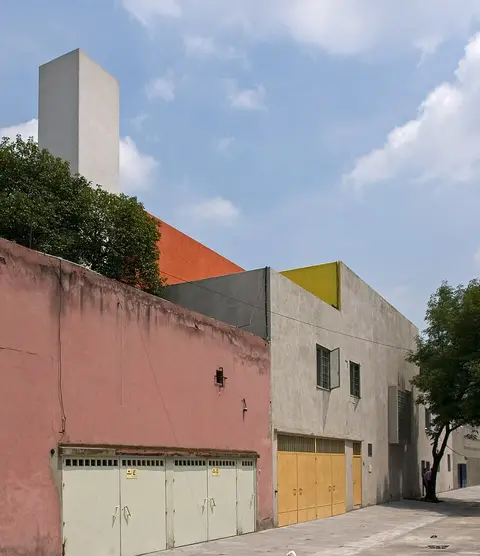 Historic sites02
Casa Estudio Luis Barragán
Gral. Francisco Ramírez 12 · Mexico City● Website● Phone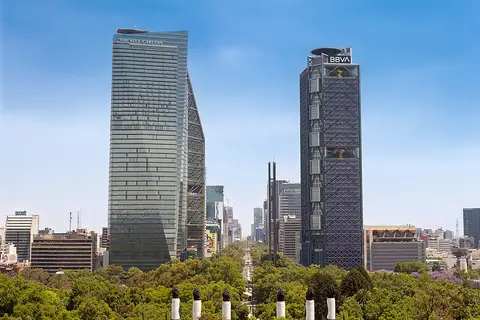 Historic sites03
Av. Paseo de Reforma
Av. P.º de la Reforma 25 · Mexico City○ Website● Phone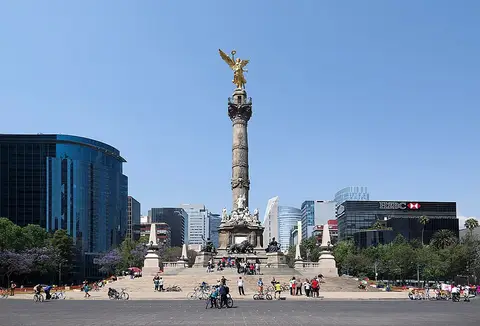 Monuments04
You need a free account to leave reviews and photos – that keeps comments genuine and lets you edit them later.
Unveiled in 1938, this striking monument honors the heroes of the Mexican Revolution, including Pancho Villa, Francisco Madero, and Lázaro Cárdenas, whose tombs are housed within. Originally intended as a legislative chamber, construction was halted by the Revolution itself and later repurposed as a symbol of Mexican independence and resilience. Visitors can take a glass elevator to the 65m-high Paseo Linternilla, a lookout platform with a spiral staircase offering panoramic city views (not suitable for young children). A 360-degree observation deck is accessible without an all-access pass.
Source: Wikivoyage, „Mexico City/Zona Rosa“ · authors per page history · CC BY-SA 4.0 · as of 6/2/2025