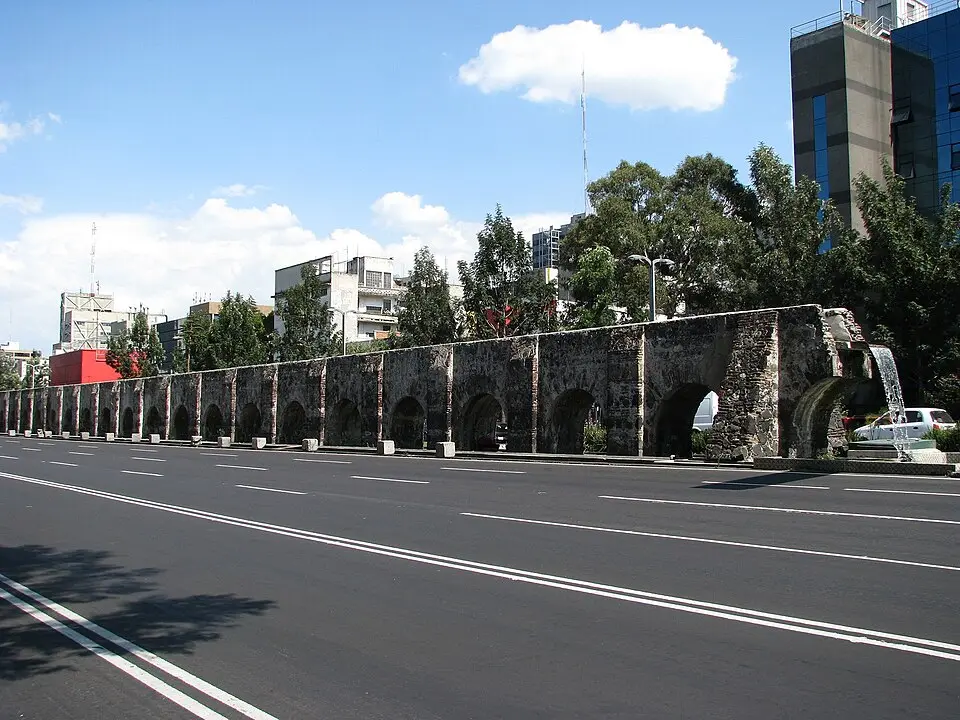
About Acueducto de Chapultepec
The Chapultepec Aqueduct in Mexico City is a historic testament to the engineering mastery of the Aztecs and, later, the colonial era. The system was originally built in the 15th century to supply the capital, Tenochtitlan, with fresh drinking water from the springs of Chapultepec, since the local groundwater was salty and could only be used for household purposes. The first canal, whose construction began in 1418, consisted of clay channels built on artificial islands and was fitted with a wooden plank walkway that also served as a thoroughfare. After a flood destroyed it in 1449, Nezahualcoyotl, the king of Texcoco, had a sturdier version built from stone masonry with mortar-lined channels. This second structure had two parallel channels, which made it possible to maintain a continuous water supply even during maintenance work.
After the Spanish conquest, Hernán Cortés recognized the strategic importance of the aqueduct and destroyed it to exploit the city's dependence on it. King Charles V, however, decreed that the springs should belong to the people. In the early 18th century, under Viceroy Fernando de Alencastre, a new aqueduct in the Roman style was built, which became known as the Aqueducto de Belen. This monumental structure stretched for about four kilometers and consisted of 904 arches. Throughout the colonial period, it supplied most of the city's fresh water. In the 19th century, the open channels were replaced with iron and lead pipes to prevent contamination, although this did not completely eliminate waterborne diseases.
Today, only fragments of this historic work remain. On Chapultepec Avenue near the Sevilla metro station, a section of about 22 arches still stands. There are also two fountains connected to the aqueduct. One, originally located in Chapultepec Forest, was restored in 1921 and moved to its current site between the park and the Chapultepec metro station. The other, the Salto del Agua, stands at the intersection of Eje Central and Arcos de Belen. Because the original had badly deteriorated, it was replaced with a replica, while the original is on display at the Museo Nacional del Virreinato in Tepotzotlán. A third fountain at La Merced was completely demolished at the end of the 19th century.
At a glance
- Category
- Sight › Monuments
- Rating
- no reviews yet · write a review
- Address
- Av Chapultepec
06700 Mexico City, Mexico - District
- Roma Norte
- Phone
- —
- Website
- en.wikipedia.org
- —
- Coordinates
- 19.42262° N · -99.16749° E
- Data quality
- confidence 0.72
- Identifier
- ID ea9a9052-ee2…
Location & surroundings
Toggle layersFAQ about Acueducto de Chapultepec
quick answersWhat is the Acueducto de Chapultepec?
The Acueducto de Chapultepec is a historic water system in Mexico City that carried drinking water from the springs of Chapultepec into the city. The Aztecs began building it in 1418 to supply their capital, Tenochtitlan, because the local groundwater was salty. The first canal consisted of clay channels laid across artificial islands and had a wooden plank walkway that also served as a thoroughfare.
How has the Acueducto de Chapultepec in Mexico City changed over the course of history?
The Acueducto de Chapultepec was destroyed and rebuilt several times. After a flood in 1449, Nezahualcoyotl, the king of Texcoco, had a stone masonry structure built with two parallel channels so that water kept flowing even during maintenance work. After the Spanish conquest, Hernán Cortés destroyed the canal, and in the early 18th century Viceroy Fernando de Alencastre had the roughly 2.5-mile-long Aqueducto de Belen built, with 904 arches in the Roman style. In the 19th century, the open channels were replaced with iron and lead pipes to prevent contamination.
What can still be seen of the Acueducto de Chapultepec today?
Only fragments of the Acueducto de Chapultepec in Mexico City survive, most notably a section of about 22 arches on Avenida Chapultepec near the Sevilla metro station in the Roma Norte neighborhood. There are also two fountains connected to the canal: One originally stood in Chapultepec Forest and was restored in 1921 and moved to its current location between the park and the Chapultepec metro station. The other, the Salto del Agua at the intersection of Eje Central and Arcos de Belen, is a replica; the original is in the Museo Nacional del Virreinato in Tepotzotlán.
What can you visit around the Acueducto de Chapultepec?
According to travelguide195, you'll find several monuments and museums near the Acueducto de Chapultepec in Mexico City. The Salto del Agua monument is about 72 yards away, and the Museo Casa de las Mil Munecas, a children's museum, is about 144 yards away. The Guillermo Tovar de Teresa Museum is roughly 306 yards away.
Are there restaurants near the Acueducto de Chapultepec?
Yes, there is a very wide selection of places to eat around the Acueducto de Chapultepec in the Roma Norte neighborhood of Mexico City. travelguide195 lists around 424 restaurants within 500 meters of the arches on Avenida Chapultepec.
Ratings & comments
none yetNear Acueducto de Chapultepec
closest 5 per category · 2 kmRestaurants
Museums
Hotels
More:Monuments in Mexico City (105)Sights in Roma Norte (57)All sights in Mexico City (2,702)
300 places within 2 km loaded.
Don't miss in Mexico City
All sights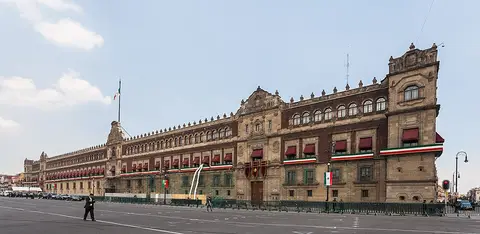 Historic sites01
Palacio Nacional
Avenida Pino Suarez · Mexico City● Website● Phone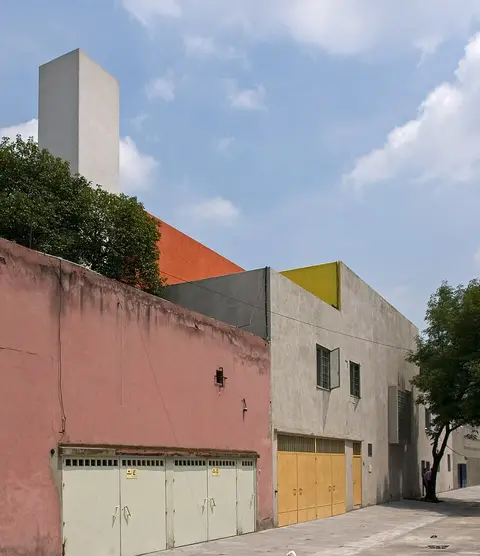 Historic sites02
Casa Estudio Luis Barragán
Gral. Francisco Ramírez 12 · Mexico City● Website● Phone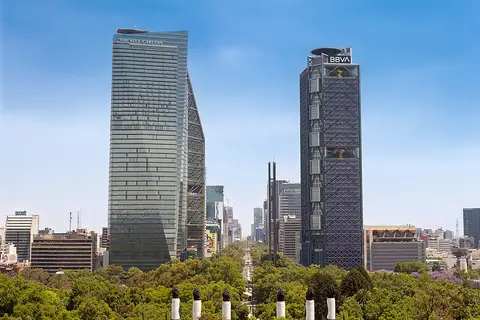 Historic sites03
Av. Paseo de Reforma
Av. P.º de la Reforma 25 · Mexico City○ Website● Phone Monuments04
You need a free account to leave reviews and photos – that keeps comments genuine and lets you edit them later.