About Frida Kahlo Museum
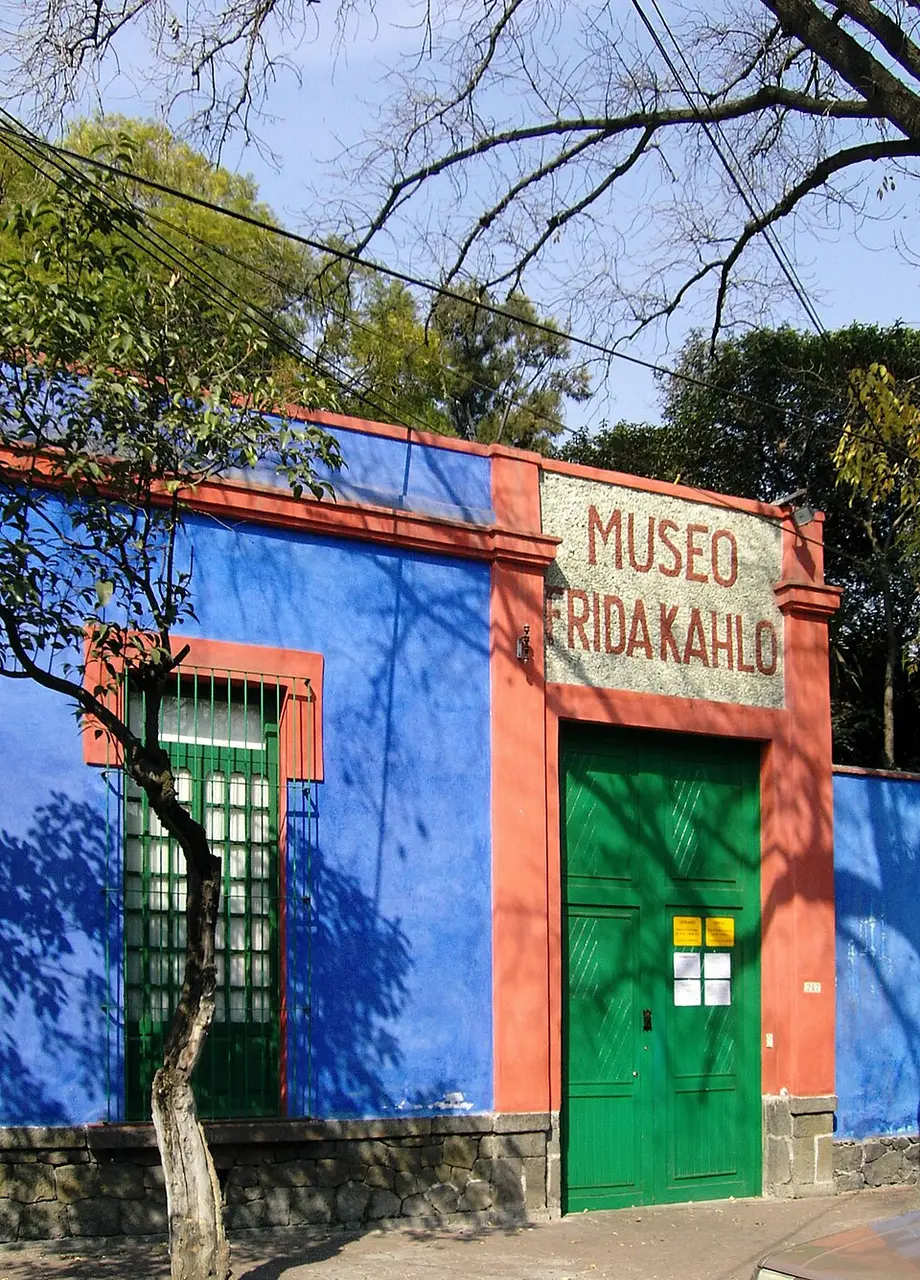
The Frida Kahlo Museum, often known internationally as La Casa Azul (the Blue House), is a historic home and art museum in the Coyoacán district of Mexico City. It is located in the Colonia del Carmen, a neighborhood that has been known for its intellectual and avant-garde scene since the 1920s. The building is easy to spot thanks to its cobalt-blue walls, which gave it its nickname. It was the birthplace of the Mexican artist Frida Kahlo, her home during her childhood, and the place where she lived for many years with her husband, the famous painter Diego Rivera. She also took her last breath in a room on the upper floor of this house. In 1957, Rivera donated the property and all of its contents to the state so that it could be turned into a museum dedicated to the memory and work of his wife.
The architecture of the house follows the traditional Mexican style, with a central courtyard surrounded by gardens. Originally, the building enclosed only three sides of this courtyard, but a fourth side was added later to close off the space completely. The house spans two floors and contains several bedrooms, studio spaces, and a large kitchen and dining room. Although the building was constructed in 1904 and initially featured French decorative elements, the facade was later converted to the simpler style you see today. The entrance area is decorated with a natural stone mosaic created by Mardonio Magaña, inspired by the murals of Juan O’Gorman.
The museum offers a deep look into the lifestyle of wealthy Mexican bohemian artists and intellectuals in the first half of the 20th century. The rooms have been largely preserved as they were in the 1950s. You can admire an extensive collection of works by Kahlo and Rivera, complemented by Mexican folk art, pre-Columbian artifacts, photographs, and personal belongings. Many of these exhibits are housed in specially designed display cases to protect them. In total, the museum comprises ten rooms that give you a chronological and thematic overview of the artist couple's life.
On the ground floor is a room that originally served as a formal salon, where Frida and Diego received prominent guests such as Sergei Eisenstein, Nelson Rockefeller, and George Gershwin. Some of Kahlo's smaller works are on display here, including portraits and symbolically charged paintings such as El marxismo dará salud. The following rooms are devoted to personal effects, letters, and photographs, as well as further paintings by Rivera. Pre-Columbian necklaces and traditional costumes hang on the walls, especially the Tehuana-style dresses that Frida made her trademark. Another room shows contemporary paintings by artists such as Paul Klee and José María Velasco, along with sculptures.
The kitchen and dining room on the ground floor are designed in the classic Mexican style, with bright yellow tile floors and blue and yellow countertops. Here you will find large clay vessels, dishes, and glassware from various Mexican regions known for their craftsmanship. Decorative elements such as papier-mâché figures and small pots spelling out the names of Frida and Diego adorn the walls. From here, a staircase leads to the courtyard, which is structured around a stepped pyramid, a fountain, and a reflecting pool. These features were added in the 1940s, when Rivera extended the house with a fourth wing decorated with seashells and mirrors.
On the upper floor, you can see Frida's last bedroom and her studio, located in the wing built by Rivera. The original furnishings are still in place. In one corner stands the urn containing her ashes, surrounded by a death mask and personal items. On her bed lies a painted plaster corset that she had to wear to support her damaged spine. A downward-facing mirror under the canopy served as her tool for her numerous self-portraits. A painting of a dead child hangs at the head of the bed, while at the foot you can see a photomontage of political figures such as Stalin and Lenin. Her wheelchair stands next to an unfinished portrait of Stalin on an easel.
The history of the house is closely intertwined with the political and personal fates of its residents. During the Mexican Revolution, Frida's mother used the house to donate supplies to Zapata's army. Frida herself spent long periods here recovering after contracting polio and, later, after being injured in a serious accident. It was during this time of bed rest that she began to paint. The house also became a meeting place for artists and intellectuals, including the Russian revolutionary Leon Trotsky, who sought asylum here for a time. After Frida's death in 1954, the house was officially opened as a museum in 1958.
In recent decades, Frida Kahlo's fame has risen sharply, which has also affected the flow of visitors to the museum. What was once a rather little-known place is now one of the most visited attractions in Mexico City. This popularity led to closures and reopenings, as well as the addition of a café and a souvenir shop. In 2009 and 2010, extensive restoration work was carried out, covering both the building and many of the artworks on display. These measures were aimed at preserving the furniture and the roofing, as well as the conservation of the paintings and photographs, which represent an essential part of the cultural heritage.
At a glance
- Category
- Museum › Art museums
- Rating
- no reviews yet · write a review
- Address
- Londres 247
04100 Mexico City, Mexico - Phone
- +525555545999
- Website
- beacons.ai
- hola@museofridakahlo.org.mx
- Coordinates
- 19.35511° N · -99.16241° E
- Data quality
- confidence 0.99
- Identifier
- ID 8ce1dbf5-c75…
Location & surroundings
Toggle layersRatings & comments
none yetNear Frida Kahlo Museum
closest 5 per category · 2 kmSights
Restaurants
Museums
Hotels
More:Art museums in Mexico City (79)All museums in Mexico City (564)
211 places within 2 km loaded.
Don't miss in Mexico City
All sights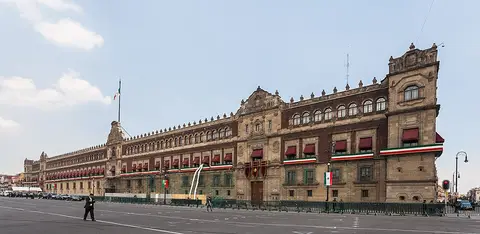 Historic sites01
Palacio Nacional
Avenida Pino Suarez · Mexico City● Website● Phone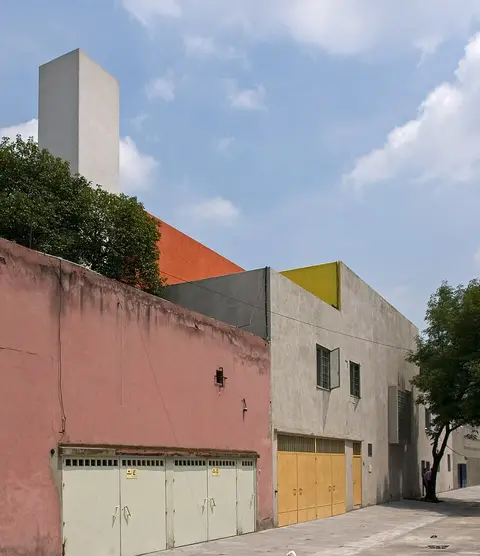 Historic sites02
Casa Estudio Luis Barragán
Gral. Francisco Ramírez 12 · Mexico City● Website● Phone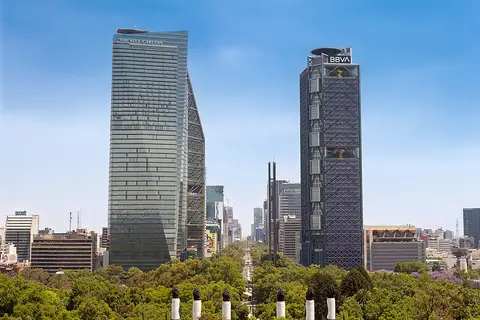 Historic sites03
Av. Paseo de Reforma
Av. P.º de la Reforma 25 · Mexico City○ Website● Phone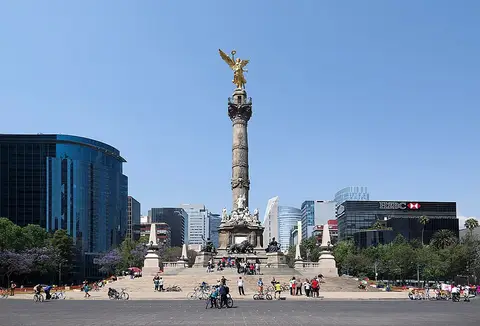 Monuments04
You need a free account to leave reviews and photos – that keeps comments genuine and lets you edit them later.
Also known as La Casa Azul , this walled hacienda painted brilliant indigo blue, is where the much-revered Mexican artist spent the last years of her life. Admission includes access to the courtyard, a small series of galleries with ever-changing displays, and the historical portion of the house, which has been preserved from the days when Kahlo was alive. A small snack bar and museum shop are also on the premises, and lectures are given periodically. An iPod tour can be taken for an extra fee and if you'd like to take pictures or videos, an extra fee of M$30 will be assessed. Tickets tend to sell out a week (or more!) in advance, so if you really want to visit this site, reserve your ticket online early.
Source: Wikivoyage, „Mexico City/Coyoacán“ · authors per page history · CC BY-SA 4.0 · as of 2/27/2024