Discovering Sasebo: 99 Islands, Burgers, and Huis Ten Bosch
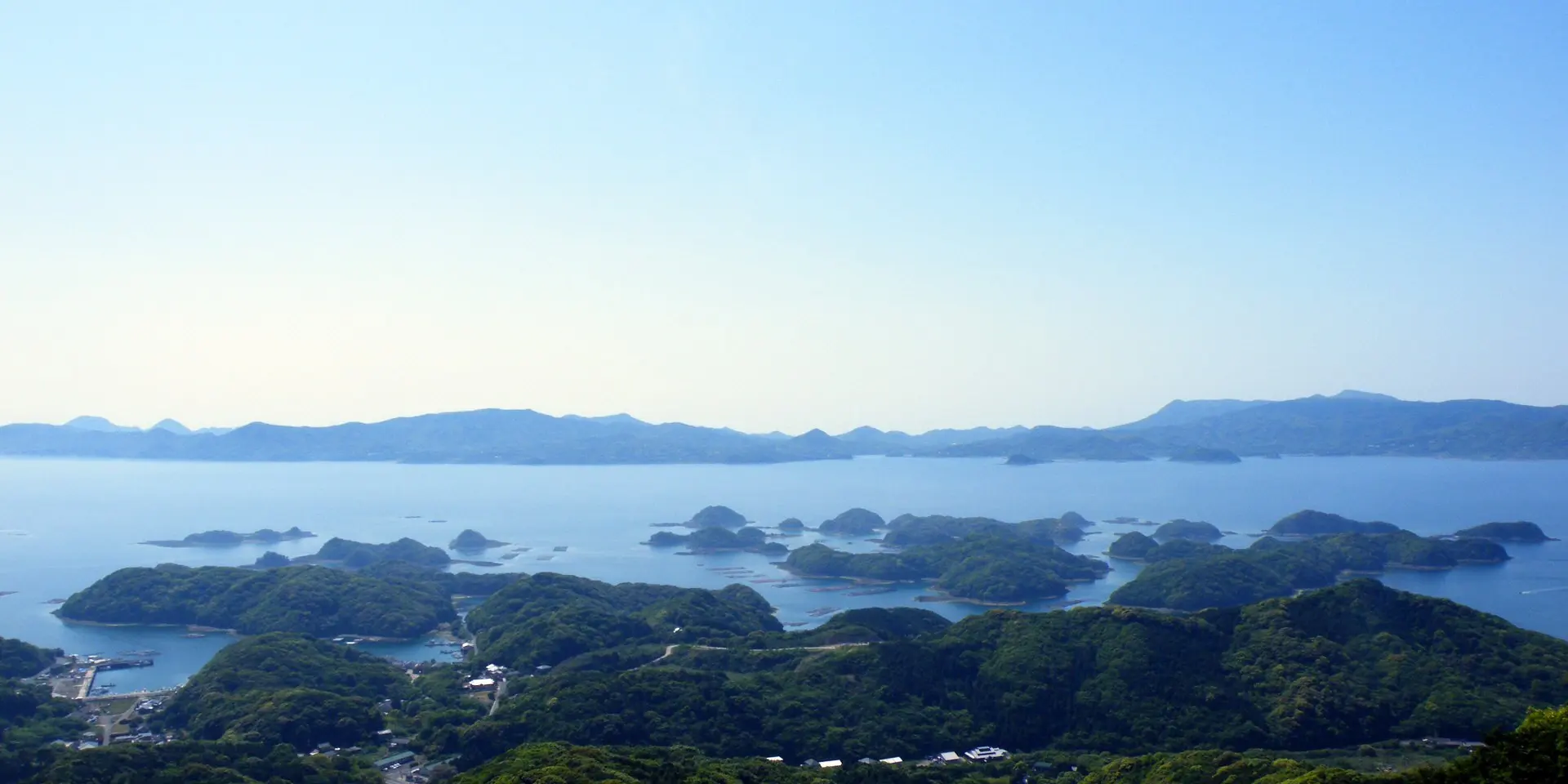
Travel guide · editorialFrom a viewpoint above Sasebo, you look out over hundreds of green islands that lie scattered across the sea like cushions. A trip to Sasebo in northwestern Kyūshū combines this island world with an American-influenced harbor culture, a burger that became a legend, and a theme park styled after a Dutch town.
Naval Port and History
Until the end of the 19th century, Sasebo was a small fishing village. In 1889, the Imperial Navy built one of its main bases here, and the town grew rapidly. After the war, the U.S. Navy arrived and still maintains a base today, as do the Japan Self-Defense Forces. The American influence shapes the look of the city: on the streets near the base, you'll find neon-lit bars, diners, and shops selling military fashion. To the south stand the three Hario radio towers, concrete masts more than 130 meters (about 430 feet) tall, built in 1922 and among the most important industrial monuments in Japan.
Sights in Sasebo
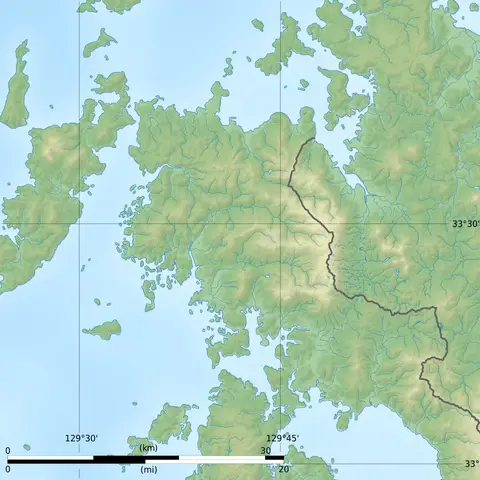
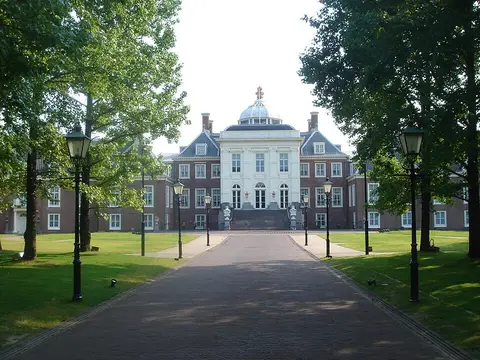
The Kujūkushima, or 99 Islands, actually number more than 200 and form part of Saikai National Park. Sightseeing boats such as the Pearl Queen depart from the Pearl Sea Resort and wind between the islands, while kayak tours lead into quiet coves. The Umikirara Aquarium shows animals of the island world and a well-known jellyfish exhibit, and from the Tenkaihō viewpoint you get the classic panoramic view. About 25 minutes to the south lies Huis Ten Bosch, a large theme park that recreates a Dutch town with canals, windmills, and tulip fields and shines in the evening with elaborate light installations. In the center runs the Sun Road Yonkachō, one of the longest straight shopping arcades in Japan.
Eating in Sasebo
The Sasebo burger is the best-known specialty: in the 1950s, American soldiers passed the recipe on to local restaurants, and ever since, big, freshly made burgers with bacon, egg, and vegetables have been served here. Many snack bars compete for the title of best, and some have been around for decades. Another local specialty is lemon steak, thin slices of beef in a lemon-soy sauce served on a hot plate. The region also produces oysters from Kujūkushima, which are grilled in winter, as well as porcelain from the Mikawachi district with delicate blue decoration.
Excursions around Sasebo
Sasebo is a good base for exploring northwestern Kyūshū. The Matsuura Railway runs along the coast to Hirado, where Portuguese and Dutch traders landed in the 16th and 17th centuries and white churches stand above the harbor. The porcelain towns of Arita and Hasami are less than an hour away, as are the onsen of Takeo and Ureshino. Nagasaki itself is about an hour and a half away by train or bus.
Getting There, Going Out, and the Best Time to Visit
Buses run from Nagasaki Airport to Sasebo in a little over an hour, and from Hakata you can get there on the Limited Express Midori in just under two hours. In the evening, the neighborhoods around the Sankachō and Yonkachō shopping arcades are worth a visit, with their pubs, bars, and yakitori restaurants where locals, sailors, and tourists mingle. In October, the whole city dances at the Yosakoi Festival. The best times to visit are spring and fall, when the light over the islands is clear and mild.