Ishikawa Prefecture: Kanazawa and the Noto Peninsula
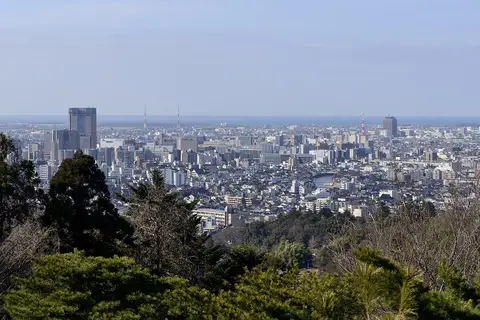
Travel guide · editorialA vacation in Ishikawa Prefecture leads to Kanazawa, one of Japan's best-preserved castle towns, which was spared during World War II. A geisha district, samurai houses, and one of the country's three great gardens are all within walking distance. To the north, the Noto Peninsula juts out into the Sea of Japan – a landscape of rice terraces and fishing villages that is recovering from the severe earthquake on New Year's Day 2024.
Landscape and Location
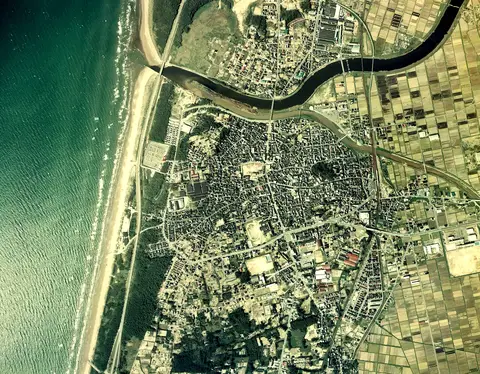
Ishikawa is a narrow strip along the Sea of Japan coast in the Hokuriku region. The south, with Kanazawa, Hakusan, Nonoichi, Komatsu, Nomi, and Kaga, is a coastal plain beneath Mount Haku, one of Japan's three sacred mountains, which rises to more than 2,700 meters. In the north, the Noto Peninsula stretches out with steep cliffs in the west, calm bays in the east, and the port of Nanao. Winters are damp and snowy; summers are warm.
Sights in Kanazawa
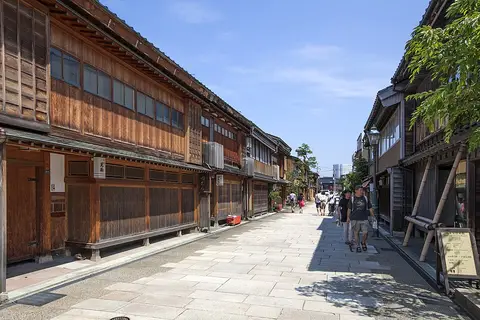
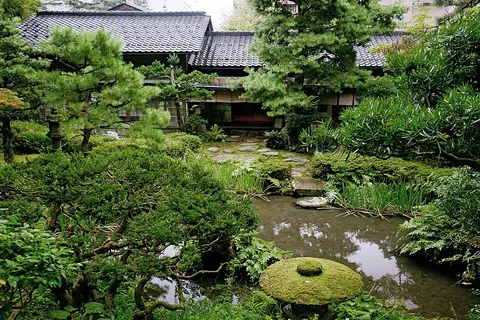
Kenroku-en is considered by many to be the most beautiful landscape garden in Japan. Its name refers to six attributes of an ideal garden, including spaciousness and seclusion. In winter, the pine trees are supported with ropes in a cone shape so the snow doesn't break their branches – a well-known photo subject. Right next door is Kanazawa Castle Park, with reconstructed gates and storehouses. The Higashi Chaya district has teahouses with fine wooden lattices, while the Nagamachi district has samurai houses behind earthen walls. The 21st Century Museum of Contemporary Art, a round glass building, is known for Leandro Erlich's swimming pool installation. Ōmichō Market has supplied the city with fish and vegetables for almost 300 years.
Ishikawa Destinations Beyond the Capital
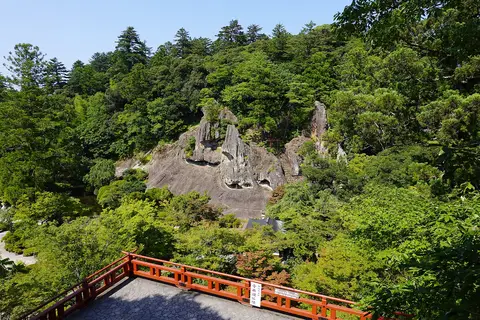
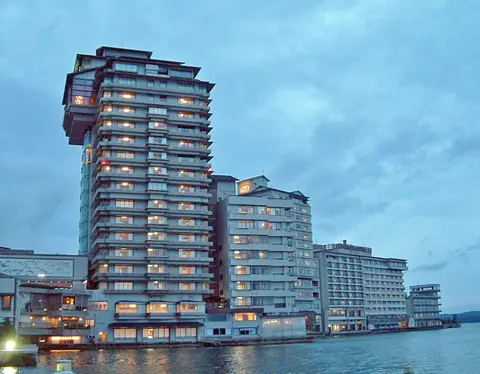
The Noto Peninsula was struck by a powerful earthquake in 2024 that severely damaged Wajima and Suzu in particular; flooding followed a few months later. Rebuilding is under way, and Wajima's famous morning market is operating partly at temporary locations. Visitors to the region support the local economy, but you should check current information on accommodations and roads beforehand. Typical of Noto are the Shiroyone Senmaida rice terraces above the sea, Chirihama Beach, where you can drive on the sand, and Notojima Island. In the south are the onsen towns of Kaga, Yamanaka, and Yamashiro with the Kakusenkei Gorge, and Komatsu is home to Natadera Temple with its rocky slopes.
Crafts and Culture
The Maeda lords supported the arts for centuries instead of investing in wars. This gave rise to a craft tradition that is still alive today: Kanazawa produces almost all of Japan's gold leaf, and in workshops you can gild objects yourself or try soft-serve ice cream covered in gold. Kutani porcelain from Nomi and Komatsu is known for its bold enamel colors, Wajima lacquerware for its durability. Kaga Yūzen is a silk-dyeing technique with naturalistic motifs. Noto keeps the Kiriko Festival alive, in which huge illuminated lanterns are carried through the villages. Kanazawa also has the D. T. Suzuki Museum, dedicated to the Zen scholar and built around a quiet water courtyard, as well as a museum dedicated to Noh theater, which was especially encouraged under the Maeda.
Food and Drink
In winter, the Sea of Japan yields kōbako crab, small female snow crabs, as well as buri (yellowtail) and nodoguro (blackthroat seaperch) with its rich, fatty flesh. Jibuni is a duck dish from Kanazawa, served in a thick sauce with wheat gluten. Kanazawa curry is served with a thick, dark sauce and cutlet on stainless-steel plates. The city is also a stronghold of wagashi, the traditional sweets served at tea ceremonies. Robust sakes come from Hakusan and Noto, and Noto also produces sea salt, traditionally harvested in salt fields.
Getting There and Best Time to Visit
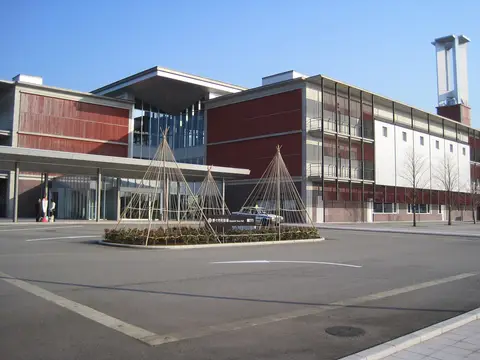
Since 2015, the Hokuriku Shinkansen has connected Tokyo with Kanazawa in about two and a half hours; since 2024 it continues on via Komatsu and Kaga Onsen to Tsuruga. From Osaka and Nagoya there are express trains with a transfer at Tsuruga. Komatsu Airport has domestic and a few international connections, and the small Noto Airport serves Tokyo. The best times to visit are considered to be spring, with cherry blossoms in the castle park, and fall. For crab and the snow-covered Kenroku-en pines, November through February is worth the trip.