
Discover Niigata: Sake, Rice Paddies, and the Shinano
Travel guide · editorialAt Niigata Station, vending machines dispense not cans of soda but small glasses of sake from dozens of the prefecture's breweries. That alone tells you a lot about a city that lives on rice and brings it to its finest form. A trip to Niigata takes you to the Sea of Japan, to the mouth of the country's longest river, and to the ferry port for Sado Island.
A Port City on the Sea of Japan
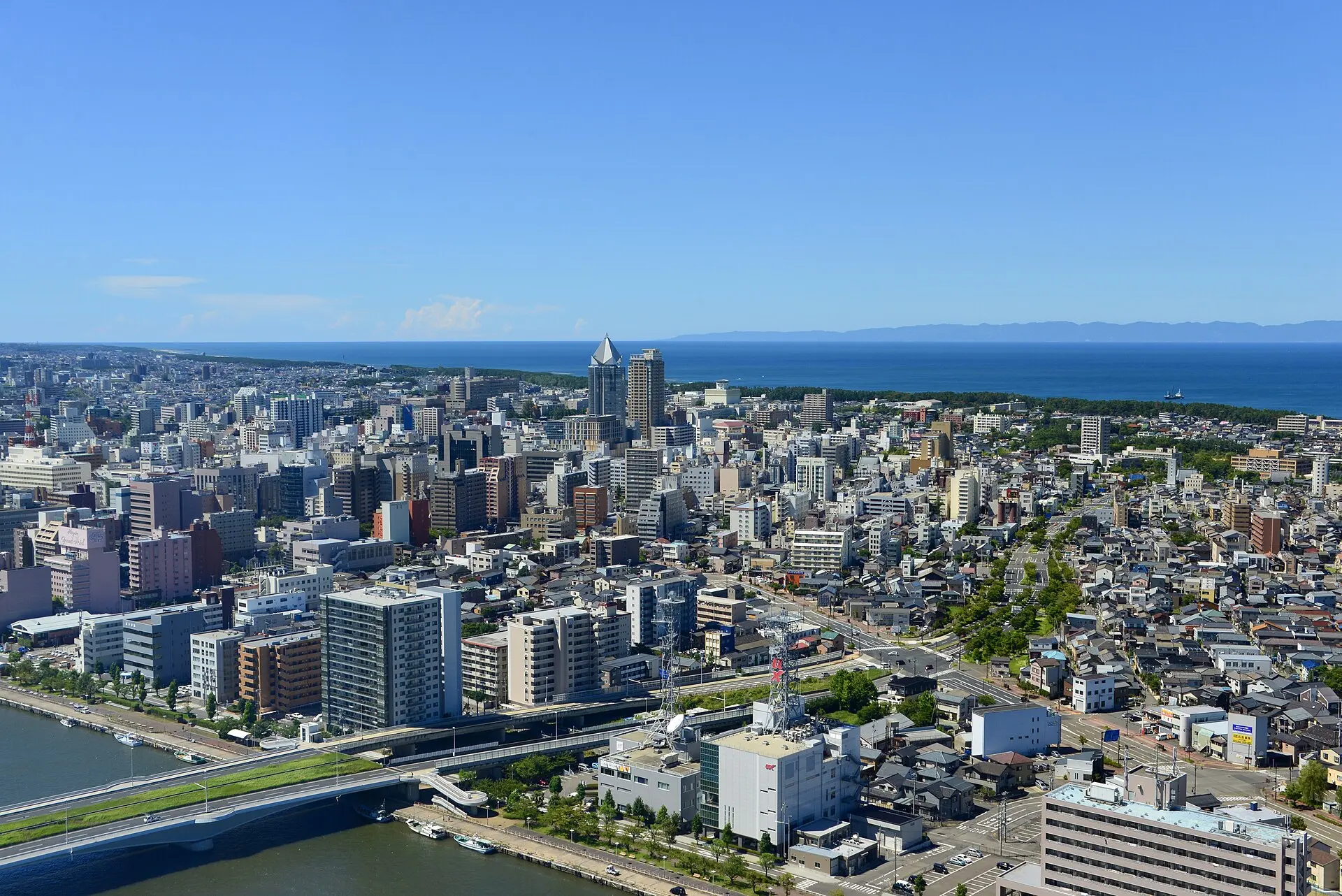
Niigata sits where the Shinano, at roughly 367 kilometers (about 228 miles) Japan's longest river, flows into the sea. Even in the Edo period the port was an important trading point for rice, and after the treaties with the Western powers, Niigata was opened to foreign trade in 1869 as one of five treaty ports. The former Customs House, one of the few surviving from that era, is a reminder of those days. The Bandai Bridge, built in 1929 as a stone-arch bridge, links the two banks and is considered the city's landmark; it even withstood the 1964 earthquake. Since 2007, Niigata has been a designated city with eight wards, including broad expanses of rice fields.
Sights in Niigata
Chūō Ward is where you see the life of the city. On Bandai-jima Island, the Toki Messe complex rises with its observation deck, from which you can see the river, the sea, and, on clear days, Sado Island. In Furumachi, the old pleasure quarter, teahouses and narrow lanes have survived; the Furumachi Geigi, the local geisha, still perform here today. Time-honored ryōtei restaurants and the former Saitō Residence, a merchant villa with a garden, give you a sense of the wealth of the port's heyday. In Kōnan Ward, the Hoppō Bunka Museum shows the magnificent estate of the Itō landowning family, with gardens and storehouses.
Museums, Nature, and Winter Swans
The Niigata City Art Museum and the Niigata Prefectural Museum of Modern Art offer exhibitions, and the Manga Museum pays tribute to the many cartoonists who come from Niigata. Between October and March, thousands of whooper swans from Siberia land on Lake Hyōko in Kita Ward, an impressive spectacle at dawn. In August, the city celebrates the Niigata Matsuri with a large dance parade and fireworks over the Shinano.
Eating in Niigata: Rice, Sake, and Local Oddities
The prefecture is famous for Koshihikari rice, considered Japan's best, and for its sake: Niigata has more breweries than any other prefecture and is known for its clean, dry style. At Ponshukan, at the station, you can taste your way through the varieties. Other typical dishes include hegi soba, buckwheat noodles bound with seaweed and served in bite-sized portions on a wooden board; tare katsudon, a thin cutlet in sweet soy sauce; and noppe, a root vegetable stew. Curious is "Italian," fried noodles with tomato sauce, a popular snack dish. For dessert, there's sasa dango, rice dumplings with mugwort wrapped in bamboo leaves.
Going Out in Furumachi
In the evening, it's worth heading to Furumachi and the neighboring arcades, where izakaya serving local sake, seafood restaurants, and small bars sit side by side. The area around Niigata Station offers ramen and quick bites; local ramen styles range from soy sauce with pork back fat to miso with ginger. Soccer fans can catch an Albirex Niigata match at Denka Big Swan Stadium. If you'd rather spend the evening by the water, you'll find promenades along the Shinano with views of the illuminated Bandai Bridge, and in summer beer gardens open there. Pier Bandai, a market and restaurant complex on the river, is a good spot for dinner with fresh-caught fish, sushi, and local sake.
Getting Around Niigata and Day Trips
The Jōetsu Shinkansen connects Niigata with Tokyo in about two hours. From Niigata Airport, buses reach the city center in about 25 minutes; in the city, buses and a bus rapid transit system are the main means of transportation. The best time to visit is from summer through fall; in winter, the city sees more rain and sleet than deep snow. The top day trip is Sado Island, reachable by hydrofoil in just over an hour; its gold mines have been a UNESCO World Heritage Site since 2024. Inland, vineyards and sake breweries beckon, along with onsen towns such as Iwamuro.