Discover Nagoya: Castle, Miso, and Engineering
Travel guide · editorialTwo golden mythical creatures with tiger heads and fish bodies, the kinshachi, gleam on the roof of Nagoya Castle – symbols of a city that is often underestimated. Located between Tokyo and Osaka, Nagoya is something many travelers in Japan simply pass through on the Shinkansen. Yet a trip to Nagoya is well worth it for anyone who wants to experience samurai history, technology, and a highly distinctive cuisine.
The City of the Three Unifiers
The region around Nagoya produced the three men who unified Japan in the 16th century: Oda Nobunaga, Toyotomi Hideyoshi, and Tokugawa Ieyasu. The last of them had Nagoya Castle built starting in 1610 and simply relocated the town of Kiyosu to the site – temples, merchants, and craftsmen moved along with it. Under the Owari branch of the Tokugawa, Nagoya became one of the most important castle towns. In the 20th century it developed into an industrial center: looms, aircraft, and later cars. Toyota is headquartered in the neighboring city of Toyota, but the company's history began with Sakichi Toyoda's automatic looms in Nagoya. After severe bomb damage in 1945, the city was rebuilt with broad boulevards, which remain a hallmark of Nagoya today.
Neighborhoods: Sakae, Meieki, and Ōsu
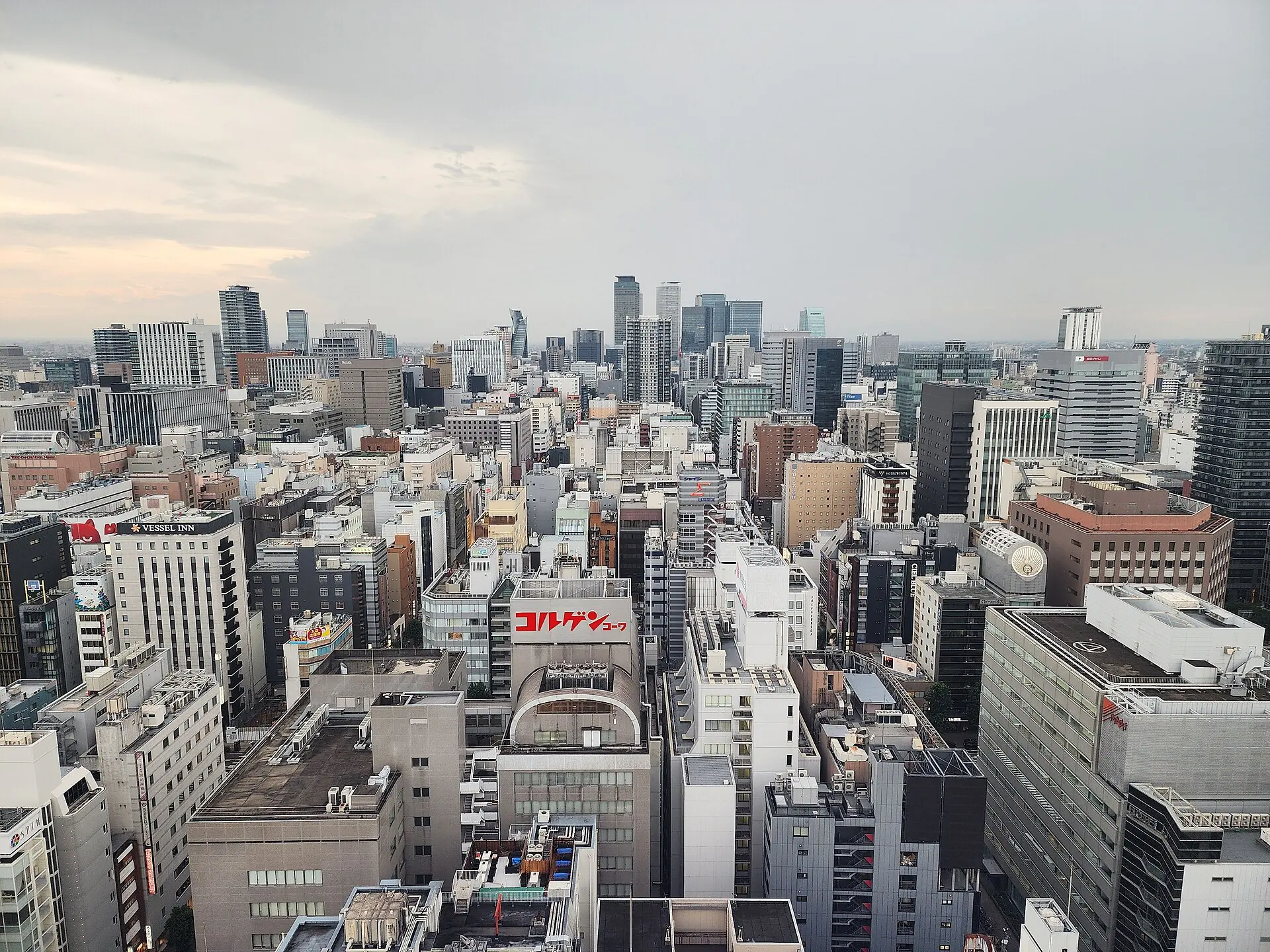
The center is divided into a few easy-to-navigate areas. In Nakamura Ward, Meieki lies around the main train station with its twin towers, department stores, and underground shopping streets. In Naka Ward, Sakae is the heart of shopping and nightlife – department stores, restaurants, and bars line the area around Sakae 3-chome, while the Chubu Electric Power MIRAI TOWER and the glass-roofed Oasis 21 define the skyline. Also in Naka is Ōsu, a lively arcade district around the Ōsu Kannon Temple with secondhand shops, electronics, and snack stands. Higashi, with its old samurai residences in the Shumoku district, and Chikusa, with the Kakuōzan Temple and its student pubs, are quieter, while Meitō in the east is a green residential area.
Sights in Nagoya
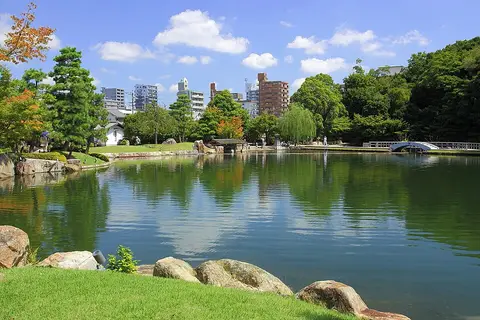
Nagoya Castle is the best-known attraction. The main keep is a concrete reconstruction from 1959 and is currently closed to visitors for safety reasons, but the reconstructed Honmaru Palace is worth the visit alone: golden sliding doors painted with tigers and pines show how lavishly the lords lived. Atsuta Shrine in the south is one of Japan's most important Shinto shrines and is said to house the sacred sword Kusanagi, one of the three Imperial Regalia. The Tokugawa Garden and the Tokugawa Art Museum display treasures of the ruling family, including scroll paintings illustrating The Tale of Genji. A calm counterpoint is Shiratori Garden, a landscape garden with a teahouse near Atsuta. On the 18th and 28th of each month, a flea market takes place at Ōsu Kannon Temple, where kimonos, ceramics, and all manner of knickknacks change hands. And if you want to see the city from above, head to the open-air Sky Promenade observation deck at Midland Square across from the main station, or stroll across the glass roof of Oasis 21, which glows in changing colors in the evening.
Museums: From Looms to Maglev Trains
Technology fans get their fill in Nagoya. The Toyota Commemorative Museum of Industry and Technology, housed in an old brick spinning mill, offers live demonstrations ranging from looms to robots. At the SCMaglev and Railway Park by the harbor, you'll find generations of Shinkansen trains and the record-setting maglev train. The Nagoya City Science Museum has one of the largest planetariums in the world. At Centrair Airport, Flight of Dreams is a hall built around the Boeing 787, parts of which are manufactured in the region. And since 2022, Ghibli Park on the Expo grounds in Nagakute has drawn anime fans to the area.
Eating in Nagoya
The local cuisine is called "Nagoya-meshi," and it is hearty, often dark, and richly seasoned. Its foundation is the red Hatchō miso from Okazaki. Miso-katsu, breaded pork cutlet with sweet miso sauce, and miso-nikomi udon served in a clay pot are classics. Hitsumabushi, grilled eel over rice, is eaten in three stages: plain, with condiments, and finally with broth poured over it. Tebasaki, fried chicken wings with pepper, are the quintessential pub food, kishimen are flat udon noodles, and tenmusu are small rice balls with shrimp tempura. One curiosity is the morning culture: in many cafés, your coffee comes with free toast with sweet bean paste and an egg on the side.
Going Out in Nagoya
In the evening, people gather in Sakae and neighboring Nishiki 3-chome, the city's largest bar district, with hostess clubs, izakaya, and karaoke. Things are more relaxed in Ōsu and in the alleys of Meieki around the station, where tebasaki joints stay open late. Sports fans can catch the Chunichi Dragons at Vantelin Dome, and in July the big sumo tournament, now held at the new IG Arena, fills the city with wrestlers. If you want to experience theater, Misono-za in Sakae is a venue steeped in tradition, with Kabuki and stage productions. Classical concerts are held at the Aichi Arts Center, which, in addition to the television tower, also houses an art museum with rotating exhibitions.
Getting Around Nagoya and the Best Time to Visit
Chūbu Centrair Airport, on an island in Ise Bay, is just under 30 minutes away by Meitetsu express train. By Shinkansen, it takes about 1 hour 40 minutes to Tokyo and around 35 minutes to Kyoto. The subway, with six lines, and the Me-guru sightseeing bus connect the main sights. The best times to visit are spring and fall; summer is very hot. Worthwhile excursions include the original Inuyama Castle on the Kiso River, where cormorant fishermen work in summer, the Meiji Mura open-air museum, Ise Shrine, and the mountain villages of Shirakawa-gō and Takayama.