Sight · Historic sites
Ghetto di Venezia
La Cuccia, Cannaregio, Sestiere Cannaregio, 2920, 30121 Venice
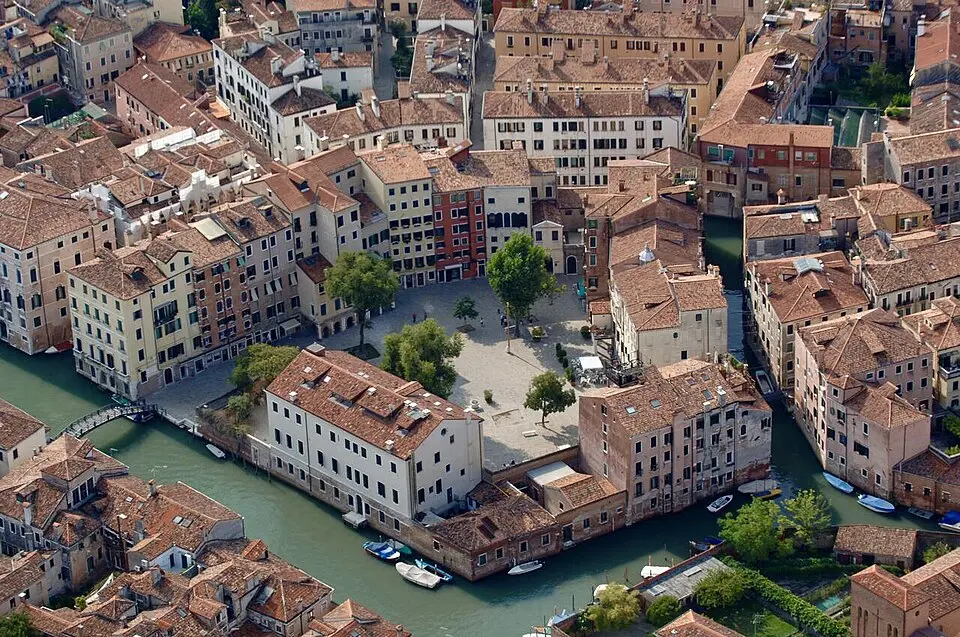
About Ghetto di Venezia
The Jewish Ghetto in Venice is a small island in the Sestiere of Cannaregio, surrounded by canals and connected to the rest of the city by three bridges. From the 16th century until Napoleon abolished it in 1796, this historic enclave was the only place where the lagoon city's Jewish population was allowed to live. As the namesake of all Jewish ghettos of this era, it gave rise to the term, which derives from the Italian word for foundry, since Jews were settled in a former iron foundry district. The island measures barely one hectare (about 2.5 acres) and is dominated at its center by the open Campo del Gheto Novo. Despite its small size, it holds a dense concentration of historic sites that tell the complex story of Venice's Jewish community.
The history of Jews in Venice goes back to the fifth century, when they were at first tolerated only as merchants. A larger influx came in the 14th century, when persecution in Central Europe drove many Jews to the relatively tolerant Republic. The Republic of Venice acted pragmatically: it used the capital of Jewish pawnbrokers to ease its own shortage of money and in return granted protection from the Inquisition and local repression. This legal security, unique in Europe, ended only with the fall of the Republic. In 1516, Jews were assigned a permanent place of residence in the area of the Gheto Novo, where they lived in cramped conditions but found safety within the city walls.
Over time the Jewish population grew, and the city had to expand the ghetto. In 1541 the adjacent area of the Gheto Vecchio was added, settled mainly by so-called Levantines, Jews who had come to Venice by way of the eastern Mediterranean. Later the Gheto Novissimo emerged, a district with more spacious residential buildings, inhabited by wealthy Spanish and Portuguese Jews. The name "vecchio" (old) referred not to the age of the settlement but to the old name of the foundry district. Together, these three districts formed the Università, a community with a high degree of autonomy that collected its own taxes and exercised its own internal jurisdiction.
The architecture of the synagogues, called scole, is a distinctive feature of the ghetto. Because building synagogues on Venetian soil was forbidden, they were often built within the outward shell of residential buildings or on their rooftops, which made them barely recognizable in the cityscape. The Scola Grande Tedesca, the first synagogue in the Gheto Novo, can nevertheless be identified by its five round-arched windows. In the Gheto Vecchio you will find the Scola Spagnola, the largest of Venice's synagogues, which was remodeled in the 17th century in the style of Baldassare Longhena. Its interior, with multicolored marble, gilded stucco, and an oval women's gallery, is considered an outstanding example of Baroque spatial staging. The Scola Levantina, with its furnishings by the sculptor Andrea Brustolon, is also architecturally significant.
The Museo Ebraico di Venezia, housed in the Gheto Nuovo since 1953, offers visitors deep insight into Jewish culture and history. The collection includes objects from the Jewish festival calendar, valuable textiles from the synagogues, and artifacts relating to the history of immigration and the book trade. Of particular note is the "Renato Maestro" book archive, which documents the intellectual tradition of the community. The museum also commemorates the victims of the deportations to the German concentration camps. Guided tours of the museum, the synagogues, and the neighborhood help you better understand the historic fabric of the place and grasp the close connection between the buildings and the lives of their former inhabitants.
The more recent history of the ghetto is marked by tragedy. During the Fascist era, 286 Jews still lived in the ghetto, most of whom were deported and murdered by the German occupiers from 1943 onward. Seven bas-reliefs by the Lithuanian sculptor Arbit Blatas, installed on the Campo de Gheto Novo in 1980, now commemorate these victims and serve as a Holocaust memorial. Since 2014, the artist Gunter Demnig has also been laying Stolpersteine ("stumbling stones") in this area to recall the individual fates of the victims. Despite the near-total destruction of the Jewish population during World War II, survivors and others returned to the ghetto to rebuild the community.
Today the ghetto is a lively place with a small but active Jewish community. Of the roughly 500 Jews in all of Venice, only a small number, about 30 people, live directly in the ghetto. For them there are shops, a kosher butcher, a specialty bakery for matzah, and a retirement home. Two of the historic synagogues, the Scola Levantina and the Scola Ponentina, are used for services in alternating seasons, while others serve as museums or for secular purposes. The three historic synagogues Scola Grande Tedesca, Scola Canton, and Scola Italiana remain important centers of Jewish life. The ghetto is under heavy police protection, and officers maintain their own guard post on site, underscoring the special significance of the place.
Besides the ghetto itself, the Jewish cemetery on the Lido is another important site. It lies near the harbor entrance by the burial grounds of San Nicolò and was restored in 1999. Although the original separation of graves by congregation has not been preserved, you will find gravestones here dating back to the 18th century. The cemetery offers a quiet place for reflection and recalls the long presence of the Jewish community in Venice. The combination of the lively Gheto, the impressive synagogues, the museum, and the cemetery makes the Jewish quarter an indispensable part of Venice's cultural heritage, inviting visitors to gain a deeper understanding of the history and culture of the Jewish community.
At a glance
- Category
- Sight › Historic sites
- Rating
- no reviews yet · write a review
- Address
- La Cuccia, Cannaregio, Sestiere Cannaregio, 2920
30121 Venice, Italy - District
- Cannaregio
- Phone
- +390552989815
- Website
- www.jewishvenice.org
- —
- Coordinates
- 45.44560° N · 12.32697° E
- Data quality
- confidence 0.92
- Identifier
- ID d29e2be2-a88…
Location & surroundings
Toggle layersRatings & comments
none yetNear Ghetto di Venezia
closest 5 per category · 2 kmSights
Restaurants
Museums
Hotels
More:Historic sites in Venice (244)Sights in Cannaregio (57)All sights in Venice (323)
263 places within 2 km loaded.
Don't miss in Venice
All sights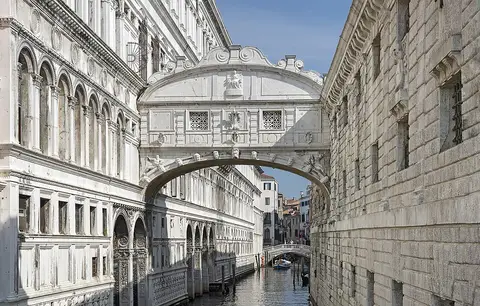 Monuments01
Ponte dei Sospiri
San Marco, Sestiere San Marco, 1 · Venice● Website● Phone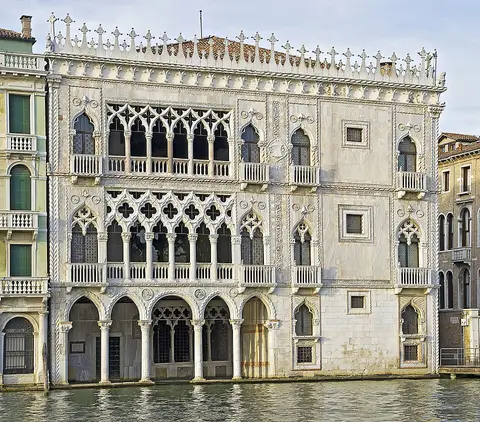 Palaces02
Ca' D'Oro
Ca' D'Oro Venezia · Venice● Website● Phone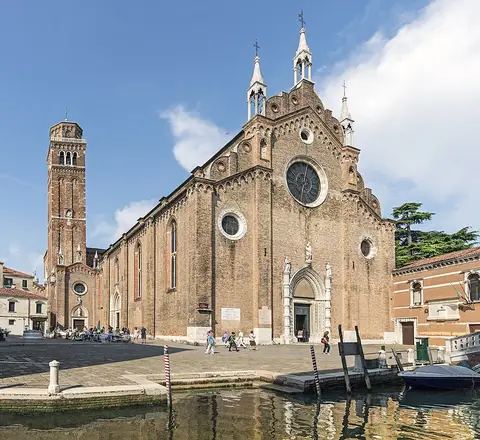 Historic sites03
Venezia Santa Maria Gloriosa Dei Frari
No address · Venice○ Website○ Phone Monuments04
You need a free account to leave reviews and photos – that keeps comments genuine and lets you edit them later.
While racial and ethnic neighborhoods had existed prior to the Venetian Ghetto, Venice's ghetto was the first "ghetto" (coming from a Venetian word for the Iron Foundry that had been on the site) and "ghetto" eventually came to mean any neighborhood that was made up of a single ethnic/racial group. Today, Jewish life is still very active in the ghetto, and elsewhere in Venice, and is home to five synagogues. Visiting on Saturdays or late Fridays (the Jewish Sabbath) will prove very fruitless because all shops, restaurants, and other Jewish places will be closed.
Source: Wikivoyage, „Venice/Cannaregio“ · authors per page history · CC BY-SA 4.0 · as of 10/31/2021