About Museo di San Marco
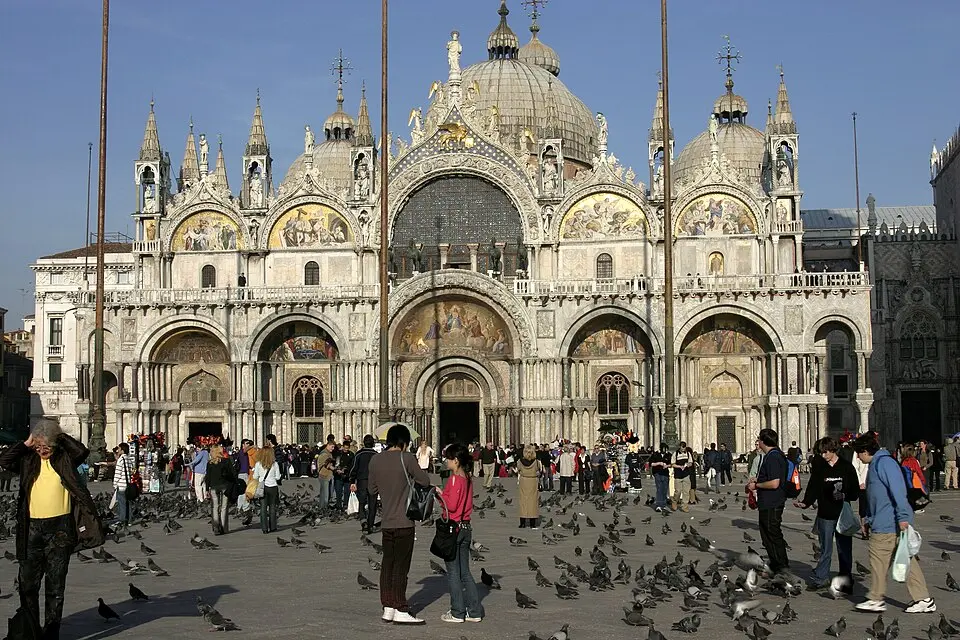
St. Mark's Basilica, officially known as the Basilica di San Marco, is the spiritual and historic heart of Venice's old town. A Roman Catholic church on the famous Piazza San Marco in the Sestiere San Marco, it forms an impressive architectural ensemble together with the Doge's Palace and the freestanding Campanile. The building is dedicated to the Evangelist Mark, whose remains rest here. Until the end of the Republic of Venice in 1797, the basilica served as the central state shrine of the Serenissima. Since 1807, it has also been the cathedral of the Patriarch of Venice.
The history of the building goes back to the year 828, when the first church was founded. Construction of the present structure began under Doge Domenico I Contarini between 1063 and 1094. The original reason for building it was to house the relics of Saint Mark, which had been taken from Alexandria in 828. The switch of the city's patron saint from Theodore to Mark was also a political statement of Venice's independence from Byzantium. After a fire destroyed the church in 976, reconstruction was begun, ultimately leading to the Byzantine form we see today. Legend has it that the saint's remains were miraculously rediscovered on June 25, 1094, a date still celebrated today as the feast of the Inventio Sancti Marci.
Architecturally, the basilica follows the model of Byzantine art, in particular the Church of the Holy Apostles in Constantinople, which no longer exists. The floor plan forms an uneven Greek cross, with the western arm built wider and longer. Five domes vault the crossing and the arms of the cross, with the central and western domes larger than the other three. This design brought the idea of the domed central-plan building to Italy and later served as inspiration for large-domed structures by artists such as Bramante and Michelangelo. In the 13th century, the domes were raised and the northern vestibule was added, while the west front was remodeled in the Venetian Gothic style in the 14th century.
The main facade is a testament to Venice's triumph and expresses the church's claim to be a state shrine. It is divided into two stories and structured by five portals with mosaic-decorated arches. The mosaics above the doorways tell the story of the translation of Saint Mark's remains, though the word "translation" is better understood as a euphemism for theft. Above the central portal is a depiction of the Last Judgment. The facade is richly decorated with marble cladding and countless ancient columns made of materials such as porphyry, jasper, and alabaster. Many of these columns came as spolia from conquests, especially from Constantinople in 1204, and today serve mainly as decoration and as a symbol of power.
A particular highlight of the facade is the balustrade above the main portal, dominated by a copy of the famous ancient quadriga of gilded bronze. The original Horses of San Marco, the only surviving ancient four-horse team, were moved into the interior of the basilica after a restoration in the 1960s to protect them. Their exact origin is disputed among experts, but they are clearly older than their arrival in Constantinople in the early 4th century. After the conquest of Constantinople, they came to Venice, where they were nearly melted down before their significance was recognized. Napoleon had them taken to Paris in 1798, where they adorned the Arc de Triomphe du Carrousel before being returned to Venice in 1815.
The interior of the basilica is marked by an overwhelming splendor that has earned the building the nickname the Golden Basilica. The floor is covered with ornamental marble mosaics, while the lower walls are clad in marble slabs. The upper wall zones and the entire ceiling are adorned with mosaics on a gold ground. These mosaics cover an area of more than 8,000 square meters, making them one of the largest continuous mosaic surfaces in the world. The pictorial program tells the entire story of Christian salvation, interwoven with the political self-presentation of the Venetian Republic. The central dome shows the risen Christ, while the western dome depicts the events of Pentecost.
The mosaic-making technique is remarkable. Layers of slurry were applied to the brickwork of the structure, and the mosaic pieces, known as tesserae, were pressed into them. Instead of colored pieces of stone, as in antiquity, slabs of colored glass were used, with gold and silver foil fused into them. Setting the tesserae at different angles heightened the play of light reflections, giving the space a lively, radiant atmosphere. In the vestibule, the narthex, you can see mosaics from the Book of Genesis, while the baptistery depicts the story of John the Baptist, including the famous scene of Salome's dance.
Among the most valuable furnishings is the gold altar frontal of the high altar, the Pala d'Oro. In front of the choir stands the choir screen with figures of the Apostles and a triumphal cross. The pulpits inside follow Greek custom and were used for proclaiming the Gospel and presenting the newly elected Doge. For centuries, St. Mark's was also one of the most important musical institutions in Europe. Famous composers such as Claudio Monteverdi and Giovanni Gabrieli served here as maestri di cappella and shaped the Venetian polychoral style. The basilica's organs, including historic instruments by Callido, are currently being redesigned to preserve and expand their original tonal character.
For visitors, St. Mark's offers a unique experience that combines history, art, and architecture. The floor sits lower than the Piazza San Marco as a result of the sinking of the city's districts, underscoring the historical depth of the site. The combination of Byzantine and Gothic elements, the rich mosaic decoration, and the precious relics make the basilica an essential destination for every traveler in Venice. Restoration work, which continued into the 1990s, has helped preserve this architectural jewel in its original splendor. The basilica remains a symbol of Venice's cultural and political history and a testament to the artistic mastery of its time.
At a glance
- Category
- Museum › Museums (general)
- Rating
- no reviews yet · write a review
- Address
- Piazza San Marco 7
30124 Venice, Italy - District
- San Marco
- Phone
- +390415225697
- Website
- www.basilicasanmarco.it
- —
- Coordinates
- 45.43461° N · 12.33931° E
- Data quality
- confidence 0.99
- Identifier
- ID ec050149-afa…
Location & surroundings
Toggle layersRatings & comments
none yetNear Museo di San Marco
closest 5 per category · 2 kmSights
Restaurants
Museums
Hotels
More:Museums in San Marco (25)All museums in Venice (135)
266 places within 2 km loaded.
Don't miss in Venice
All sights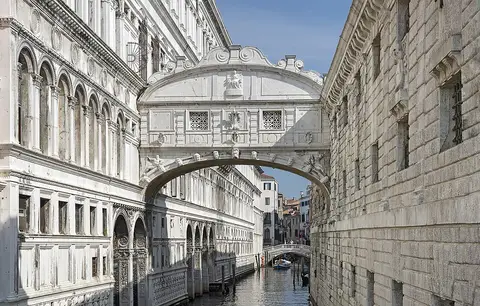 Monuments01
Ponte dei Sospiri
San Marco, Sestiere San Marco, 1 · Venice● Website● Phone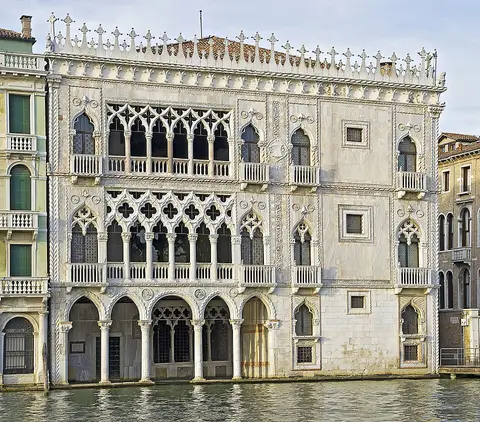 Palaces02
Ca' D'Oro
Ca' D'Oro Venezia · Venice● Website● Phone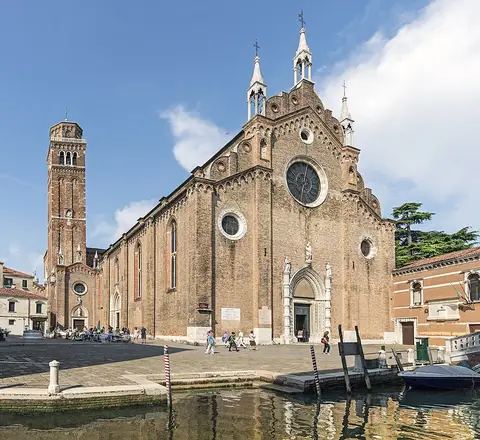 Historic sites03
Venezia Santa Maria Gloriosa Dei Frari
No address · Venice○ Website○ Phone Monuments04
You need a free account to leave reviews and photos – that keeps comments genuine and lets you edit them later.