Calabria: The Toe of the Boot Between Two Seas
Travel guide · editorialAt the tip of the Italian boot lies a region that many travelers know only from passing through on the way to Sicily. Yet a vacation in Calabria offers nearly 500 miles of coastline, densely forested highland plateaus, Greek museum treasures, and a fiery cuisine that smells of peperoncino.
Mountains and Two Seas
Calabria is a peninsula washed by the Tyrrhenian Sea to the west and the Ionian Sea to the east. Although you may think of the sea first, the region is mostly mountainous. In the north, Pollino, Italy's largest national park, forms the border with Basilicata; this is where the rare Bosnian pines grow. In the middle lies the Sila, a highland plateau with lakes and pine and beech forests that is blanketed in snow in winter. In the south, the Aspromonte rises almost to the Strait of Messina. At the narrowest point near Catanzaro, only about 19 miles separate the two seas.
Reggio, Catanzaro, and Cosenza
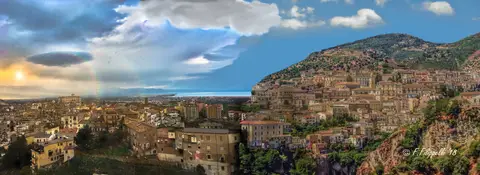
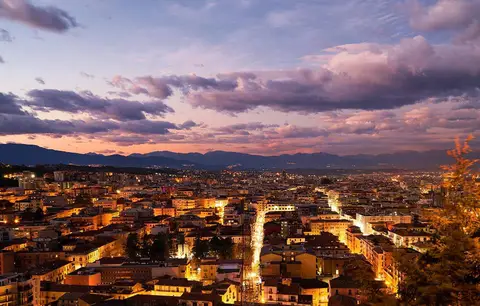
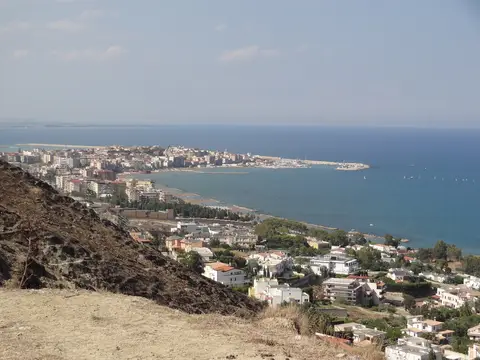
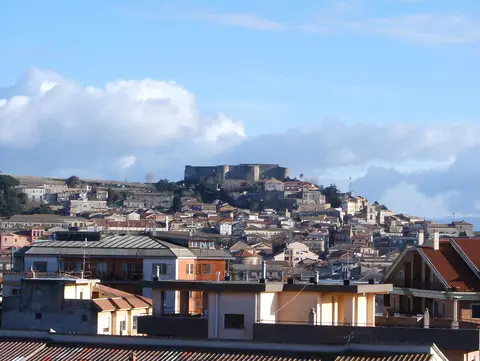
Reggio di Calabria looks across the strait to Sicily and Mount Etna. Its Lungomare, praised by Gabriele D'Annunzio as the most beautiful kilometer in Italy, is where the city gathers in the evening. The National Archaeological Museum is home to the Riace Bronzes, two Greek warrior statues from the 5th century B.C. that were found in the sea in 1972. Catanzaro, the regional capital, sits on a hill above the Ionian Sea and is connected to the beach suburb of Catanzaro Lido; the Bisantis Viaduct is one of the tallest arch bridges in Europe. Cosenza has a well-preserved old town with a Norman cathedral and an open-air sculpture gallery along Corso Mazzini, while neighboring Rende is home to the University of Calabria.
Sights in Calabria
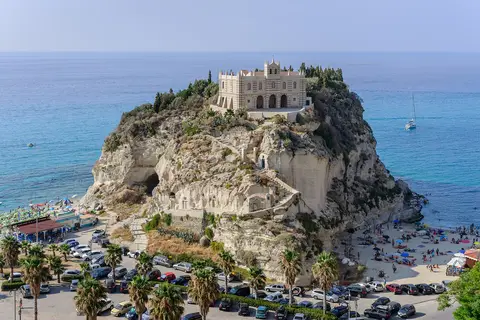
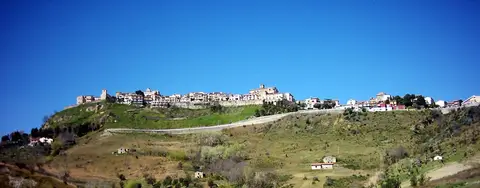
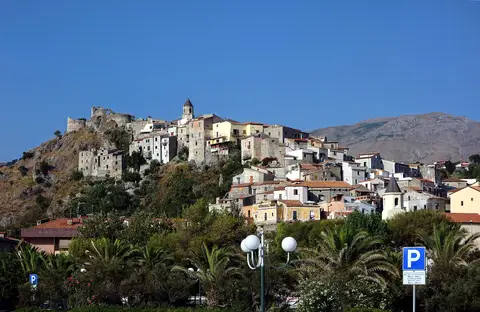
The best-known of Calabria's destinations is Tropea, whose old town perches on a cliff above white beaches, with the Santa Maria dell'Isola monastery on a rock opposite. The Costa degli Dei between Pizzo and Nicotera offers more coves; in Pizzo, a church is carved into a grotto, the Chiesetta di Piedigrotta. Scilla, with its fishing quarter of Chianalea, where the houses stand right in the water, lies on the strait. Stilo in the east is home to the Byzantine Cattolica, a tiny 10th-century church. Gerace is a medieval hilltop town with a large cathedral. In Le Castella, an Aragonese castle stands on a small island.
The Ionian Coast and the North
Crotone was once the important Greek city of Kroton, where Pythagoras taught; a single Doric column of the Temple of Hera survives at Capo Colonna. To the north lies Corigliano-Rossano, formed in 2018 by merging two municipalities. Rossano preserves the Codex Purpureus, a magnificent 6th-century gospel manuscript. The plain of Sibari is home to citrus groves and the excavated ancient city of Sybaris. On the Tyrrhenian coast north of Lamezia Terme you'll find the Riviera dei Cedri and towns such as Diamante, known for its murals, and Scalea. Some villages are home to the Arbëresh, descendants of Albanian immigrants of the 15th century, who keep their own language and traditional dress.
Food and Drink
Calabrian cuisine is bold and spicy. 'Nduja, a spreadable salami from Spilinga made with plenty of chili, is spread on bread or melted into pasta. The red onion from Tropea is so sweet that it's eaten raw or made into jam. Potatoes and mushrooms grow in the Sila, and Caciocavallo cheese and soppressata round out the table. Along the coast, fishermen catch swordfish, especially in Bagnara, as well as anchovies. Bergamot from the area around Reggio, grown almost exclusively here, flavors Earl Grey tea and perfumes. The white wine Greco di Bianco and the red from Cirò are the best-known wines, and licorice from Rossano is a sought-after specialty.
Getting There and Best Time to Visit
The main airport is Lamezia Terme in the middle of the region, with additional airports at Reggio and Crotone. High-speed trains from Rome reach Lamezia and Reggio, and ferries cross from Villa San Giovanni to Messina. In the interior, a car is almost essential. The best time to visit Calabria is between May and June and in September and October, when the sea is warm and the heat is bearable. In August, when Italians take their vacations, the coastal towns are packed. In winter, you can even ski in the Sila and on the Aspromonte, for example in Camigliatello Silano.