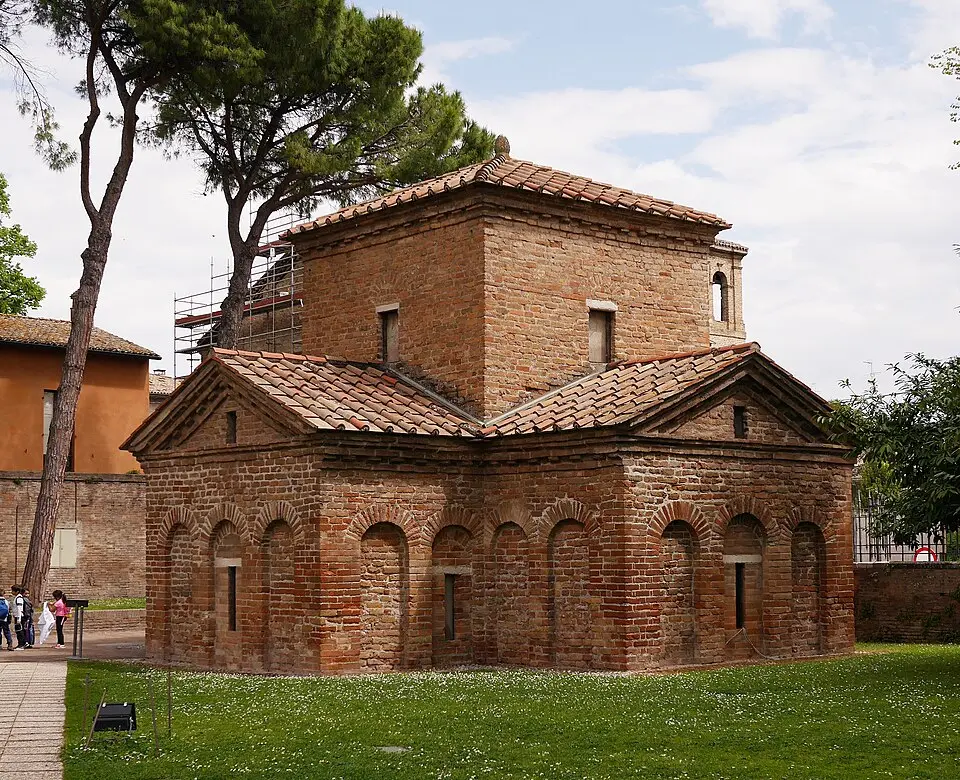
About Mausoleo di Galla Placidia
The Mausoleum of Galla Placidia in Ravenna is a historic monument traditionally regarded as the burial place of Empress Galla Placidia, a daughter of Theodosius the Great. It was probably built between 425 and 430, although there is no clear evidence that she was actually laid to rest in this small, cross-shaped chapel. Archaeological and art-historical analyses suggest instead that it was an oratory dedicated to Saint Lawrence. The building was originally attached to the narthex of the Church of Santa Croce, which the empress also commissioned. Today the floor of the structure lies about five feet below street level, which gives it a rather unassuming, squat look from the outside. Despite this plain exterior, the building has been part of the UNESCO World Heritage Site of the Early Christian Monuments of Ravenna since 1996.
Inside, the impression is completely different. A mystical, golden light filters through the narrow alabaster-paned windows and brings out the splendid wall mosaics. These mosaics, which cover the entire surface of the vault, dome, and side walls, are executed in a late antique style and are considered the oldest of their kind in Ravenna. The ceiling shows a deep blue vault of heaven studded with white and gold stars, and the star patterns in the barrel vaults are regarded as especially beautiful and unique for late antiquity. Other motifs include the symbols of the four Evangelists, figures of the Apostles, and a central depiction of the youthful Jesus as the Good Shepherd in the entrance lunette. Christ is shown here as an enthroned emperor holding a golden cross like a scepter, wrapped in a purple pallium. The color palette ranges from shades of blue through yellow and ochre to various greens, and the flat composition without overlapping elements is striking.
The historical significance of these mosaics lies not only in their age but also in the fact that a relatively complete overall composition has survived, which is rare in Byzantine art because of the iconoclastic disputes that followed. The mosaic technique, using gilded glass tesserae, was meant to create an otherworldly radiance and symbolize the eternal truth of the Christian faith. The central theme of redemption is expressed through the motif of the Good Shepherd, which is based on ancient depictions of Orpheus but was reinterpreted through Christian symbols such as the halo. The arms of the cross-shaped chapel also hold three large sarcophagi of Greek marble, though who exactly lies in each remains uncertain. Here, visitors experience a unique combination of architectural simplicity and artful, spiritual imagery.
At a glance
- Category
- Sight › Historic sites
- Rating
- no reviews yet · write a review
- Address
- Via San Vitale, 17
48121 Ravenna, Italy - Phone
- +390544541688
- Website
- www.ravennamosaici.it
- info@ravennamosaici.it
- Coordinates
- 44.42099° N · 12.19711° E
- Data quality
- confidence 1.00
- Identifier
- ID 4556f9ac-d5d…
Part of the tour
Ravenna in One Day: Mosaics, Mausoleums, and Dante's Tomb →Location & surroundings
Toggle layersFAQ about Mausoleo di Galla Placidia
quick answersWhat is the Mausoleo di Galla Placidia in Ravenna?
The Mausoleo di Galla Placidia is a small, cross-shaped chapel in Ravenna, Italy, built sometime between 425 and 430 and famous for its late antique mosaics. It is traditionally regarded as the burial place of Empress Galla Placidia, a daughter of Theodosius the Great. Since 1996, the building has been part of the UNESCO World Heritage site of the Early Christian monuments and mosaics of Ravenna. You'll find it at Via San Vitale, 17.
Is Galla Placidia really buried in the Mausoleo di Galla Placidia?
There is no clear evidence that Empress Galla Placidia was ever interred in the mausoleum in Ravenna. Archaeological and art-historical analyses suggest instead that the building was an oratory dedicated to Saint Lawrence, originally attached to the narthex of the church of Santa Croce, which the empress also commissioned. The arms of the cross hold three large sarcophagi of Greek marble, though it remains uncertain whom they were made for.
What do the mosaics in the Mausoleo di Galla Placidia depict?
The mosaics in the Mausoleo di Galla Placidia in Ravenna completely cover the vaults, dome, and side walls and are considered the oldest of their kind in the city. The ceiling shows a deep blue vault of heaven studded with white and gold stars, along with the symbols of the four Evangelists and figures of the apostles. The entrance lunette depicts a youthful Christ as the Good Shepherd, a motif based on ancient depictions of Orpheus. What makes this site especially rare is that a relatively complete overall composition has survived.
Why does the Mausoleo di Galla Placidia look so unassuming from the outside?
The Mausoleo di Galla Placidia in Ravenna looks plain from the outside because its floor now lies about 1.5 meters below street level. As a result, the small building appears squat and inconspicuous. Inside, the impression changes completely: golden light filters through narrow alabaster-glazed windows onto mosaics made of gilded glass tesserae.
What can you visit near the Mausoleo di Galla Placidia in Ravenna?
Several museums and historic sites lie right near the Mausoleo di Galla Placidia in Ravenna. travelguide195 lists, among others, the Museo Nazionale di Ravenna about 110 meters away, the Basilica of San Vitale about 140 meters away, the Museo Byron e del Risorgimento about 220 meters away, and the Domus dei Tappeti di Pietra and the Torre civica, each about 300 meters away. Within a 500-meter radius, travelguide195 also lists around 87 restaurants. The mausoleum is also part of the tour "Ravenna in a Day: Mosaics, Mausoleums, and Dante's Tomb."
Ratings & comments
none yetNear Mausoleo di Galla Placidia
closest 5 per category · 2 kmSights
Restaurants
Museums
Hotels
More:Historic sites in Ravenna (58)All sights in Ravenna (65)
186 places within 2 km loaded.
Don't miss in Ravenna
All sights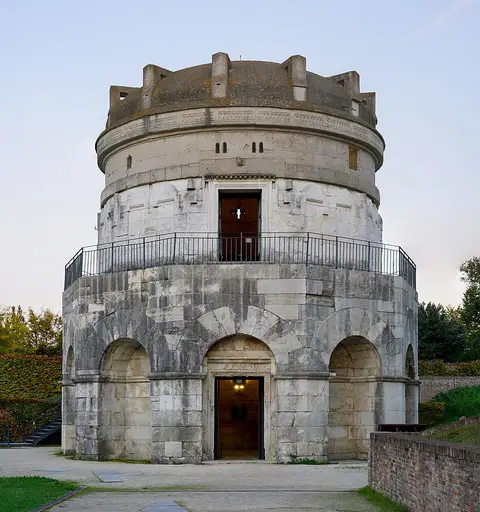 Monuments01
Mausoleo di Teodorico
Via delle Industrie, 14 · Ravenna● Website● Phone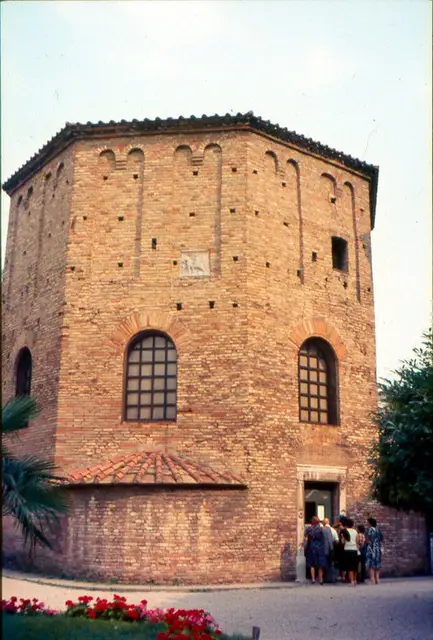 Historic sites02
Battistero Neoniano
P.za Arcivescovado, 1 · Ravenna● Website● Phone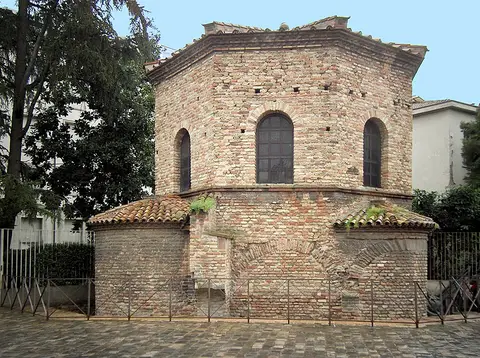 Historic sites03
Battistero degli Ariani
Piazzetta degli Ariani · Ravenna● Website● Phone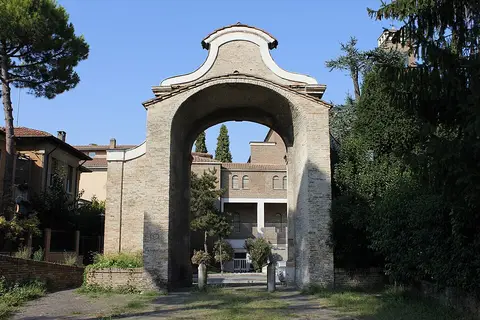 Historic sites04
You need a free account to leave reviews and photos – that keeps comments genuine and lets you edit them later.
Cross-shaped structure housing contains three sarcophagi. The largest one used to contain remains of Galla Placidia , sister of Honorius and Empress of Rome. Galla, who died in 450 AD, is one of history's most powerful women.
Source: Wikivoyage, „Ravenna“ · authors per page history · CC BY-SA 4.0 · as of 4/16/2016