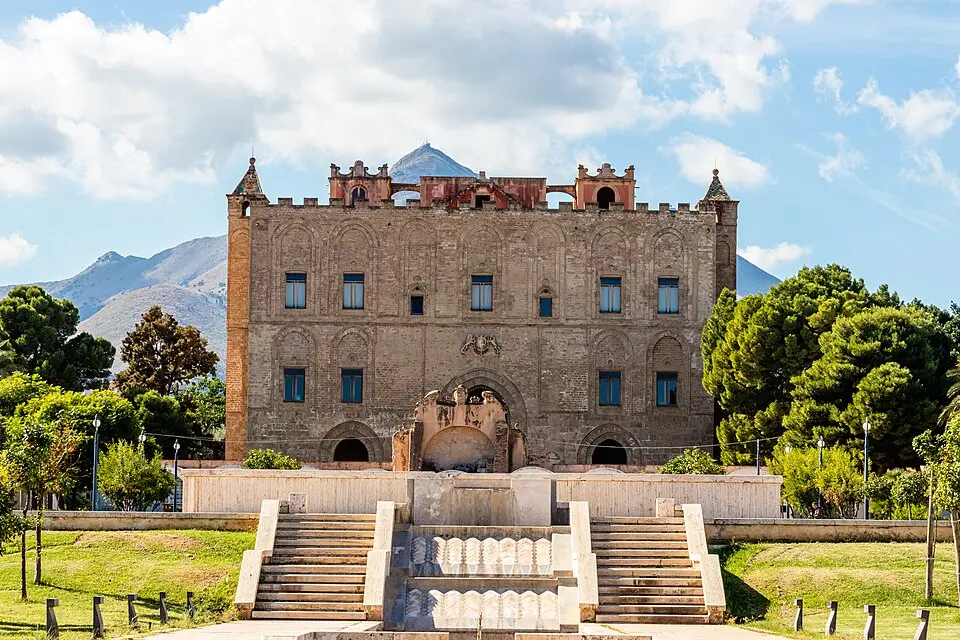
About La Zisa
La Zisa, also known as Castello della Zisa, is a historic palace in the west of Palermo that served as a summer residence for the Norman kings of Sicily. The building was constructed between 1165 and 1167 under the rulers William I and William II and showcases an impressive blend of Norman and Arabic architecture. This cultural influence is due to the fact that most of the craftsmen involved were Arabs. The name of the castle also derives from Arabic and means something like "mighty" or "strong." The palace originally stood in the royal park, known as the Parco Nuovo, and was surrounded by a large reflecting pool in front of the main facade. Over the centuries the building was altered several times: it was expanded into a fortress in the 14th century, and in the 17th century the de Sandoval family converted it into a Baroque palace. After it passed into state ownership in the 1950s, the Baroque modifications were undone to restore its original character.
The exterior of the palace is defined by its cube-like shape with three stories. Projecting bays on the narrow sides served as ventilation shafts and are topped with small turrets. The main facade is dominated by three pointed-arch entrances, with the central one especially lavish, resting on pairs of columns. A narrow, straight cornice runs around the building and emphasizes its horizontal lines. Today La Zisa houses Palermo's Museum of Islamic Art. Inside, you can see the large two-story audience hall, which stands out for its muqarnas niches and remnants of mosaic work. A special feature is the Fountain of Paradise in the central niche, from which water once flowed down a sloping slab into a channel in the floor that widened into several basins and finally led outside to the pool in front of the castle.
Today a park surrounds the palace, laid out in 2005 with lawns and a water channel that flows over cascades and rectangular basins. In front of the castle you can still see the historic pool, with the base of a former pavilion visible at its center. To the north of the palace you will also find the remains of a Roman aqueduct and a bathhouse complex, as well as the Cappella della Santissima Trinità alla Zisa. Along with La Cuba, La Zisa is considered one of the best-preserved Norman palaces in Sicily and offers a fascinating glimpse into the island's cultural diversity during Norman rule.
At a glance
- Category
- Sight › Historic sites
- Rating
- no reviews yet · write a review
- Address
- —
Palermo, Italy - District
- V Circoscrizione
- Phone
- —
- Website
- fr.wikipedia.org
- —
- Coordinates
- 38.11667° N · 13.34111° E
- Data quality
- confidence 0.75
- Identifier
- ID f3ae8396-206…
Location & surroundings
Toggle layersFAQ about La Zisa
quick answersWhat is La Zisa in Palermo?
La Zisa, also known as Castello della Zisa, is a Norman palace in the west of Palermo that served as a summer residence for the Norman kings of Sicily. It was built between 1165 and 1167 under William I and William II and originally stood in the royal park known as Parco Nuovo. Along with La Cuba, La Zisa is considered one of the best-preserved Norman palaces in Sicily.
Why does La Zisa in Palermo combine Norman and Arabic architecture?
La Zisa in Palermo blends Norman and Arabic building styles because most of the craftsmen involved were Arabs. Even the name comes from Arabic and roughly means "mighty" or "strong." On the outside, the cube-shaped, three-story building is defined by three pointed-arch entrances on the main facade, the middle one resting on pairs of columns, as well as projecting wings topped with small turrets that served as ventilation shafts.
What can you see inside La Zisa?
Inside La Zisa in Palermo you'll now find the city's Museum of Islamic Art. You can see the large two-story audience hall with muqarnas niches and remnants of mosaics. One highlight is the Fountain of Paradise in the central niche, from which water once flowed down a sloping slab into a channel in the floor and on to the pool in front of the palace.
How has La Zisa changed over the course of history?
La Zisa in Palermo was remodeled several times and only brought back closer to its original character in the 20th century. In the 14th century the palace was expanded into a fortress, and in the 17th century the de Sandoval family turned it into a Baroque palace. After La Zisa passed into state ownership in the 1950s, the Baroque alterations were reversed.
What can you see around La Zisa in Palermo?
Right around La Zisa in Palermo is a park laid out in 2005 with a water channel, cascades, and rectangular pools, as well as the historic pool with the base of a former pavilion. To the north of the palace you'll find remains of a Roman aqueduct and a bathhouse complex, as well as the Cappella della Santissima Trinità alla Zisa. travelguide195 also lists nearby ZAC - Zisa Arte Contemporanea (about 240 m), Palazzo Wirz all'Olivuzza (Palazzo Florio, about 250 m), Villino Florio (about 390 m), and the Fondazione Giuseppe Whitaker (about 560 m), plus around 31 restaurants within 500 m.
Ratings & comments
none yetNear La Zisa
closest 5 per category · 2 kmSights
Restaurants
Museums
Hotels
More:Historic sites in Palermo (149)All sights in Palermo (200)
260 places within 2 km loaded.
Don't miss in Palermo
All sights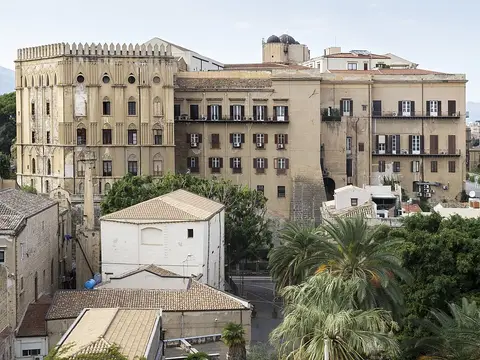 Palaces01
Palazzo dei Normanni
Piazza del Parlamento, 1 · Palermo● Website● Phone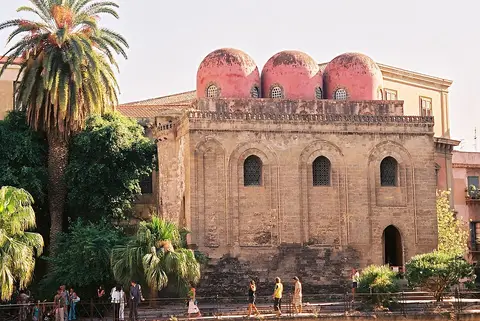 Monuments02
Church of San Cataldo, Palermo
Piazza Vincenzo Bellini, 4 · Palermo○ Website● Phone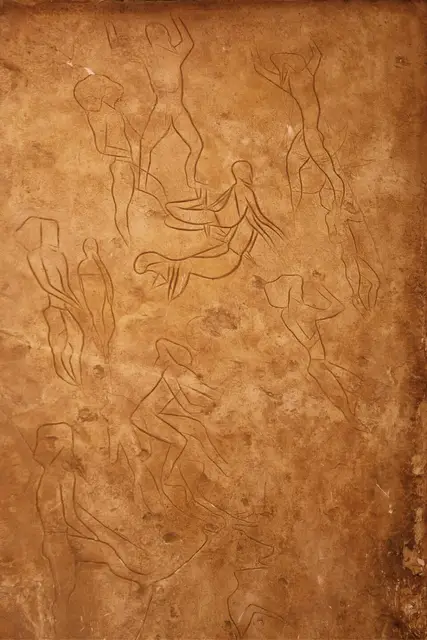 Historic sites03
Grotta dell'Addaura
No address · Palermo○ Website○ Phone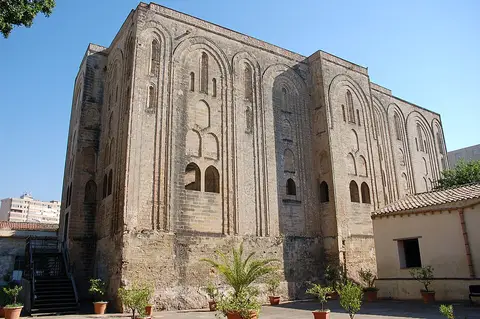 Historic sites04
You need a free account to leave reviews and photos – that keeps comments genuine and lets you edit them later.