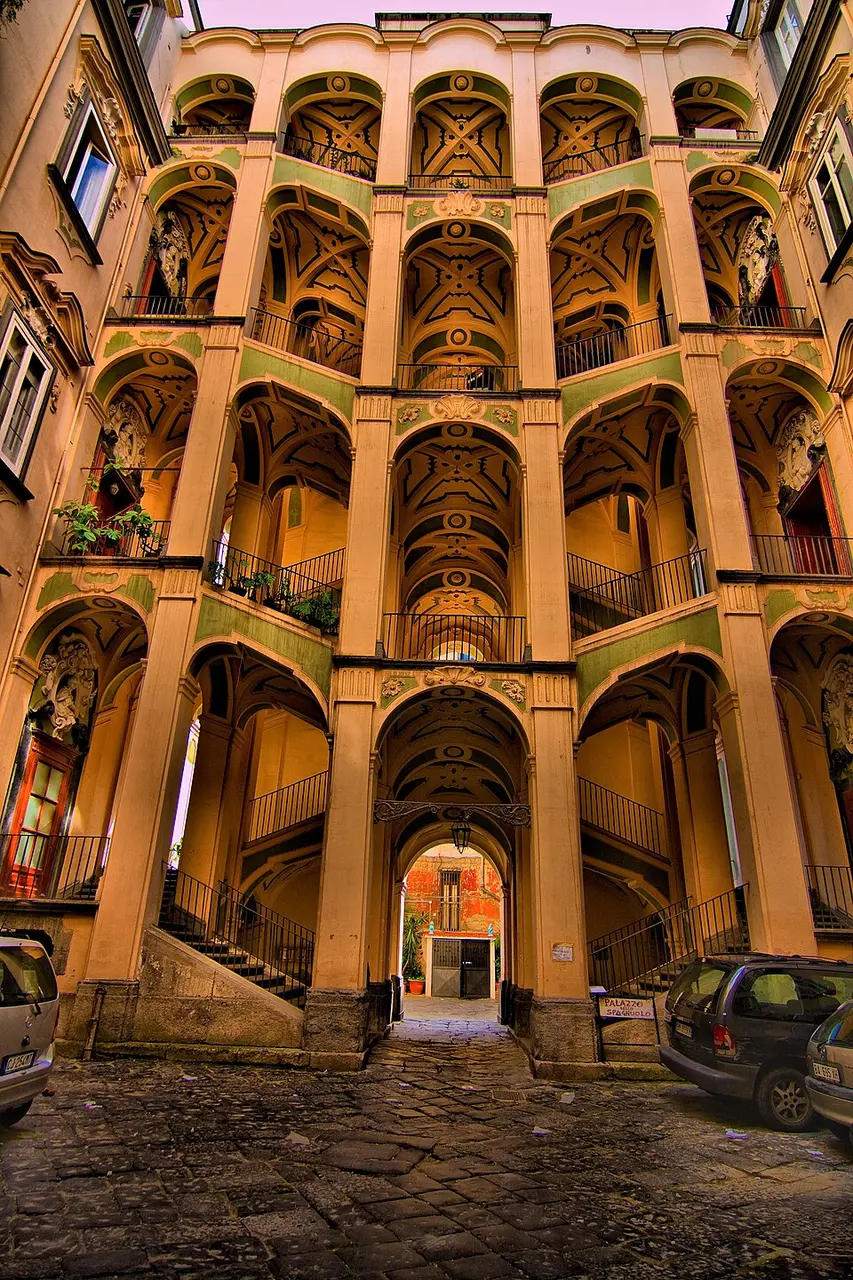
About The Palazzo dello Spagnolo
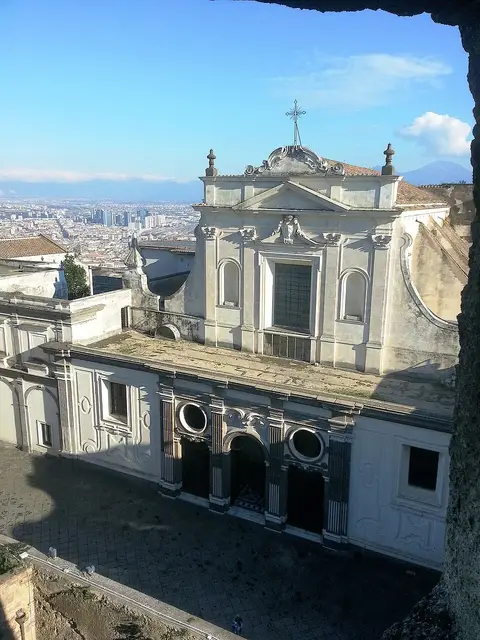
The Palazzo dello Spagnolo in the Sanità district is one of the outstanding examples of Neapolitan civic Baroque architecture. The building was constructed in 1738 to designs by the architect Ferdinando Sanfelice for the Marquis Nicola Moscati. Its imposing double-ramp open main staircase, known as the "Falcon's Wing," forms the architectural centerpiece and defines the inner façade. The walls are richly decorated with Rococo-style stucco work, executed around 1740 by Aniello Prezioso. The palace takes its present name from Tommaso Atienza, a Spanish nobleman who acquired the property in the late 18th century and had it expanded. Originally, the palace served as a social gathering place where King Charles III of Spain regularly changed his horses. Today the building is divided into several condominiums. The second and third floors house a museum dedicated to the famous actor Totò, while the Istituto delle Guarattelle puppet museum was previously located here.
At a glance
- Category
- Sight › Historic sites
- Rating
- no reviews yet · write a review
- Address
- Via Vergini, 19
80137 Naples, Italy - District
- Municipalità 3
- Phone
- +393337114807
- Website
- it.wikipedia.org
- —
- Coordinates
- 40.85680° N · 14.25437° E
- Data quality
- confidence 0.88
- Identifier
- ID aca6b601-0af…
Location & surroundings
Toggle layersFAQ about The Palazzo dello Spagnolo
quick answersWhat is the Palazzo dello Spagnolo in Naples?
The Palazzo dello Spagnolo is a Baroque city palace in Naples' Sanità district and is considered an outstanding example of the city's civic Baroque architecture. It was built in 1738 to designs by the architect Ferdinando Sanfelice for the Marquis Nicola Moscati. You'll find the Palazzo dello Spagnolo at Via Vergini, 19 in Municipalità 3.
What is special about the staircase of the Palazzo dello Spagnolo?
The architectural centerpiece of the Palazzo dello Spagnolo in Naples is an imposing open main staircase with a double flight, known as the "Falcon's Wing." It defines the palace's inner facade. The walls are also richly decorated with Rococo-style stucco work, which Aniello Prezioso executed around 1740.
How did the Palazzo dello Spagnolo get its name?
The Palazzo dello Spagnolo in Naples is named after Tommaso Atienza, a Spanish nobleman who acquired the property in the late 18th century and had it expanded. The palace originally served as a social meeting place. According to tradition, King Charles III of Spain regularly changed his horses here.
What is in the Palazzo dello Spagnolo today?
Today the Palazzo dello Spagnolo in Naples is divided into several condominiums. The second and third floors house a museum dedicated to the famous actor Totò. The puppet museum Istituto delle Guarattelle was previously located here.
What can you visit around the Palazzo dello Spagnolo in Naples?
Around the Palazzo dello Spagnolo in Naples, numerous sights and museums are within walking distance. travelguide195 lists, among others, the Galleria degli abiti dello Spagnuolo (about 12 m), the Complesso Monumentale Vincenziano (about 35 m), the Borgo dei Vergini (about 36 m), the Ipogeo dei Cristallini (about 109 m), the Jago Museum (about 146 m), the Museo del Sottosuolo (about 167 m), the Museo Archeologico Nazionale (about 173 m) and the Acquedotto Augusteo (about 238 m). Within 500 m, travelguide195 also lists around 65 restaurants.
Ratings & comments
none yetNear The Palazzo dello Spagnolo
closest 5 per category · 2 kmSights
Restaurants
Museums
Hotels
More:Historic sites in Naples (304)Sights in Municipalità 3 (37)All sights in Naples (377)
299 places within 2 km loaded.
You need a free account to leave reviews and photos – that keeps comments genuine and lets you edit them later.
A late-baroque palace built in 1738 in Rione Sanità, famous for its monumental courtyard staircases with arches in shifting places.
Source: Wikivoyage, „Naples“ · authors per page history · CC BY-SA 4.0 · as of 6/28/2018