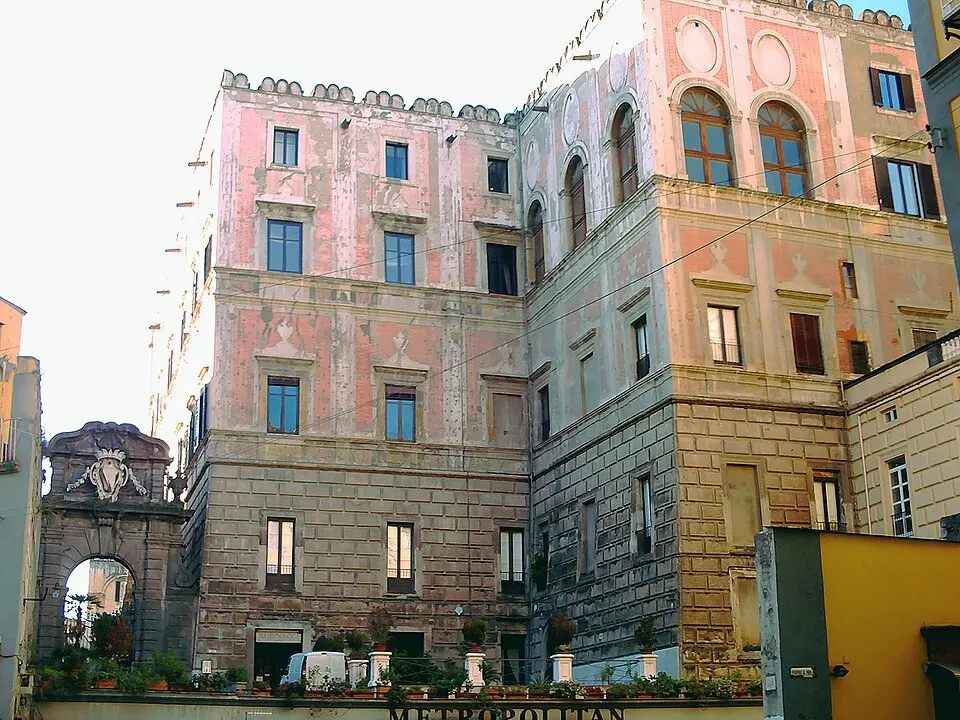
About Palazzo Mannajuolo
Palazzo Mannajuolo, historically also known as Palazzo Cellamare or Palazzo Francavilla, is an impressive palace in Naples' San Ferdinando district. The building on Via Chiaia was originally constructed in the first decade of the 16th century by Abbot Giovanni Francesco Carafa and later restored in the typical Renaissance style by his nephew Luigi Carafa. Over the centuries, the palace changed hands several times and at one point served as a lazaretto during the plague of 1656. In the 18th century, the Genoese duke Antonio del Giudice bought the property, which later became the center of Neapolitan high society under Prince Michele Imperiali. Grand celebrations were held here, and the palace made a name for itself as a host to illustrious figures such as Giacomo Casanova, Johann Wolfgang von Goethe, and the painter Caravaggio, who spent his last years here.
Architecturally, the building combines influences from several eras. The facade facing Via Chiaia has the features of a fortified palace with smooth rustication, while the side facing Via Fiangieri reflects the style of an 18th-century noble residence. Inside, Baroque elements shape the look of the palace, including a portal by Ferdinando Fuga and a remarkably beautiful chapel created in 1727 by Giovan Battista Nauclerio. The interior rooms bear witness to elaborate modernizations by architects such as Francesco Antonio Picchiatti. Particularly noteworthy are the living quarters, which are decorated with 18th-century frescoes, including works by Pietro Bardellino, Giacinto Diano, and the Fischetti brothers. These ceiling paintings adorn both the rooms of Cardinal Giudice Caracciolo and the grand salons once occupied by Queen Maria Carolina.
Behind the palace lies a spacious garden that has existed since the 16th century and has had to adapt its size to the city's development over time. In the middle of this green space you will find fragments of a fountain by Giovanni da Nola. Beneath the building are tuff caves, formed when stone was quarried for its construction. In these cellar rooms, the Metropolitan cinema opened in 1948; it was considered the largest in the city and reopened after extensive restoration work in the 2000s. The most recent renovation work on the facades and interiors was completed in spring 2023 to safeguard the historic heritage for the future.
At a glance
- Category
- Sight › Palaces
- Rating
- no reviews yet · write a review
- Address
- Via Gaetano Filangieri
80121 Naples, Italy - District
- Municipalità 1
- Phone
- +39081409446
- Website
- —
- —
- Coordinates
- 40.83645° N · 14.24045° E
- Data quality
- confidence 0.98
- Identifier
- ID d1b02891-5d1…
Part of the tour
The Old Town on Foot: From the Decumano to Pizzofalcone →Location & surroundings
Toggle layersRatings & comments
none yetNear Palazzo Mannajuolo
closest 5 per category · 2 kmSights
Museums
Hotels
More:Palaces in Naples (31)Sights in Municipalità 1 (99)All sights in Naples (377)
294 places within 2 km loaded.
You need a free account to leave reviews and photos – that keeps comments genuine and lets you edit them later.
Art Nouveau residential building built in 1911, with an impressive ellipsoidal staircase in marble. The palace is a condo and it is possible to have a look inside asking the doorman
Source: Wikivoyage, „Naples“ · authors per page history · CC BY-SA 4.0 · as of 6/28/2018