About Milan Circo romano
The Roman Circus of Milan was a monumental complex in the ancient city of Mediolanum, built under Emperor Maximian between the third and fourth centuries. When Milan became the capital of the Western Roman Empire, the structure served as a symbol of economic and military strength. At 470 meters long and 85 meters wide, it was among the largest of its kind during the Tetrarchy. The structure consisted of two straight stretches connected by curves and divided by a raised central axis, the spina, which was decorated with statues, niches, and fountains. The circus's main purpose was to host chariot races with two- and four-horse teams, while gladiatorial combats took place only on rare occasions. The stands provided seating for the public, while the emperor could reach his reserved box directly from the nearby imperial palace via a private entrance.
The structure stood in the western part of the city, near the Roman city walls, making it easy to reach both for residents living outside the walls and for the emperor. The complex survived the Gothic period and was even used in the seventh century for the coronation of the Lombard king Adaloald. The circus was destroyed in 1162, probably during the siege by Emperor Frederick Barbarossa, who feared Milan's growing power. Today, the former site stretches across streets such as Corso Magenta, Via Brisa, and Via Circo.
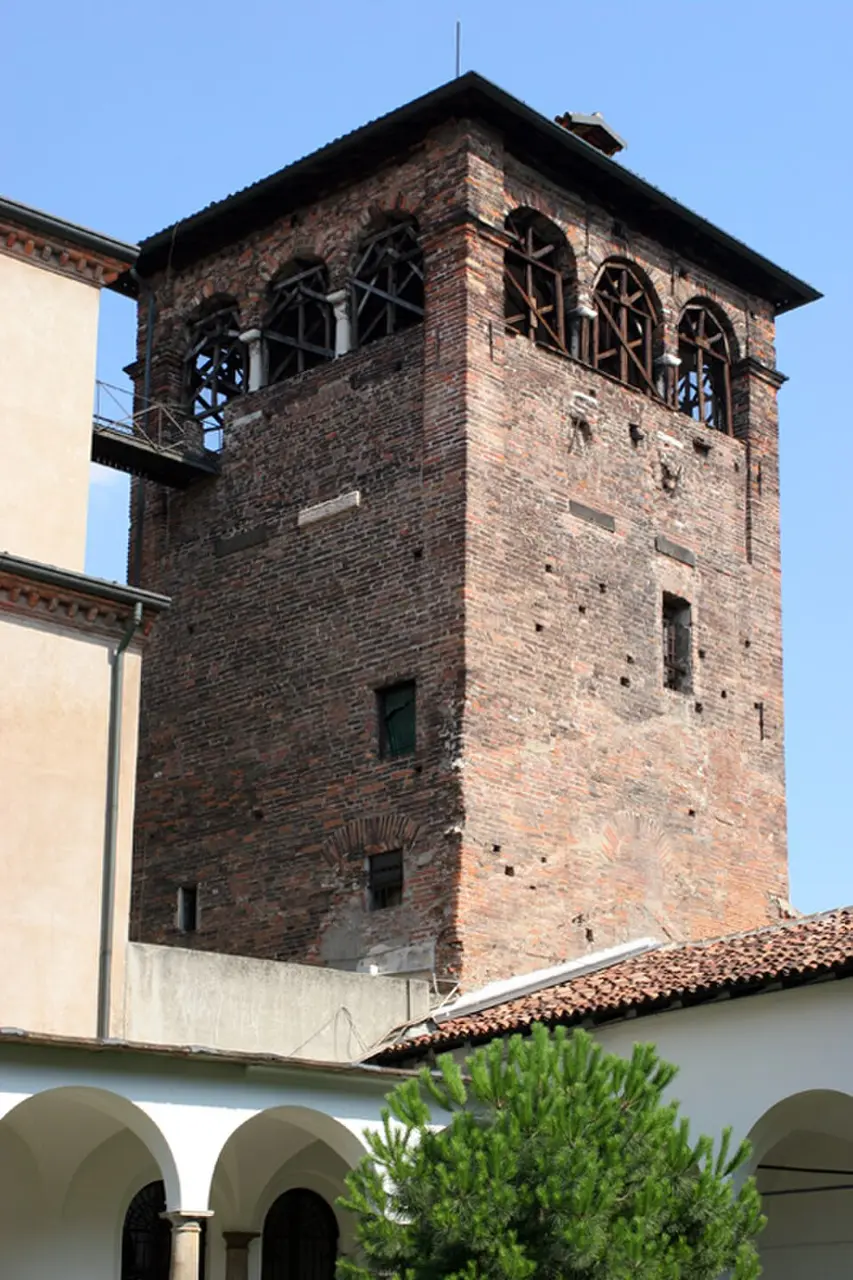
Today, you can still see several remains of the complex. In the courtyards of buildings on Via Vigna and Via Circo, foundations and wall remnants survive, some of which also served a defensive function. The best-preserved element is the western tower of the starting gates, which now serves as the bell tower of the church of San Maurizio al Monastero Maggiore. This tower, which stands on Via Luini, still shows Roman architectural elements such as marble cornices and columns. In the adjoining garden of the Civic Archaeological Museum, you can also see sections of the Roman city walls and an apse that once marked the place reserved for the emperor or the judges.
At a glance
- Category
- Sight › Historic sites
- Rating
- no reviews yet · write a review
- Address
- Via Bernardino Luini, 2
20123 Milan, Italy - District
- 1
- Phone
- —
- Website
- —
- —
- Coordinates
- 45.46519° N · 9.17899° E
- Data quality
- confidence 0.51
- Identifier
- ID bdf7986e-1d8…
Location & surroundings
Toggle layersRatings & comments
none yetNear Milan Circo romano
closest 5 per category · 2 kmSights
Restaurants
Museums
Hotels
More:Historic sites in Milan (455)Sights in 1 (254)All sights in Milan (573)
300 places within 2 km loaded.
You need a free account to leave reviews and photos – that keeps comments genuine and lets you edit them later.