About 14 Henrietta Street
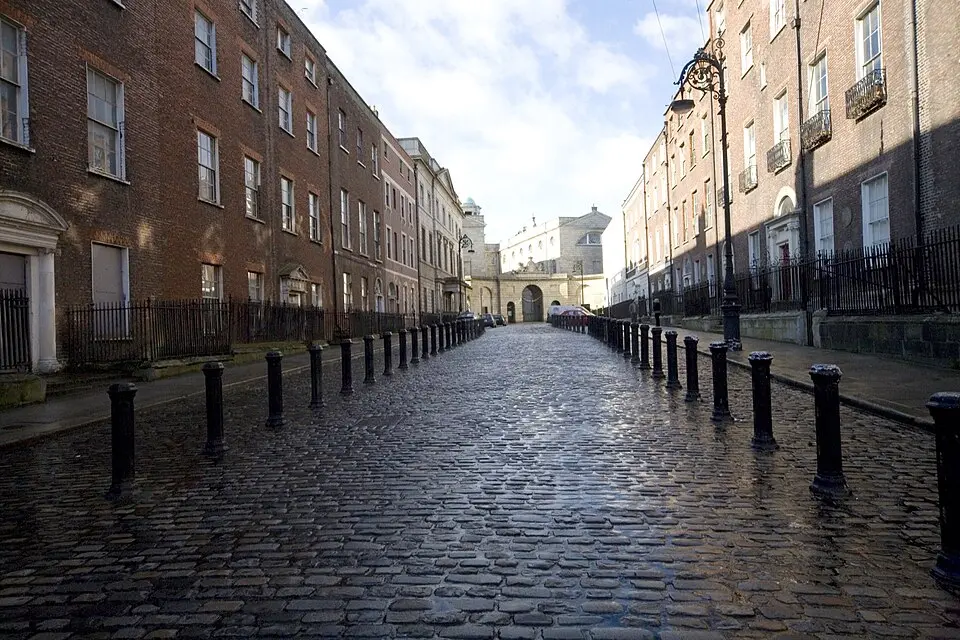
14 Henrietta Street in Dublin is a museum that opened in late 2018 and tells the story of the building and the people who lived there. It stands on one of the oldest Georgian streets in the city, laid out by Luke Gardiner in the 1720s and today a dead end that finishes at the Law Library of King's Inns at its western end. The street is known for its large red-brick mansions and Georgian-style townhouses. While wealthy families lived in the houses in the 18th century, they fell into disrepair in the 19th and 20th centuries and served as a tenement district for a long time. After extensive restoration work in the late 20th and early 21st centuries, 14 Henrietta Street was opened to the public as a museum. Here you can gain insight into the historical development of the street and learn how the architecture and social conditions changed over the centuries. A plaque on the house also commemorates the Irish republican Thomas Bryan.
At a glance
- Category
- Museum › History museums
- Rating
- no reviews yet · write a review
- Address
- 14 Henrietta St
D01 HH34 Dublin, Ireland - Phone
- +35315240383
- Website
- linktr.ee
- info@14henriettastreet.ie
- Coordinates
- 53.35245° N · -6.27018° E
- Data quality
- confidence 1.00
- Identifier
- ID 1ec11b57-217…
Location & surroundings
Toggle layersRatings & comments
none yetNear 14 Henrietta Street
closest 5 per category · 2 kmSights
Restaurants
Museums
Hotels
More:History museums in Dublin (25)All museums in Dublin (72)
292 places within 2 km loaded.

You need a free account to leave reviews and photos – that keeps comments genuine and lets you edit them later.
Many Dubliners lived in buildings like this. Built in the 1740s, its first occupant was Lord Viscount Molesworth and his family, and after him came a series of Right Honorable This and Viscount That and Bishop of Wherever. But the union with England in 1801 drained power and money to London, and the neighbourhood went downhill. Rural folk flocked to Dublin after the famine, so the building was broken up into tenements, with 100 living here. From the 1930s the inner city drained out to new suburbs, and No 14 fell derelict in 1970 before being preserved. Visit by guided tour.
Source: Wikivoyage, „Dublin“ · authors per page history · CC BY-SA 4.0 · as of 6/5/2024