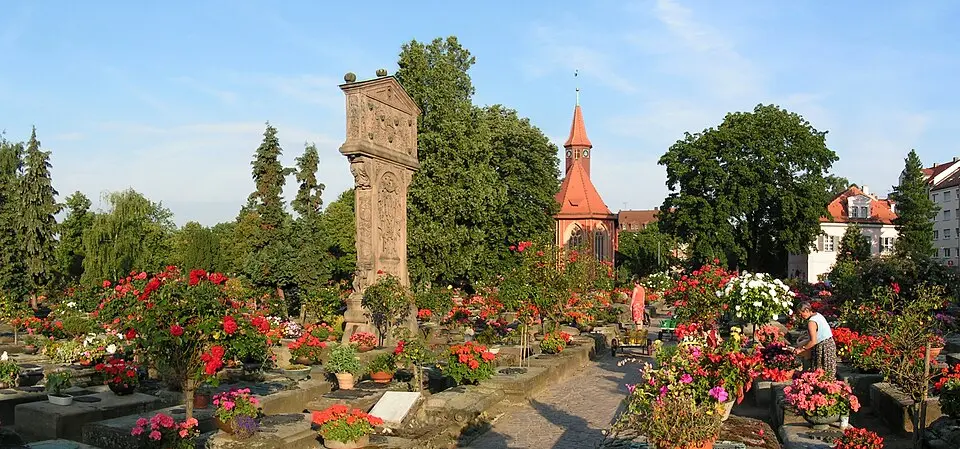
About St. Johannis
The Johannisfriedhof (St. John's Cemetery) in Nuremberg is a historic burial ground that is still in active use today and is a protected monument. It is also known as the Rose Cemetery, since countless rosebushes characterize the grounds. The history of the site goes back to the 13th century, when a house for people with leprosy was first built here. In 1238, Pope Gregory IX approved a burial ground with a chapel, which over the centuries developed into one of the city's most important cemeteries. At the center of the cemetery stands St. John's Church, whose choir was consecrated in 1377 and whose nave was consecrated in 1395. It survived World War II largely unscathed and houses valuable altars, including a side altar bearing the double coat of arms of the donor families Imhoff and Holzschuher. On the eastern edge is the round Holzschuher Chapel, built around 1506 and used as the burial site of the wealthy Holzschuher family.
The numerous bronze epitaphs found in the cemetery are of particular cultural significance. These works of art were created in the 16th and early 17th centuries by the skill of Nuremberg's brass founders and today serve as important sources for the history of crafts and social history. Unlike at other cemeteries, there was no strict separation by social class here, so craftsmen could also decorate their graves with individual depictions of their tools. The tradition of epitaph making was added to the Bavarian State Inventory of Intangible Cultural Heritage in 2018. In addition, the Nuremberg Way of the Cross, with seven stations, leads from the city to the cemetery. Adam Kraft's original works from the early 16th century can now be seen in museums such as the Germanisches Nationalmuseum (Germanic National Museum) or the Heilig-Geist-Spital (Holy Spirit Hospital), while copies stand along the path itself.
The cemetery is a significant stop on the cemetery tourism circuit and part of Nuremberg's Historic Mile. Many famous figures rest here, including the painter Albrecht Dürer, the poet Hans Sachs, the sculptor Veit Stoss, and the humanist Willibald Pirckheimer. Artists such as Anselm Feuerbach and Joachim von Sandrart, as well as scientists and entrepreneurs, are also buried here. You can enjoy the peaceful atmosphere and admire the artistic tombs, which were created over a span of five centuries. An association and a foundation are working to preserve these cultural treasures, since many epitaphs are threatened by weathering or vandalism. The site thus combines religious tradition, historical significance, and artistic heritage in a unique way.
At a glance
- Category
- Sight › Historic sites
- Rating
- no reviews yet · write a review
- Address
- Kirschgartenstr.
90419 Nuremberg, Germany - District
- St. Johannis
- Phone
- —
- Website
- —
- —
- Coordinates
- 49.45907° N · 11.06119° E
- Data quality
- confidence 0.83
- Identifier
- ID 4c5da1c9-1d0…
Location & surroundings
Toggle layersRatings & comments
none yetNear St. Johannis
closest 5 per category · 2 kmSights
Restaurants
Museums
Hotels
More:Historic sites in Nuremberg (96)All sights in Nuremberg (121)
260 places within 2 km loaded.
Don't miss in Nuremberg
All sights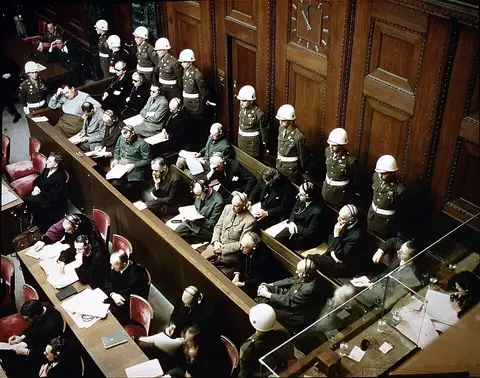 Historic sites01
Memorium Nürnberger Prozesse
Bärenschanzstraße 72 · Nuremberg● Website● Phone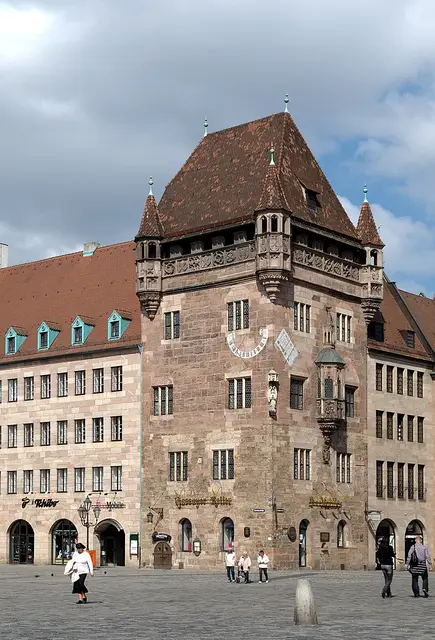 Historic sites02
Nassauer Haus
Karolinenstraße 2 · Nuremberg● Website● Phone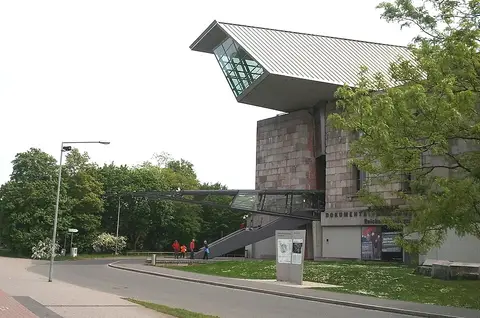 Historic sites03
Dokumentationszentrum Reichsparteitagsgelände
Bayernstraße 110 · Nuremberg● Website● Phone Monuments04
You need a free account to leave reviews and photos – that keeps comments genuine and lets you edit them later.