About Castillo de Núremberg
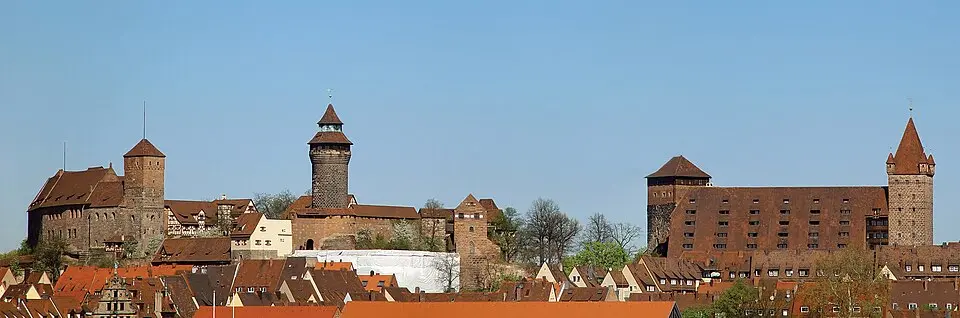
Nuremberg Castle sits enthroned as the city's majestic landmark on a steep sandstone ridge north of the Pegnitz River. Historically, this imposing double castle is divided into the Imperial Castle (Kaiserburg) and the Burggrave's Castle (Burggrafenburg), although the structural boundaries between the two parts are now hard to make out. The complex ranks among the most important fortifications and former imperial residences in Europe and is a central part of Nuremberg's Historic Mile. After the heavy destruction caused by air raids in World War II, the castle was rebuilt in its historic forms, which gives it an authentic medieval character today.
The castle's location was chosen with great strategic skill. The rocky ridge drops steeply to the south, west, and north, making the complex a natural spur castle. From here, you get a sweeping view over the craftsmen's quarter below and the Old Town. The summit of the castle hill rises noticeably above the surrounding landscape, which underscores the defensive strength of the complex throughout history. The site also lay in an area considered royal land, situated between old royal estates such as Altdorf and Fürth, which explains the political importance of the place in earlier centuries.
The castle's history goes back to around the year 1000, as archaeological finds show. Written sources first mention the complex in the 11th century, when the Salian royal castle served as a starting point for campaigns to the east. Over the centuries, control of the castle changed hands several times. Under the Staufer dynasty, the importance of the Imperial Castle grew; it served as a royal palatinate and secured the empire's eastern border. Later, the complex became caught up in a power struggle between the rising Imperial City of Nuremberg and the Burgraves of Nuremberg, who came from the House of Hohenzollern.
This conflict led the city of Nuremberg to drive the Burgraves out of the castle in 1427 and take over administration of the entire complex. In the 16th century, the city strengthened the fortifications by adding bastions in order to integrate the castle into the city's defenses. With the end of its military significance in the 17th century, the castle's function increasingly shifted to that of a ceremonial residence. In the 19th century, the complex was remodeled in the spirit of Romanticism, and in the 20th century it again played a controversial role before being restored after the war and opened to the public.
Today the castle is a popular destination that attracts hundreds of thousands of visitors every year. The walking tour often begins at the Ölberg and leads up to the former Imperial Stables, which now serve as a youth hostel. From there, you pass the Pentagonal Tower on your way to the first gate. One highlight is the Freiung, an open area offering an unobstructed panoramic view of the city. In the past, persecuted people found asylum here under medieval law.
Inside the castle you will find numerous historic buildings that reflect the different eras of rule. The Inner Castle Courtyard is enclosed by the Palas (great hall), the Kemenate (ladies' quarters), and the castle chapel. Especially worth seeing is the Double Chapel, which dates from the Staufer period and is among the oldest surviving parts of the complex. It consists of the upper Imperial Chapel and the lower Chapel of St. Margaret, which are connected only by an opening in the ceiling. In the sanctuary of the Imperial Chapel hangs a crucifix by the sculptor Veit Stoss, a masterpiece of the late Gothic period.
Another architectural gem is the Sinwell Tower, which you can climb as a lookout tower for another view over the city's rooftops. Nearby is the Deep Well, whose shaft was cut deep into the rock and was meant to ensure the castle's water supply during sieges. The bastions on the north side of the castle, built in the 16th century to protect the complex against modern artillery, now house castle gardens as well as casemates where guided tours are offered.
Today the castle is home to the Imperial Castle Museum, a branch of the Germanisches Nationalmuseum. The permanent exhibition explores not only the history of the castle itself but also the Holy Roman Empire of the German Nation and Nuremberg's role in the late Middle Ages. On guided tours, you can see the interiors of various buildings of the Imperial Castle and gain insight into the living quarters and state rooms of the emperors and kings.
Beyond its cultural uses, the castle is also an important habitat for flora and fauna. The varied structures of cellars, walls, and towers offer niches for numerous animal and plant species. For several years now, peregrine falcons have nested in the Sinwell Tower, and you can watch the broods live via webcams. This ecological significance underscores the versatility of the complex, which reaches far beyond its historic function.
Nuremberg Castle is thus not only a testament to European history but also a living place that combines culture, nature, and relaxation. Whether you take a quiet stroll along the bastions, visit the museum, or watch the wildlife, the castle offers visitors a rich and varied experience. It remains a symbol of Nuremberg's rich past and a draw for anyone interested in history, architecture, and landscape.
At a glance
- Category
- Sight › Historic sites
- Rating
- no reviews yet · write a review
- Address
- Burg 13
90403 Nuremberg, Germany - District
- Altstadt, St. Sebald
- Phone
- —
- Website
- —
- —
- Coordinates
- 49.45790° N · 11.07590° E
- Data quality
- confidence 0.82
- Identifier
- ID fd30fae9-a4a…
Location & surroundings
Toggle layersRatings & comments
none yetNear Castillo de Núremberg
closest 5 per category · 2 kmSights
Restaurants
Museums
Hotels
More:Historic sites in Nuremberg (96)Sights in Altstadt, St. Sebald (36)All sights in Nuremberg (121)
268 places within 2 km loaded.
Don't miss in Nuremberg
All sights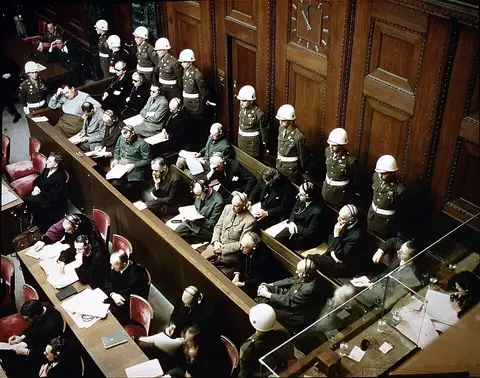 Historic sites01
Memorium Nürnberger Prozesse
Bärenschanzstraße 72 · Nuremberg● Website● Phone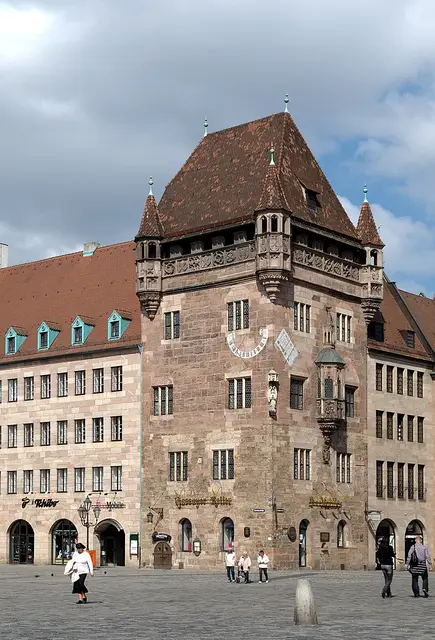 Historic sites02
Nassauer Haus
Karolinenstraße 2 · Nuremberg● Website● Phone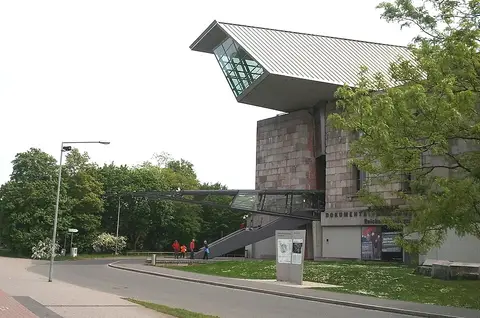 Historic sites03
Dokumentationszentrum Reichsparteitagsgelände
Bayernstraße 110 · Nuremberg● Website● Phone Monuments04
You need a free account to leave reviews and photos – that keeps comments genuine and lets you edit them later.