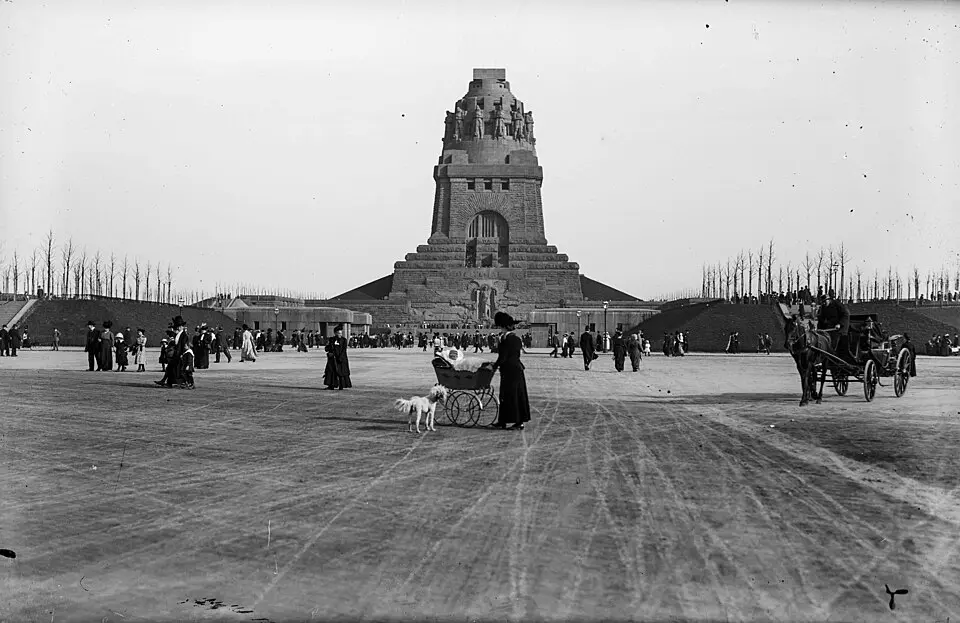
About Völkerschlachtdenkmal
The Monument to the Battle of the Nations (Völkerschlachtdenkmal) in Leipzig is an imposing monument commemorating the historic Battle of the Nations of October 18, 1813. In this decisive engagement of the Wars of Liberation, Napoleon suffered a defeat at the hands of a coalition of Russia, Austria, Prussia, and Sweden. Built between 1898 and 1913 in the monumental style to designs by the architect Bruno Schmitz, the structure stands roughly 91 meters (about 300 feet) tall and ranks among the tallest monuments in Europe. It is not only a national monument of Germany but also one of Saxony's most important sights and a well-known landmark of the city. The monument stands in the southeast of Leipzig, facing the site of the former battlefield, and forms a landmark visible from far away—on a clear day, it can even be seen from the Fichtelberg.
The idea for such a monument arose shortly after the battle, but concrete plans were not carried out until the end of the 19th century. After several competitions failed to produce satisfactory results, the German Patriots' League commissioned Bruno Schmitz to prepare a new design. The foundation stone was laid on October 18, 1898, with an earlier foundation stone from 1863 embedded in the concrete of the foundation. Funding came from lotteries and donations. The construction was technically demanding and required extensive soil surveys as well as the excavation of a sand pit. The monument is ninety percent concrete and was built using a special slip-forming technique, which at the time made it one of the most significant concrete structures in Germany. The visible parts are clad in Beucha granite porphyry, whose blocks were quarried and transported specifically for this project.
Architecturally, the monument is laid out on a square floor plan with a lower, middle, and upper section. The lower part consists of a base fronted by a broad outdoor staircase crowned by a monumental figure of the Archangel Michael. Above it rises a cube with large arches and windows, leading to a narrow viewing gallery. The top is formed by a dome surrounded by twelve colossal guardian figures and ending in a square viewing platform. From the foot of the base to the top, 500 steps lead upward, most of them in tight spirals. In front of the monument lies a large reflecting pool, popularly known as the Lake of Tears, which mirrors the monument's silhouette.
The rich sculptural decoration of the monument was designed under the direction of Christian Behrens and Franz Metzner. Twelve knight figures stand on the outer wall of the dome, leaning with lowered heads on their swords. Above the main entrance sits the figure of Saint Michael, flanked by large reliefs depicting the fallen of the battle. Inside, the space is divided into a crypt and a Hall of Fame. The crypt symbolizes the grave of the more than 120,000 fallen and is dominated by enormous death masks and guardian figures. The hall above houses four colossal statues embodying the virtues of national strength, willingness to sacrifice, bravery, and strength of faith. These figures, inspired by ancient Egyptian models, give the space a cathedral-like character with its colorful stained-glass windows and heavy iron doors.
The monument's history is closely tied to modern German history. During the Nazi era, it served as a site for oaths of allegiance and for visits by Adolf Hitler. In the final phase of World War II, soldiers entrenched themselves there, resulting in damage from artillery hits. After the war, the East German government initially considered demolishing it but then decided to use the monument as a symbol of German-Soviet friendship, since Russian troops had also fought on the winning side. In recent years, the monument has undergone extensive renovation. The reconstruction work, which began in 2003, included restoring the glazing of the thematic windows in the Hall of Fame, which had been destroyed in the war, as well as installing new elevators that make the monument wheelchair accessible up to a certain height.
Today the Monument to the Battle of the Nations is owned by a public-law foundation of the City of Leipzig and is an institution of the Museum of City History. Around 300,000 people visit the monument each year. Besides its historical significance, the monument also offers cultural experiences. The unique acoustics of the interior, which reflect overtones and produce a long reverberation, make it a popular venue for concerts. A resident choir and organ concerts can be heard regularly, and events are also held in the crypt as part of the Wave-Gotik-Treffen festival. The monument is also part of the Road of Monuments (Straße der Monumente), a network of German memorial sites that aims to link historical focal points of the past more closely and make them tangible.
Access to the Monument to the Battle of the Nations is well developed. A nearby S-Bahn station as well as bus and tram stops make getting there easy. A park-and-ride lot lies in front of the monument, and sightseeing buses also stop here. Very close by is the Napoleon Stone, which marks the spot where Napoleon had his command post during the battle. The monument is not only a place of quiet and remembrance but also a lively cultural space that connects past and present. It invites you to reflect on the historical significance of the Battle of the Nations and to admire the architectural and artistic masterpiece of the early 20th century.
At a glance
- Category
- Sight › Monuments
- Rating
- no reviews yet · write a review
- Address
- Straße des 18. Oktober 100
04277 Leipzig, Germany - District
- Südost
- Phone
- +49493412416870
- Website
- www.voelkerschlachtdenkmal.de
- kontakt@voelkerschlachtdenkmal.de
- Coordinates
- 51.31255° N · 12.41246° E
- Data quality
- confidence 0.99
- Identifier
- ID 978c9855-358…
Location & surroundings
Toggle layersRatings & comments
none yetNear Völkerschlachtdenkmal
closest 5 per category · 2 kmSights
Restaurants
Museums
Hotels
Cocktail bars
None within 2 km.
More:Monuments in Leipzig (22)All sights in Leipzig (99)
71 places within 2 km loaded.
Don't miss in Leipzig
All sights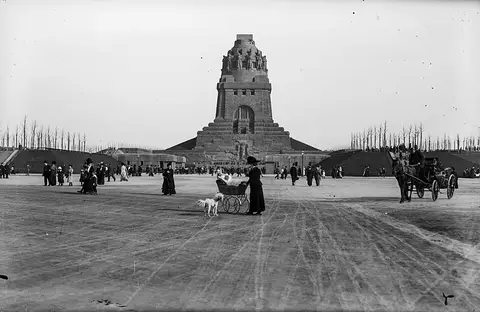 Monuments01
Monument to the Battle of the Nations
Prager Straße 210 · Leipzig● Website● Phone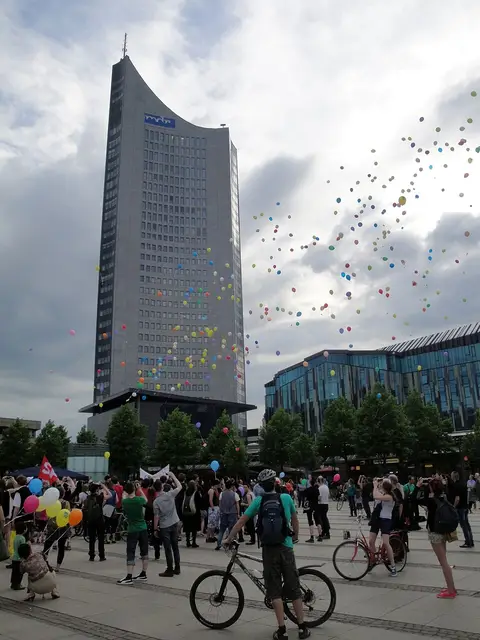 Historic sites02
City-Hochhaus
City-Hochhaus Leipzig, Augustuspl. 9/6.OG · Leipzig● Website● Phone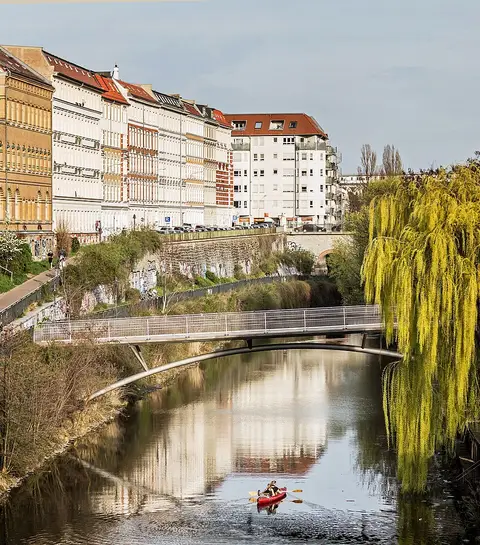 Historic sites03
Karl-Heine-Kanal
No address · Leipzig○ Website○ Phone Historic sites04
You need a free account to leave reviews and photos – that keeps comments genuine and lets you edit them later.
At 91m tall, this is the biggest monument in Europe, commemorating the Battle of Leipzig in the Napoleonic Wars, in which the combined Prussian, Austrian, and Russian forces defeated Napoleon at a cost of 100,000 lives. The top platform can be visited (steep, narrow stairs). Every summer, the 'bath tub' race is held in the reflecting pool below. The monument itself was built for the first centennial of the battle and its design reflects the spirit of these times as well as numerous Masonic symbols given that the architect was a Freemason.
Source: Wikivoyage, „Leipzig“ · authors per page history · CC BY-SA 4.0 · as of 10/29/2021