About Ruhmeshalle Völkerschlachtdenkmal
The Hall of Fame (Ruhmeshalle) is the central and arguably most impressive part of the Monument to the Battle of the Nations (Völkerschlachtdenkmal) in Leipzig, one of the city's most important historic landmarks. The monument was completed in 1913 for the hundredth anniversary of the Battle of the Nations and stands near the area where the fiercest fighting took place in 1813 and where most of the soldiers lost their lives. As a memorial and museum, the complex combines historical significance with architectural splendor and invites visitors to step back into the era of the Wars of Liberation. The hall serves not only as a place of quiet and reflection but also as a venue for exhibitions that bring the events of those days to life.
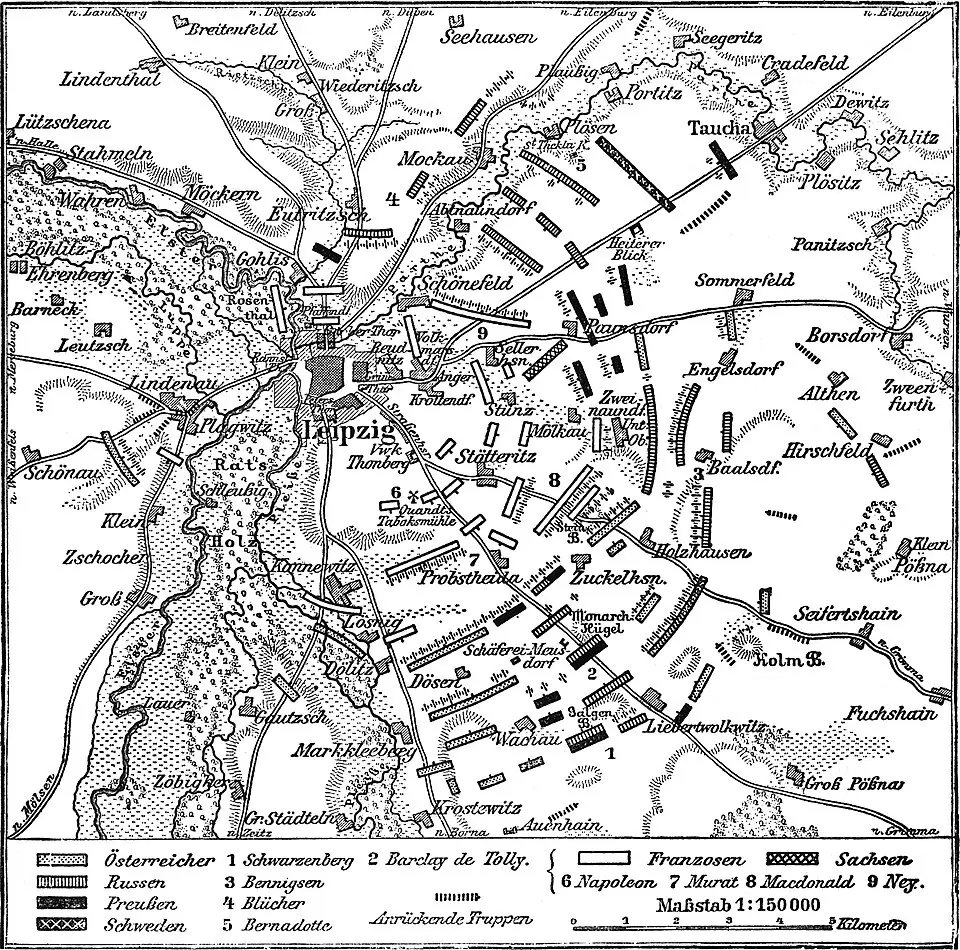
The Battle of Leipzig, fought from October 16 to 19, 1813, was the decisive turning point of the Wars of Liberation. In this enormous conflict, the troops of a coalition of Russia, Prussia, Austria, and Sweden, along with smaller principalities, defeated the forces of France and its allies under Napoleon Bonaparte. The consequences of this defeat were devastating for the French emperor: he had to withdraw from Germany, and the Confederation of the Rhine, the main pillar of his rule in Central Europe, collapsed. The battle is regarded as the moment when Napoleon's ambitions for power on German soil finally failed.
With up to 600,000 soldiers from more than a dozen countries taking part, it was probably the largest battle in world history up to that point. The scale of the conflict was enormous, and the losses were correspondingly high. Of the roughly 600,000 soldiers involved, 92,000 were killed or wounded. These figures underscore the tragedy of the event and the need to remember the victims. The term "Battle of the Nations" (Völkerschlacht) was first used by Achim von Arnim and has since become firmly established as a way of highlighting the international dimension of the fighting.
The architecture of the Monument to the Battle of the Nations is a masterpiece of Historicism. Rising 91 meters (299 feet), the monument towers majestically over the landscape and symbolizes the magnitude of the historic event. Inside is the Hall of Fame, supported by a series of columns and forming a wide, lofty space. The ceiling is adorned with frescoes depicting scenes from the battle, transporting viewers into the past. The design of the hall aims to create an atmosphere of awe and remembrance that encourages reflection on the horrors of war.
Visitors to the Hall of Fame can follow the story of the Battle of the Nations and its background in an extensive permanent exhibition. The exhibition sheds light on the political and military developments that led to the outbreak of war and shows the different perspectives of the nations involved. Documents, weapons, uniforms, and other artifacts make the events tangible. The presentation is designed to appeal to history buffs and families alike, explaining complex connections in an accessible way.
A special highlight of the Hall of Fame is the chance to view the battle from a bird's-eye perspective. On the monument's top level is an observation platform with sweeping views over the former battlefield and the surrounding landscape. This vantage point lets visitors grasp the geography of the fighting and imagine how the troops were positioned on the field. The view is especially impressive in clear weather and provides a striking setting for remembering the events of 1813.
The significance of the Battle of the Nations goes far beyond Napoleon's military defeat. It marked the beginning of the end of Napoleonic rule in Europe and laid the foundation for the reorganization of the continent. In the wake of the battle, several states left the Confederation of the Rhine and joined the Allied side. This redistribution of power in Europe had long-term effects on the political landscape of the 19th century. The Hall of Fame therefore also serves as a place to reflect on these historical connections and understand their meaning for today.
Over the years, the Monument to the Battle of the Nations has become an important site of German remembrance. As early as the 19th century, numerous memorial stones and monuments were erected to commemorate the battle. The monument's dedication in 1913 was a major event accompanied by celebrations. During the Nazi era and in East Germany, the monument was exploited for political purposes, but it always retained its function as a place of historical remembrance. Today it is a neutral space where the history of the Battle of the Nations is presented in a factual and respectful way.
The Hall of Fame is not only a place of stillness but also a place of activity. Lectures, guided tours, and cultural events dealing with the history of the Battle of the Nations and its aftermath take place here regularly. These offerings are aimed at a broad audience and help keep historical knowledge alive. Collaboration with museums and educational institutions in the Leipzig region ensures that the Battle of the Nations remains present in public awareness and that new impulses are given to research and education.
For travelers visiting Leipzig, the Hall of Fame is an essential part of experiencing the city. It offers deep insight into the history of the city and of Germany and invites you to connect the past with the present. The combination of architectural beauty, historical depth, and emotional impact makes a visit a special experience. Whether you are interested in military strategy, the political dimension, or the human stories of those involved, the Hall of Fame has something for every visitor.
In summary, the Hall of Fame of the Monument to the Battle of the Nations is a place of great historical and cultural importance. It commemorates one of the largest battles in world history and the people who fought and died in it. Through its architecture, exhibitions, and events, it helps keep the memory of the Battle of the Nations alive and makes the lessons of the past useful for the future. A visit to the Hall of Fame is therefore not only a journey into the past but also an invitation to reflect on peace, freedom, and the responsibility of people in history.
At a glance
- Category
- Sight › Monuments
- Rating
- no reviews yet · write a review
- Address
- Straße des 18. Oktober 100
04277 Leipzig, Germany - District
- Südost
- Phone
- +4934119449
- Website
- www.lvb.de
- —
- Coordinates
- 51.31255° N · 12.41246° E
- Data quality
- confidence 0.78
- Identifier
- ID 8163bd06-cf4…
Location & surroundings
Toggle layersRatings & comments
none yetNear Ruhmeshalle Völkerschlachtdenkmal
closest 5 per category · 2 kmSights
Restaurants
Museums
Hotels
Cocktail bars
None within 2 km.
More:Monuments in Leipzig (22)All sights in Leipzig (99)
71 places within 2 km loaded.
Don't miss in Leipzig
All sights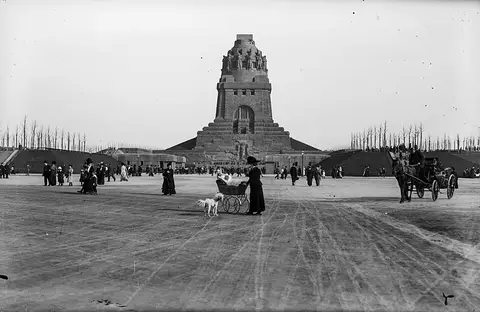 Monuments01
Monument to the Battle of the Nations
Prager Straße 210 · Leipzig● Website● Phone Historic sites02
City-Hochhaus
City-Hochhaus Leipzig, Augustuspl. 9/6.OG · Leipzig● Website● Phone Historic sites03
Karl-Heine-Kanal
No address · Leipzig○ Website○ Phone Historic sites04
You need a free account to leave reviews and photos – that keeps comments genuine and lets you edit them later.